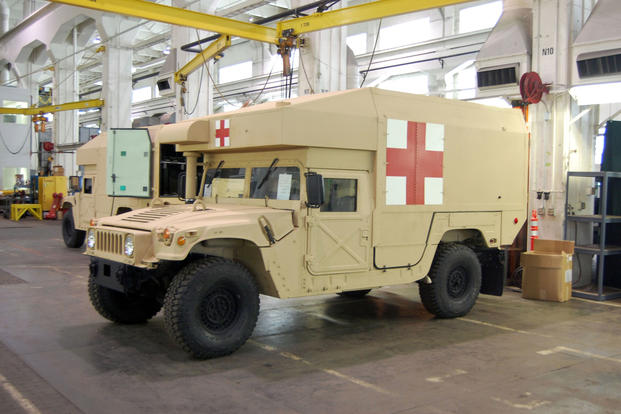
> It may just be a game to you but, it means the world to us
The placement of that comma really irks me. Isn't "It may just be a game to you, but it means the world to us" the grammatically correct form? I'm somewhat surprised to see this in official communication from the Canadian Red Cross group.
I feel like I've seen this "post-but" comma more and more recently. I guess people feel like they would speak the sentence with a pause after the conjunction and therefore the comma goes there in writing.
It all makes sense but I am not sure if it has been submitted in response to some recent egregious misuse.
Yep, that's what I would go with. I can't see a use case for a comma after the "but" in British nor American English.
> I guess people feel like they would speak the sentence with a pause after the conjunction
Even this feels off to me when I read up to the "but" and then pause (as opposed to pausing on the "you").
I don't understand how these two sentences are related and the article doesn't explain it as far as I can tell. They seem to be vaguely insinuating that video games appropriating the red cross logo have caused these deaths, which is surely an absurd claim but I can't figure out what else they might mean.
EDIT: A lot of defensive responses. To be clear, no one is impugning the Red Cross or disrespecting the work they're doing. I merely don't understand the reasoning in TFA.
Note that this isn't normal copyright, the red cross is protected under the Geneva Conventions
https://en.wikipedia.org/wiki/Emblems_of_the_International_R...
Also, my googling found this: https://www.thedrum.com/news/2017/01/17/indie-games-develope...
Does a child's toy, which is supposed to represent a first aid kit, with the red cross on it constitute a misuse?
Can a random private hospital not use the red cross?
That being said, if the symbol was being used as the emblem of an evil army or crime syndicate in a game, I could understand them having a problem with it, however.
German and English have similar grammar but they are very far from being the same. Particular here with commas. Clauses in German are almost always marked with commas. English uses the comma much more sparingly.
A green cross would confuse people.
> "It may just be a game to you but" Red Cross spokesperson tine said "it means the world to us."
(Edited to clarify timeframe)
But I also spent a lot of my youth in France, where it means exactly that.
"When someone misuses the red cross,(the video game industry being just one of many), we seek their cooperation in ending the unauthorized use"
The red cross is a protect trademark so this seems reasonable.
https://www.bradley.com/insights/publications/2012/04/one-cr...
In my unprofessional opinion, the red cross should go the way of "tissue", "google", "coke", etc. It's too common, hasn't been enforced. You lose the exclusive right to it.
But tv, movies, games, etc, just showing an accurate representation of real life, within the media itself seems...normal.
I think if they have to, the least confusing thing would be a red square with a white cross inside it. That's what a lot of first aid kits seem to do. Though perhaps the Swiss wouldn't be thrilled. Maybe a white cross in a red circle?
EDIT: There's a really big issue here with the public perception of the Red Cross. I expect most people think of the Red Cross as a purely benevolent organization. They're the folks with the bell-ringing Santa Clauses, for example. Who can argue with Santa Claus? So while most people are going to see this as "don't pick on the little, helpful people", if you're more familiar with the history the Red Cross, you'll be remembering some scandals they've been involved with. Some of that is accountable to the fact that it's a gigantic organization and corruption is not unavoidable at such a scale. But also, the stakes are so very high that you'd hope they had a better handle on it.
This saves lives, and protects those who run into danger zones to save people.
If we slap red cross symbols on people with medical equipment that you see in video games, it'll just dilute the meaning and maybe next time someone sees a vehicle with the red cross symbol they'll think "oh, that's just the enemy's medics" and throw a grenade that way.
If I understand correctly the red cross will treat anyone regardless of the side they came in with.
…
In English there's also a difference in comma usage with restrictive and nonrestrictive relative clauses (restrictive relative clauses, which indicate which specific entity is referred to as opposed to others, don't use commas, while nonrestrictive relative clauses, which merely add additional information, do), but I seem to remember that native German speakers will commonly write both with commas.
*The person, who was here yesterday, has come back.
Conversely, it's sometimes hard for me to remember to use that comma in German. I want to write something like *"sie sagt dass man hier kein Komma braucht".
I used to have a toy ambulance that had the red cross logo on it. They probably should post a policy on what they consider to be acceptable play, and what is not. This would also impact a lot of movies and cartoons.
The red cross had issues in the past with the symbols. Muslims didn't wanted to be treated for them (seeing the cross as a symbol for christians), so they needed to create the 'Red crescent' symbol exclusively for Muslims. But then jews, hindi and asians felt excluded also, so a third symbol was necessary, the red crystal, that aim to represent humanitary work without being assimilated to one of the bands in conflict. The red crystal is used in delicate cases to not upset anybody.
The red cross should be named now the red crystal, to hide that it was created in an European context, by a christian, and also that is just the Switzerland flag with inverted colors (he was from Geneva).
Is a good example of how politics and ideology can spoil anything.
Use by organizations other than the International Red Cross and Red Crescent Movement.
The point is to strictly maintain the neutrality of the symbol in wartime and similar situations, as distinct from merely indicating (for example) an army medic of a particular country. If it ends up broadly used just to indicate 'first aid', that purpose is lost.
I understand this, but, perhaps in the long term they should consider using a more complex symbol, and including the Red Cross name in it. It is much more difficult to protect a symbol when it is so generic and simple to draw it.
Claim is stronger than insinuate.
claim: verb (used with object) to demand by or as by virtue of a right; demand as a right or as due
insinuate: verb (used with object) to suggest or hint slyly
Sometimes one is forced to wonder if some people actually read what they write, or listen to what they say.
Was "tissue" ever a trademark? Did you mean "Kleenex"?
FWIW, "Kleenex", "Coke", and "Google", all still have their protected status. "Aspirin" was once a trademark (of Bayer?), but is no longer.
Otherwise, the red cross symbol just becomes a huge target painted on you.
And I see why, people think that there is no obvious financial interest for them.
But think again deeper about that, they are often selling their own brand. For example, in a lot of places, they are asking donations exchanging them with red cross stickers that they put on cars.
For some people it is a status symbol to have this sticker on their cars as it is a signal that "they are generous".
And, as said otherwise, the red cross recent history is plagued with waste of money and very bad management.
This isn't some bit of copyright law. This is an international treaty that has vested the right to enforce this thing with a specific group. Misuse isn't going to result in in a DMCA takedown. Misuse of the red cross is an international crime, a violation of the Geneva Conventions. Don't like it? Elect people and have them withdraw your country from the Geneva Conventions. I doubt any party anywhere would ever adopt such a platform.
This is just another instance of North Americans (I haven't really seen this in British English speakers) placing their commata not at the boundaries between clauses/phrases, but where they pause when they read the sentence out loud. You may argue with descriptivism -- that the grammatical rules have changed and this is the new normal -- but placing a comma like this has the probably unintentional effect that reading the sentence out loud now causes you to pause in yet a different place.
Where do you get this confidence that there's no confusion with the green cross?
Google has also been taking defensive actions to prevent this from happening for all of recent history: http://news.bbc.co.uk/2/hi/uk_news/3006486.stm
Part of the point of the symbol is to indicate the International Red Cross and Red Crescent Movement, specifically, which keeps to strict neutrality in wartime. If it starts getting used willy-nilly it puts their members at greater risk because they are no longer clearly delineated from the medical services or army medics of specific countries.
I also wouldn't say that German has "otherwise the same grammar as English". (Or in wrong German: "Ich auch würde nicht sagen dass Deutsch hat ansonsten das gleich Grammatik wie Englisch" - even if we're just talking about comma rules, the German version should have a comma before the "that/dass").
[1]: http://www.neue-rechtschreibung.net/2012/04/30/kommasetzung-...
https://en.wikipedia.org/wiki/Dolo_hospital_airstrike
https://www.irishtimes.com/news/us-admits-bombing-red-cross-...
"The red cross is a powerful symbol of neutrality, impartiality, humanity and hope. Please help us protect it!"
They have redefined the cross, which to Christians, is the symbol of God's love for us, and the hope of healing and salvation, and therefore the driver for the origination of the organization itself - to be the hands and feet of Christ.
They have stripped it of its original meaning (for laudable purposes btw), and now are concerned when others do the same...
The continents of Europe, Africa, Australia... I've also seen it used in China but I'm not as familiar with Asia because I haven't lived there.
I'm sorry, but if your only example is the US then you're likely to be wrong about a lot of things.
It doesn't matter which the verb is, the second half of the first sentence is a much weaker, and more defensible, statement than GP's "vague insinuation" of a concrete incident.
No, they are not insinuating that the use of the Red Cross in video games can be directly tied to specific deaths. Yes, they are insinuating, fairly clearly, that making the logo generic could lead to less recognition of the unique neutral status of the Red Cross, and this gradual loss of recognition could potentially lead to more deaths.
The red cross is used by the enemies medics. It's one of main allowed uses.
The issue comes with a distinction not commonly used in video games, true medics using the red cross as a logo are designated non-combatants, while they are armed they are only to use their weapons in protection of themselves or their patients and under no circumstances are they to directly engage in offensive military operations.
It's also part of the reason why combat medics in the US no longer use the symbol, without it they can act offensively
Also the Taliban have no qualms about destroying an ambulance or shooting a medic.
This is actually a completely inappropriate scenario. The point of the Red Cross symbol is that it indicates an internationally neutral organization that is very specifically not associated with any country.
Army medics != Red cross, and that's a big difference.
If a red cross is taken to mean just army medics, they might be considered to be "just" the enemy's medics, a "legitimate" target for some, unlike the Red Cross who are neutral and help everyone.
Extreme comma tension now relieved above.
https://wl6.fandom.com/wiki/Health_Items?file=Sprite0162_cop...
If you want to indicate a pause to show how you want it read you can use an ellipses (...).
The important thing about the Red Cross and its brand is that they are neutral. The Genova convention declared they get a special marker, and a rule against harming them in wartime. A US army doctor presumably does not seek out to treat both sides of the conflict, and does not get the special protection the rules of engagement afford to the Red Cross. Nor would some random soldier carrying a J&J first aid kit get any protection. In particular the risk is that the more common that symbol is, the less distinctive it is, a particularly troublesome effect during armed conflict where decisions about where to point a rifle and whether to pull a trigger are being made rapidly.
> Can a random private hospital not use the red cross?
A random hospital definitely cannot, without permission (and presumably, some covenants). And it'd definitely not be an enforceable trademark on their end so not a smart branding move anyways. It's usually not a huge deal -- in the US the hospital sign is blue with a big H. In video games you can just use red background with a white plus (but thats like, the swiss flag) Or in the case of TF2, a red (or blue) cross on a yellow circle.
It would likely help their cause if there were an alternative public domain recognized symbol. The ISO standard is apparently White cross on green background: https://www.iso.org/obp/ui#iso:grs:7010:E003 but pretty much nobody knows that.
They’ve only mentioned it as one avenue of misuse.
https://www.businessinsider.com/google-taser-xerox-brand-nam...
https://www.jnj.com/our-company/youre-doing-what
https://www.reuters.com/article/us-johnsonandjohnson-redcros...
Specifically medical organizations that commit to treating _all sides of a conflict_.
Wow that's a lot of snark.
1. I did read the entire article, I just didn't quote it all because that's not what quotes are for. Note that the site guidelines advise against accusations of not reading TFA.
2. "as such are becoming a target in conflict zones." So basically the absurd "videogames thus killings" argument that I addressed in my original post?
3. I got a couple dozen upvotes in a few minutes, so I'm not the only one confused by this.
E.g. it sounds like people died because of it? Why?
I'm not sure I follow - isnt it a good thing that the emblem is widely recognized and used, so everyone know what it stands for help/medicine/first aid/dont shoot, etc...
Or does it mean soemthing else?
In real life, the symbol is pretty strictly limited to a specific international organization well-known for their neutrality in armed conflict. Portraying it as just meaning 'healing' takes away from the power of that neutrality.
"Videogames cause death" feels like a bad-faith oversimplification of the point they're trying to make. It's understandable, as video games are often wrongly attributed as creating violence... but that's not what they're saying.
They don't want video games to stop representing medics, for example... they just don't want the red cross to be synonymous with health, because it's much more specific than that.
Prison Architect actually received a notice about this. Their answer was very simple: replace the red cross with a green one. There is no reason other games cannot also make this very minor concession to the Geneva Conventions. It is the law.
Look to TV shows. It is very very rare to see an actual red cross. Ambulances on shows like Scrubs don't use them. Film/TV people know to respect that symbol and only use it in very specific scenarios. MASH used it extensively, but then too very carefully.
From Wikipedia [1]: "As a protection symbol, they are used in armed conflicts to mark persons and objects (buildings, vehicles, etc.) which are working in compliance with the rules of the Geneva Conventions."
This means that in contrast to what many commenter here are saying non-Red Cross medics (including military ones) can and do use the red cross symbol to signal that they are such.
This of course does not really change much in regards to the usage issue, you are still not allowed to use the symbol for other purposes than specified in the Geneva convention.
[1]: https://en.wikipedia.org/wiki/Emblems_of_the_International_R...
not really. they've got a zero tolerance approach to the appropriation of their symbol because the mission is so important and from their perspective it is all downside risk to them. they don't care about your video game, all they care about is misuse of their symbol.
and they're protected by the geneva convention and have all the weight of law behind them.
if they ask you to stop using their symbol its very simple and you need to stop.
the clarity of the rule means that they don't need to debate which usage is or isn't sufficient to produce the effects, it all simply needs to be removed and then they're assured it is not being diluted.
that is actually a perfectly reasonable perspective.
the fact that it doesn't allow for subjective arguments over the magnitude of the harm being done by the particular violation is a feature, not a bug.
Also how would you even prove such a connection? What combatant is ever going to say “I’m sorry, I shot you because I thought you were the enemy’s medic and not the red cross due to decades of brand dilution”.
I was being terse, not bad faith. In particular, "videogames cause death" is not a less robust argument than "trademark appropriation can cause confusion which can cause death". Moreover, I'm specifically being charitable and saying "I don't think this is what TFA means because it's so ridiculous, but I can't identify a better likely meaning".
But apparently there are a lot of people who think the "trademark violation => death" (again, brevity, not mockery) argument is serious, so I invite them to support their position with examples.
They've gone back and forth depending on their perception of how well the ICRC is doing its job:
* Withdrawal: https://www.rferl.org/a/afghanistan-taliban-withdraws-icrc-s...
* Restoration: http://cms.trust.org/item/20181012103241-lymfx
* https://www.npr.org/2019/09/16/761152686/taliban-lifts-ban-o...
What we say doesn't matter. What the Red Cross says doesn't matter. The Geneva Convention protects certain symbols. That's the end of the debate. The red cross/crescent is owned by the Red Cross and any use by anyone else is completely subject to their permission.
This system was setup for a good reason. Those of us whose lives may one day be protected by that symbol (wounded soldiers) need it to remain above reproach. Every soldier may one day be bleeding on a cot in a field hospital, that symbol on the tent his only protection from instant death. The use of the red cross/crescent/crystal/star is not something that should be up for constitutional debate.
It's not though. Lots of military ambulances, from many countries, not associated with the Red Cross, have a red cross on them.
One example, there are many more: https://www.google.com/search?q=british+military+ambulance&t...
I'm asking "are they insinuating that appropriation of their trademark contributed to the deaths that they cited".
> And how would you ever prove such a thing?
Presumably *if* they are alleging a causal relationship between trademark appropriation and violence against personnel they have some reason to suspect that the causal relationship exists.
This also isn't about trademark, the red cross is outlined in the Geneva Conventions as a symbol with a specific meaning. That meaning is specific because it's meant to protect aid workers as neutral parties in conflict.
"Under the Geneva Conventions, the three distinctive emblems of the red cross, red crescent and red crystal are intended to identify and protect medical and relief workers, military and civilian medical facilities, mobile units and hospital ships during armed conflict."
https://www.redcross.org/content/dam/redcross/atg/PDF_s/Inte... (PDF)
Edit: Perhaps I misunderstood. I thought the Red Cross was complaining about military ambulances, hospital ships, and so on, depicted in games. In addition to less realistic uses.
Also on Windows using WinCompose http://wincompose.info/
See: https://www.wsj.com/articles/the-red-cross-and-the-holocaust...
> But what began as an organization meant to curb the barbarity of warfare has found it difficult to live down its most grievous mistake: cozying up to the Third Reich, remaining silent about the Holocaust and later helping Nazis escape justice. In his last book, “Nazis on the Run: How Hitler’s Henchmen Fled Justice” (2011), historian Gerald Steinacher chronicled one aspect of this shameful era. His newest effort, “Humanitarians at War: The Red Cross in the Shadow of the Holocaust,” synthesizes what he and other historians have learned about the ICRC’s conduct during this troublesome period before adding new material on what the organization did next. This more comprehensive account of the ICRC’s actions equips the reader to decide whether the organization truly recovered from its wartime and postwar errors.
I'd like to see how much they spend on this, and will reconsider donating to the red cross in the future if they continue this foolhardy errand.
If you use the IBM logo or the ATT death star in an unauthorized fashion, you get a nastygram from IBM or ATT because you are diluting their brand. Diluting the brand of the Red Cross means that there is an increased likelihood of "mistakes", and a mistake in a combat zone is a bad thing.
I suspect the red cross would not take issue with a game using the red cross to depict untargatable aid workers.
Good grief. Can you think of a reason why your analogy about changing how a symbol is used in real life might not apply to a debate about how symbols are used in fiction?
Let me offer up an analogy that isn't completely and obviously broken:
If you watch enough Doctor Who, does it make you believe that real life police boxes are actually camouflaged time machines?
Fine, so what's the persuasion in this case? Is it really "misuse of trademark in fiction media contributed to these killings of Red Cross personnel"? Because that's a pretty fantastic claim that requires evidence if you are to persuade someone.
But didn’t that ship sail a century ago?
Since exactly everything related to medical services/material/staff uses a red cross in the physical world, isn’t it natural that it does in movies (or games)? Is the argument here that it can be used when depicting proper use (e.g war movie or war game) but shouldn’t be used more than that since that’s the rule in the real world? That at least makes some sense.
I have been an army medic myself with a red cross armband and while I knew that this was somehow related to the Geneva convention I wasn’t actually aware that it was the exclusive right of military medical staff. Every single gadget/vehicle/facility is plastered with the symbol so it sure feels like the generic “medical whatever” symbol.
Here is the relevant US law: https://www.law.cornell.edu/uscode/text/18/706
The misuse of the red cross, especially in video games, is rampant to the point that the Red Cross is worried about confusion.
There's additional issue with the fact that video games are very common, but warzones and disaster areas less so. So it's quite possible the fictional association, if overused, could redefine the real-life usage for many people. We already see some of this in the comment section... many people don't understand the difference between "health" as a concept and the red cross as an element protected by international law.
It seems reasonable to try and claw that meaning back.
You already acknowledge this elsewhere, and you've also already acknowledged that there's special meaning to the red cross as opposed to merely referring to pharmacies.
I don't know what you're doing excluding Asia or the USA either, while saying
> A green cross would confuse no one.
And then following up with
> I'm sorry, but if your only example is the US then you're likely to be wrong about a lot of things.
Irrespective they are asking to be taken seriously - it's not Kleenex™ asking to not to use kleenex generically.
They do, medical branches of the military are allowed to use the symbols.
This is the silliest thing I've ever heard, and not every fictional red cross symbol is a threat anyway. This whole thing seems at least as ridiculous as the moral panic about violent video games in the early 2000s, except that I kind of expect ridiculous moral panics from conservative parents not so much from the official communications arm of one of the largest NGOs in the world. Absent any actual evidence I think we're just going to have to agree to disagree.
That is uncalled for.
There are a number of incidents mentioned in the post and in this thread where Red Cross workers were injured or killed by combatants. Do I have any reason to believe any of them involve "appropriation of their trademark contributed to the deaths"? No, although I would believe that the defense in most cases would be "a mistake was made". But the Red Cross (and a lot of other people) have good reason to defend those logos.
International Humanitarian Law (https://ihl-databases.icrc.org/customary-ihl/eng/docs/home):
"Rule 25. Medical personnel exclusively assigned to medical duties must be respected and protected in all circumstances. They lose their protection if they commit, outside their humanitarian function, acts harmful to the enemy."
"Rule 28. Medical units exclusively assigned to medical purposes must be respected and protected in all circumstances. They lose their protection if they are being used, outside their humanitarian function, to commit acts harmful to the enemy."
"Rule 29. Medical transports assigned exclusively to medical transportation must be respected and protected in all circumstances. They lose their protection if they are being used, outside their humanitarian function, to commit acts harmful to the enemy."
"Rule 59. The improper use of the distinctive emblems of the Geneva Conventions is prohibited."
(The Red Cross logos are such distinctive emblems.)
Which would actually be an interesting game idea...
The protective use of the Red Cross, is subject to the conditions of the Geneva Conventions, and only those rules. What any particular Red Cross organization feels is completely irrelevant. These rules allow use by one side of the conflict's own medics, among other things. There is no treating both sides rule or anything like that.
Protective use of the symbol in an inappropriate context is a war crime. As is ignoring the symbol and firing upon a protected facility.
The Geneva conventions also allow indicative use of the symbols by International Red Cross and Red Crescent Movement organizations. It is only supposed to be used by those organizations in this indicative sense, but it is not viewed as a war crime when this is violated.
Using the symbol in a game as a generic symbol for healing or medics is wrong. Use of the the symbol in the protective fashion in video games is arguably fine, as long as the game also treats ignoring the symbol as a war crime. I'm not sure I've ever seen a game where the player gets court marshaled if they fire upon an enemy's medics wearing the red cross symbol though, which is a real problem, and dilutes the meaning of the symbol.
One weird thing here is that for example, the American Red cross licenses the use of the symbol for purposes like first aid kits very much like those found in video games. This is in addition to the well known Johnson and Johnson trademark allowing them to use it on their first aid kits too.
The First Geneva convention article 39 allows the military to order that the symbol be on equipment used by in battle are supposed to have the symbol on it, so they would very much could carry first aid kits with a red cross on it.
They're not calling for video games to be banned or even re-labeled, they're just trying to prevent the red cross from losing the intended meaning (which comes with an international treaty intended to protect aid workers)... it seems like the method of applying this mostly consists of asking nicely.
It looks like the the American and Canadian Red Cross(es) actually sell first aid supplies with the emblem: https://www.redcross.org/store/first-aid-supplies, https://products.redcross.ca/. Is the issue that the emblem is on first aid supplies at all, or just first aid supplies made by other organizations?
I don't really get the connection between that activity and:
> In fact, the red cross emblem is an important symbol of humanitarian protection. It is recognized as such in both Canadian and international law which prohibit its unauthorized use. Misuse of this valued symbol distorts its meaning and its protective value for victims of conflict and the aid workers that assist them.
"Rule 25. Medical personnel exclusively assigned to medical duties must be respected and protected in all circumstances. They lose their protection if they commit, outside their humanitarian function, acts harmful to the enemy.
"As explained below, the equipment of medical personnel with small arms to defend themselves or their patients and the use of such arms for this purpose do not lead to loss of protection. Furthermore, in analogous application of the similar rule applying to medical units, it is not to be considered a hostile act if medical personnel are escorted by military personnel or such personnel are present or if the medical personnel are in possession of small arms and ammunition taken from their patients and not yet handed over to the proper service.
"Rule 29. Medical transports assigned exclusively to medical transportation must be respected and protected in all circumstances. They lose their protection if they are being used, outside their humanitarian function, to commit acts harmful to the enemy."
Not sure about armor, although the general statement seems to be they would only lose their protected status if they commit specific actions.
It's not unthinkable to conceive a scenario in which this symbol is misinterpreted, loss of health or life or property follows, and the ignorance of the perpetrators cannot be pinpointed - maybe it'd be lack of proper education, maybe missing classes during military training, maybe seeing red-cross logo misused in games, maybe bad memory - the thing is that all of those explanations are IMO "reasonable", so we might want to do at least something about each of those (if possible).
I didn't exclude Asia, I stated that my experience there is more limited than the continents I listed. The US isn't a reliable authority on any international standards.
If you started up a new video game and the health packs had green crosses instead of red ones, would you be confused?
Oy.
The purpose of these symbols is to unambiguously identify protected vehicles, protected buildings, protected people.
It's true that in some countries people slap red crosses (in particular) on stuff that shouldn't have them and doesn't need them. But that doesn't make it a good idea. In a video game in particular you could use any symbol and players would soon get the idea. How long do you think it takes Mario players to realise that one of the mushrooms makes Mario bigger, while a different one is an extra life?
In conflict zones, the red cross symbol has often protected them from being a target. It might have been one of the primary meanings and uses of the symbol. Could they mean, with those two sentences, that having the red cross be used, in for example, video games, for other meanings (like health pack or whatever) waters down that original important meaning of the symbol as the Red Cross organisation identity?
I’m just speculating, but could it be that a combatant in war seeing a red cross previously though “that’s the Red Cross” while they today might, more often than before, just think: “that’s medics”?
The Red Cross symbol is sui generis, it is not a (normal) trademark.
Use of the symbols in peace time is prohibited under Article 44 of the First Geneva Convention (except as allowed under that article).
>It's ridiculous to attempt to police the world for the use of it in a certain color.
It's protected because it protects medics, the wounded and other vulnerable non-combatants in war. It's a vital humanitarian tool.
Also, if you are asking for examples in media, they are extremely easy to find. Here's an example from a comic strip commenting on TF2: https://photos.smugmug.com/photos/217534009_hZ5oD/0/1050x100...
FWIW, first aid kits in the UK almost exclusively use that symbol.
Not saying getting here from there is ready. But it may be possible.
Well, that settles it. Any games depicting red crosses should be patched to check if the player is shooting at vehicles or people marked with a red cross in the game, and if so, report him to the nearest police unit for an arrest.
In my mind, the red cross symbol has become a universal symbol for 'medical service or supplies', and not just for this one organization.
Perhaps they should change their logo. Or just be content that they 'own' one of the most recognizable symbols in history.
And, FWIW, those first aid kits in big green plastic boxes are mostly used by regular soldiers. The medics have different kits in backpack looking containers called an M-9.
2. The Red Cross helps these people.
3. Their symbol is a tool which improves Red Cross's ability to help.
4. Misuse or casual use of the symbol dilutes its utility.
5. Therefore, please cease its casual use.
What other symbol would you use for medicine/medical? Just look at any first-aid box, and it has a red cross. Even nurse dress-up costumes.
Of course if I tried to start an NGO using the symbol, I would rightly be sued. But using it generically, in games for med-paks or whatever, etc, seems fine to me.
I've literally used them when developing a video game before, and that's what I was thinking as I implemented them.
I've also used the red cross when making a game before without even thinking about a possible trademark or protection, it was already a generic symbol to me. Come to think of it, I just used it again in the art for a board game I was making. I guess I should change it, but I'm not sure to what (I guess a green cross?).
I have a tendency to be needlessly antagonist sometimes.
I’m trying to improve.
> I don't understand how these two sentences are related ...
Lots of their people are getting killed; thus the protection provided by the emblem is very important to them.
Personally I found that part to be badly written; but it is still reasonable position.
Claims like these are what I read about all the time in Canada. As an American, to me their culture has moved to a very strange place as far as worry and blame.
https://www.theguardian.com/world/2011/may/25/nazis-escaped-...
Was anybody prosecuted by the infamous 2007 attack to an ambulance in Baghdad shown by Wikileaks, (oh, yes... Manning of course. Silly me. I almost forgot)
Was anybody jailed for the men and woman and children burnt alive by the "strictly forbidden under international laws" white phosphorus in Fallujah? noope
Were the systematic bombing of hospitals and civil buildings in Gaza, Pakistan or Syria investigated?
https://www.middleeasteye.net/news/israel-gaza-hospitals-tar...
Was somebody prosecuted by what they did to Omran Daqneesh and his family?.
Or by the annexation of Crimea?
I could spent the next hour enumerating cases of war crimes written in flashing neon letters, solved with a path in the shoulder to the criminals. Is a fact that war crimes go often unpunished when commit by "the good guys".