Note that this isn't normal copyright, the red cross is protected under the Geneva Conventions
https://en.wikipedia.org/wiki/Emblems_of_the_International_R...
Also, my googling found this: https://www.thedrum.com/news/2017/01/17/indie-games-develope...
https://www.bradley.com/insights/publications/2012/04/one-cr...
In my unprofessional opinion, the red cross should go the way of "tissue", "google", "coke", etc. It's too common, hasn't been enforced. You lose the exclusive right to it.
Google has also been taking defensive actions to prevent this from happening for all of recent history: http://news.bbc.co.uk/2/hi/uk_news/3006486.stm
I also wouldn't say that German has "otherwise the same grammar as English". (Or in wrong German: "Ich auch würde nicht sagen dass Deutsch hat ansonsten das gleich Grammatik wie Englisch" - even if we're just talking about comma rules, the German version should have a comma before the "that/dass").
[1]: http://www.neue-rechtschreibung.net/2012/04/30/kommasetzung-...
https://en.wikipedia.org/wiki/Dolo_hospital_airstrike
https://www.irishtimes.com/news/us-admits-bombing-red-cross-...
https://wl6.fandom.com/wiki/Health_Items?file=Sprite0162_cop...
The important thing about the Red Cross and its brand is that they are neutral. The Genova convention declared they get a special marker, and a rule against harming them in wartime. A US army doctor presumably does not seek out to treat both sides of the conflict, and does not get the special protection the rules of engagement afford to the Red Cross. Nor would some random soldier carrying a J&J first aid kit get any protection. In particular the risk is that the more common that symbol is, the less distinctive it is, a particularly troublesome effect during armed conflict where decisions about where to point a rifle and whether to pull a trigger are being made rapidly.
> Can a random private hospital not use the red cross?
A random hospital definitely cannot, without permission (and presumably, some covenants). And it'd definitely not be an enforceable trademark on their end so not a smart branding move anyways. It's usually not a huge deal -- in the US the hospital sign is blue with a big H. In video games you can just use red background with a white plus (but thats like, the swiss flag) Or in the case of TF2, a red (or blue) cross on a yellow circle.
It would likely help their cause if there were an alternative public domain recognized symbol. The ISO standard is apparently White cross on green background: https://www.iso.org/obp/ui#iso:grs:7010:E003 but pretty much nobody knows that.
https://www.businessinsider.com/google-taser-xerox-brand-nam...
https://www.jnj.com/our-company/youre-doing-what
https://www.reuters.com/article/us-johnsonandjohnson-redcros...
From Wikipedia [1]: "As a protection symbol, they are used in armed conflicts to mark persons and objects (buildings, vehicles, etc.) which are working in compliance with the rules of the Geneva Conventions."
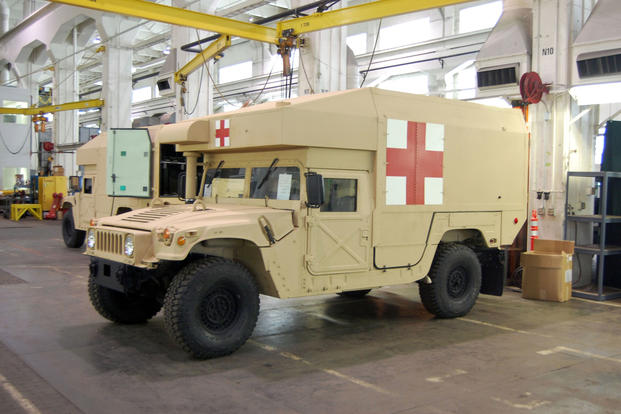
This means that in contrast to what many commenter here are saying non-Red Cross medics (including military ones) can and do use the red cross symbol to signal that they are such.
This of course does not really change much in regards to the usage issue, you are still not allowed to use the symbol for other purposes than specified in the Geneva convention.
[1]: https://en.wikipedia.org/wiki/Emblems_of_the_International_R...
They've gone back and forth depending on their perception of how well the ICRC is doing its job:
* Withdrawal: https://www.rferl.org/a/afghanistan-taliban-withdraws-icrc-s...
* Restoration: http://cms.trust.org/item/20181012103241-lymfx
* https://www.npr.org/2019/09/16/761152686/taliban-lifts-ban-o...
It's not though. Lots of military ambulances, from many countries, not associated with the Red Cross, have a red cross on them.
One example, there are many more: https://www.google.com/search?q=british+military+ambulance&t...
"Under the Geneva Conventions, the three distinctive emblems of the red cross, red crescent and red crystal are intended to identify and protect medical and relief workers, military and civilian medical facilities, mobile units and hospital ships during armed conflict."
https://www.redcross.org/content/dam/redcross/atg/PDF_s/Inte... (PDF)
Also on Windows using WinCompose http://wincompose.info/
See: https://www.wsj.com/articles/the-red-cross-and-the-holocaust...
> But what began as an organization meant to curb the barbarity of warfare has found it difficult to live down its most grievous mistake: cozying up to the Third Reich, remaining silent about the Holocaust and later helping Nazis escape justice. In his last book, “Nazis on the Run: How Hitler’s Henchmen Fled Justice” (2011), historian Gerald Steinacher chronicled one aspect of this shameful era. His newest effort, “Humanitarians at War: The Red Cross in the Shadow of the Holocaust,” synthesizes what he and other historians have learned about the ICRC’s conduct during this troublesome period before adding new material on what the organization did next. This more comprehensive account of the ICRC’s actions equips the reader to decide whether the organization truly recovered from its wartime and postwar errors.
If you use the IBM logo or the ATT death star in an unauthorized fashion, you get a nastygram from IBM or ATT because you are diluting their brand. Diluting the brand of the Red Cross means that there is an increased likelihood of "mistakes", and a mistake in a combat zone is a bad thing.
Here is the relevant US law: https://www.law.cornell.edu/uscode/text/18/706
There are a number of incidents mentioned in the post and in this thread where Red Cross workers were injured or killed by combatants. Do I have any reason to believe any of them involve "appropriation of their trademark contributed to the deaths"? No, although I would believe that the defense in most cases would be "a mistake was made". But the Red Cross (and a lot of other people) have good reason to defend those logos.
International Humanitarian Law (https://ihl-databases.icrc.org/customary-ihl/eng/docs/home):
"Rule 25. Medical personnel exclusively assigned to medical duties must be respected and protected in all circumstances. They lose their protection if they commit, outside their humanitarian function, acts harmful to the enemy."
"Rule 28. Medical units exclusively assigned to medical purposes must be respected and protected in all circumstances. They lose their protection if they are being used, outside their humanitarian function, to commit acts harmful to the enemy."
"Rule 29. Medical transports assigned exclusively to medical transportation must be respected and protected in all circumstances. They lose their protection if they are being used, outside their humanitarian function, to commit acts harmful to the enemy."
"Rule 59. The improper use of the distinctive emblems of the Geneva Conventions is prohibited."
(The Red Cross logos are such distinctive emblems.)
It looks like the the American and Canadian Red Cross(es) actually sell first aid supplies with the emblem: https://www.redcross.org/store/first-aid-supplies, https://products.redcross.ca/. Is the issue that the emblem is on first aid supplies at all, or just first aid supplies made by other organizations?
I don't really get the connection between that activity and:
> In fact, the red cross emblem is an important symbol of humanitarian protection. It is recognized as such in both Canadian and international law which prohibit its unauthorized use. Misuse of this valued symbol distorts its meaning and its protective value for victims of conflict and the aid workers that assist them.
"Rule 25. Medical personnel exclusively assigned to medical duties must be respected and protected in all circumstances. They lose their protection if they commit, outside their humanitarian function, acts harmful to the enemy.
"As explained below, the equipment of medical personnel with small arms to defend themselves or their patients and the use of such arms for this purpose do not lead to loss of protection. Furthermore, in analogous application of the similar rule applying to medical units, it is not to be considered a hostile act if medical personnel are escorted by military personnel or such personnel are present or if the medical personnel are in possession of small arms and ammunition taken from their patients and not yet handed over to the proper service.
"Rule 29. Medical transports assigned exclusively to medical transportation must be respected and protected in all circumstances. They lose their protection if they are being used, outside their humanitarian function, to commit acts harmful to the enemy."
Not sure about armor, although the general statement seems to be they would only lose their protected status if they commit specific actions.
Oy.
Also, if you are asking for examples in media, they are extremely easy to find. Here's an example from a comic strip commenting on TF2: https://photos.smugmug.com/photos/217534009_hZ5oD/0/1050x100...
FWIW, first aid kits in the UK almost exclusively use that symbol.
https://www.theguardian.com/world/2011/may/25/nazis-escaped-...
Was anybody prosecuted by the infamous 2007 attack to an ambulance in Baghdad shown by Wikileaks, (oh, yes... Manning of course. Silly me. I almost forgot)
Was anybody jailed for the men and woman and children burnt alive by the "strictly forbidden under international laws" white phosphorus in Fallujah? noope
Were the systematic bombing of hospitals and civil buildings in Gaza, Pakistan or Syria investigated?
https://www.middleeasteye.net/news/israel-gaza-hospitals-tar...
Was somebody prosecuted by what they did to Omran Daqneesh and his family?.
Or by the annexation of Crimea?
I could spent the next hour enumerating cases of war crimes written in flashing neon letters, solved with a path in the shoulder to the criminals. Is a fact that war crimes go often unpunished when commit by "the good guys".