https://www.food-safety.com/articles/11004-a-2025-timeline-o...
https://www.theatlantic.com/health/archive/2025/09/maha-lets...
https://www.ruokavirasto.fi/en/foodstuffs/healthy-diet/nutri...
I find when it comes to health advice, generally government sources can't be trusted because there's too much special interests and money involved. You really have to do your own research.
[1] https://www.npr.org/sections/thetwo-way/2016/09/13/493739074...
Saturated fats are good because they're more stable than poly-unsaturated fats for instance.
If you do consume a seed oil (which you really shouldn't -- there's no benefit), you should get a cold-pressed one. But that would be more expensive, so if you're paying more you might as well just get something good like avacado oil or coconut oil.
(there is an argument for why this shouldn't apply to grass-fed meat but that is an extremely small minority of meat sold)
https://news.harvard.edu/gazette/story/2025/11/looking-to-bu...
There was a story about this in the NYT recently (can't find it) and IIRC, it basically said protein is out and fiber is in. It wasn't that simple, but that was my takeaway.
This new JFK Jr diet has something in common with the Paleo "cave man" diet, which at least makes some sense in the argument ("this is what our bodies have evolved to eat") if not the specifics. I'm not sure where the emphasis on milk/cheese and eggs comes from since this all modern, not hunter-gatherer, and largely unhealthy, and putting red-meat at the top (more cholesterol, together with the eggs), and whole grain at the bottom makes zero sense - a recipe for heart attacks and colon cancer.
https://www.cnbc.com/2026/01/07/rfk-jr-nutrition-guidelines-...
https://www.poptarts.com/en_US/products/new/pop-tarts-protei...
https://en.wikipedia.org/wiki/Kefir
If you're stateside, you can buy it at Publix and other groceries: https://www.publix.com/pd/lifeway-lifeway-original-plain-kef...
What is EVOO btw?
The normal recommended daily intake for protein is 0.8 g/kg. 1.2-1.6 is silly; that's a recommendation for athletes.¹
Starches have been a dietary staple in pretty much every society forever. Sugars have not. It's silly that they treat grains as a "sometimes" food.
There's also the weird boogeyman of "processed food." Almost all food is processed to some degree & always has been. We've been cooking, baking, juicing, fermenting, chopping, grinding, mashing, etc. long enough that it influenced the shape of our teeth. Certainly we haven't been making Pizza Pockets that long, but the issue there isn't processing, it's ingredients. And the reason people buy Pizza Pockets isn't that they think they're healthy—it's that Pizza Pockets only need to be microwaved, and cooking a real meal takes time that a lot of people just don't have.
[1]: https://www.strongerbyscience.com/athlete-protein-intake/
The history of cotton seed oil is interesting. After reading that, I would challenge people to think if that's really something they'd want in their body. Other than cost, I see no downside to avoiding seed oils and a lot of upside: https://en.wikipedia.org/wiki/Cottonseed_oil#Economic_histor...
Protein is actually pretty hard to overdo naturally. If you've ever tried to follow the high protein guidelines and you're a taller or broader shouldered person you'll find that getting that amount of protein requires supplementation or a lot of focus on lean meats. I'm not saying everyone needs to go "high" protein, I'm just saying that worrying about the amount of protein you're eating is probably not worth doing. You'll feel pretty full if you eat a lot of protein.
Keto is not just "high fat" though. Keto is about producing ketones, and going too high fat can actually be counterproductive there, at least for weight loss. (You want to be liberating fat from your storage, not getting it from external sources)
https://www.nature.com/articles/s41598-021-91554-z#Sec5 https://www.consumerreports.org/lead/protein-powders-and-sha...
You are being pretty fast and loose with your language here so I will alight what I think you are trying to say.
"Fill you up" I must assume means that you are implying the state of feeling "full" or satiated.
There is really only one study in the field of broad food source satiety: https://pubmed.ncbi.nlm.nih.gov/7498104/
Potatoes are the most satiating food at 323% that of white bread.
The second is Ling fish which is a source of protein, but another one of my assumptions is that when you say 'protein' I am doubtful you mean 'ling fish'. So assuming you mean a 2026 American definition of 'protein' you're probably referring to cow flesh (beef) which is only 176% of white bread, almost half of potatoes.
So, in the future I would suggest spreading the word and correcting your comment by saying "I mean potatoes do fill you up faster"
These are the prior recommendations: https://lgpress.clemson.edu/wp-content/uploads/sites/3/2024/...
100% evidence based but not branded as contrarian by a bunch of Instagram idiots so people assume they didn’t exist.
Link to autism comments: https://www.cato.org/blog/circumcision-tylenol-autism-rfk-jr...
Misc including 5g comments: https://www.forbes.com/sites/saradorn/2024/11/15/rfk-jrs-con...
Red meat has been linked to cardiovascular disease https://academic.oup.com/eurheartj/article/44/28/2626/718873... https://www.tandfonline.com/doi/full/10.1080/10408398.2021.1... etc
A demand for the average American to eat more meat would have to explain, as a baseline, why our already positive trend in meat consumption isn't yielding positive outcomes. There are potential explanations (you could argue increased processing offsets the purported benefits, for example), but those are left unstated by the website.
[1]: https://www.agweb.com/opinion/drivers-u-s-capita-meat-consum...
[2]: https://ers.usda.gov/data-products/chart-gallery/chart-detai...
In moderate amounts, sure. But frequently eating red meat (more than two or three servings a week) is terrible for you. There's "a clear link between high intake of red and processed meats and a higher risk for heart disease, cancer, diabetes, and premature death": https://www.health.harvard.edu/staying-healthy/whats-the-bee...
https://papersplain.com/sample/62d71c8ecb6411e042f346088c231...
The only recommendations to limit fish that I have seen are due to mercury exposure risks:
https://www.fda.gov/food/consumers/advice-about-eating-fish
Coal burning and incidental industrial releases drastically increased the amount of mercury in surface waters over the past century. The released mercury gets transformed by bacteria into organomercury compounds which are lipophilic and concentrate up the food chain, meaning that predator fish like tuna and swordfish can contain orders of magnitude more mercury than the water they live in.
There are plenty of fish with much lower mercury levels (like salmon, trout, and sardines):
https://www.fda.gov/food/environmental-contaminants-food/mer...
You can eat all the salmon you want without worrying about mercury, and I haven't seen government advice to the contrary.
- Canned, drained and rinsed: 7g protein / 100g [1]
- Boiled: 9g protein / 100g [2]
Not sure what explains the discrepancy (though the second number is much older), but both are considerably higher than what your can says. Sure you aren't reading a per-serving amount?
[1]: https://fdc.nal.usda.gov/food-details/2644288/nutrients
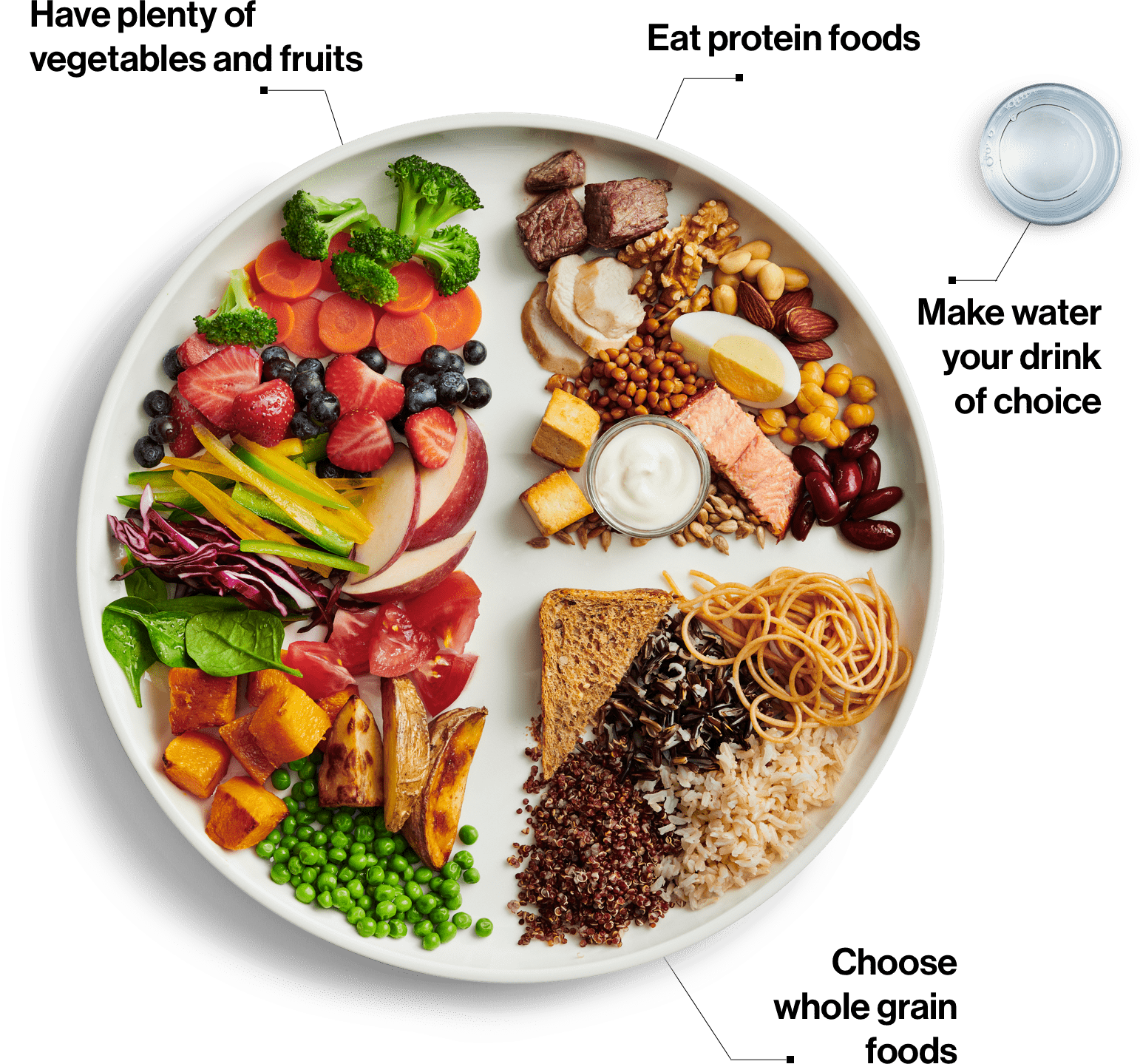
https://food-guide.canada.ca/en/
Discussion in 2019: >>18985017
Whole grain bread or infant formula can be “highly processed” despite very healthy.
In the end someone else cooks for you and packages it. They can cook healthy or not or in between, add a lot of salt or little, .. as always it’s more complex.
1: https://www.nature.com/articles/s41430-022-01099-1
2 https://www.cambridge.org/core/journals/nutrition-research-r...
This newest iteration appears to have had input from HHS under RFK Jr: https://www.nbcnews.com/health/health-news/us-dietary-guidel...
https://pubmed.ncbi.nlm.nih.gov/38118410/
What happens is that the excess of protein stays in your system, but, if you don't use the nutrient by exercising, the caloric excess will obviously make you fat.
"These findings demonstrate that the magnitude and duration of the anabolic response to protein ingestion is not restricted and has previously been underestimated in vivo in humans."
In fact, from the very same site, here's another article saying it's not: https://health.clevelandclinic.org/saturated-fats-finding-a-...
Saturated fat is OK in moderate amounts, but if you eat too much, it drives up your cholesterol because your body converts saturated fat into cholesterol[1][2].
The issue I have with this new food pyramid is the guidance ignores the danger of saturated fat. It lists "meats" and "full-fat dairy" among sources of "healthy fats", and that's just not true. In the picture that shows sources of protein/fat, 11 out of 13 of the items are animal-based fats. With a giant ribeye steak, cheese, butter, and whole milk specifically (not just milk), they're simply not giving an accurate picture of healthy fat sources.
I personally don't think seed oils are bad, but even if they were, it does not follow that saturated fat is good. The evidence shows otherwise, for one thing, plus it's not like seed oils and saturated fat are the only two kinds of fat. There are plenty of unsaturated fats which aren't seed oils.
---
[1] https://medlineplus.gov/ency/patientinstructions/000838.htm
[2] https://www.heart.org/en/healthy-living/healthy-eating/eat-s...
Thats tantamount to a recommendation that fish should comprise a minority of your protein, which is backwards. It’s almost certainly healthier overall for fish to be your primary protein source and to eat red meat, chicken, and pork sparingly. How many servings a week of fish do you think Japanese kids eat?
https://www.youtube.com/watch?v=5EU76q3Vf3Q
My favorite is pan frying them in a hot sauce + aromatics for a quick chickpea rice bowl, I even gotten into the habit of using chickpeas as a chicken replacement for many of my Mexican dishes.
If you're use to the typical American diet, please try cooking more lentils! Very tasty, filling dishes, low on costs and high on nutrients.
chicken 100g/27g of protein
chickpeas 100g/19g of protein
That's a good ratio for something that costs less than a dollar a can compared to chicken.
Who was lobbied? The lobbyists can’t publish things in the Federal Register. How it works is they try to influence the experts at the agencies to support their position. That’s what lobbying is. It’s all laundered through experts both in the private sector and the government.
https://apnews.com/article/rfk-kennedy-election-2024-preside...
to keep this focused on hacker news. this is like asking the programming community to solve "some intractable social problem," and then sometimes you get an answer, "well, what we need is, a new kind of open source license."
disputes over guidelines and the meaning of highly processed, outside the academic humanities context, is kind of pointless right? if you are talking about cultural influence - you can't coerce people to eat (or not eat) something in this country, so cultural influence is the main lever government can pull regarding food - the answer to everything is, "What does Ja Rule think?" (https://www.okayplayer.com/dave-chappelles-ja-rule-joke-is-h...) that is, what do celebrities say and do? And that's why we're at where we are at, the celebrities are now "running" the HHS.
There's a definition for highly processed food, it's whatever Ja Rule says it is. Are you getting it?
Case in point: the Mayo Clinic article titled "Are you getting enough protein?"[0]
It claims that protein is only a concern for people who are undereating or on weight loss drugs, yet it cites protein recommendations that many people find challenging to meet (1.1g/kg for active people, more if you're over 40 or doing strength or endurance workouts.) To top it off, it's illustrated with a handful of nuts, which are pretty marginal sources of protein. It's bizarrely mixed messaging.
[0] https://www.mayoclinichealthsystem.org/hometown-health/speak...
> Protein target: 1.2–1.6 grams per kilogram of body weight per day.
Total calories will be 1,608 kcal/day.
It's a very depressing diet menu.
I used to drink protein shakes, but now I am actively against these. Artificial sweeteners provoke insulin release [1] [2] that leads to type-II diabetes.
[1] https://pubmed.ncbi.nlm.nih.gov/2887503/
[2] https://www.sciencedirect.com/science/article/abs/pii/S10568...
I think Kris Sowersby is my favorite contemporary typographer.
https://klim.co.nz/collections/untitled/ https://klim.co.nz/collections/tiempos/ https://klim.co.nz/collections/soehne/
I really like this study of a population of highly trained athletes and their diets/protein intake: https://pubmed.ncbi.nlm.nih.gov/27710150/
In that study they eat > 1.2g protein/kg body weight, but 43% of that is "plant sources", meaning grains, legumes, fruits and vegetables. Like one serving of oatmeal is 6g, things you don't think of as "protein" add up and you have to count them. The athletes in that study are Dutch and 19% of their protein intake came from bread.
But what always happens with protein recommendations is that they say "x grams protein/kg bodyweight" but people hear "protein is meat, you are telling me to eat x grams/kg bodyweight of meat." Very few people ever look closely enough at their diet to develop an intuitive sense for counting macros.
Lentils contain trypsin inhibitors, which contain inordinate amount of nitrogen that is counted as protein.
While you do not eat these directly after cooking your lentils, you do not eat as much protein as you would think you do.
Results from this meta-analysis [1] says
> protein intakes at amounts greater than ~1.6 g/kg/day do not further contribute RET [resistance exercise training]-induced gains in FFM [fat-free mass].
Said more plainly: if you're working out to gain muscle, anything more than 1.6g/kg/day won't help your muscle gains.
For those curious about why, see Figure 5. Americans also get too much protein already, ~20% more than recommended [2]. There are negative effects from too much protein (~>2g/kg/day) like kidney stones, heart disease, colon cancer [3]. Going back to the 1.2-1.6 g/kg/day range, this can be a good range if you're already working out, so get out there and walk/run/weight lift/swim/bike!
[1]: https://bjsm.bmj.com/content/bjsports/52/6/376.full.pdf
[2]: https://hsph.harvard.edu/news/protein-is-important-but-were-...
[3]: https://www.health.harvard.edu/nutrition/when-it-comes-to-pr...
https://www.nytimes.com/2011/06/03/business/03plate.html
It's amusing how outraged people were when Michelle Obama did her Let's Move campaign focused on eating healthy and exercise and now people are pretending it's all new.
(There was also a version before that, in 2005. The "MyPyramid." That one emphasized exercise by having a person walking up a revised version of the pyramid. Though it had a whole giant category for "milk," admittedly as a knock against it. I'll grant today's did a good job in de-emphasizing dairy compared to 2005 and 2011.)
> The US is the biggest consumer of beef in the world, but, according to new research, it’s actually a small percentage of people who are doing most of the eating. A recent study shows that on any given day, just 12% of people in the US account for half of all beef consumed in the US.
> Men and people between the ages of 50 and 65 were more likely to be in what the researchers dubbed as “disproportionate beef eaters”, defined as those who, based on a recommended daily 2,200 calorie-diet, eat more than four ounces – the rough equivalent of more than one hamburger – daily. The study analyzed one-day dietary snapshots from over 10,000 US adults over a four-year period. White people were among those more likely to eat more beef, compared with other racial and ethnic groups like Black and Asian Americans. Older adults, college graduates, and those who looked up MyPlate, the US Department of Agriculture’s (USDA) online nutritional educational campaign, were far less likely to consume a disproportionate amount of beef.
High steaks society: who are the 12% of people consuming half of all beef in the US? - https://www.theguardian.com/environment/2023/oct/20/beef-usd... - October 20th, 2023
Demographic and Socioeconomic Correlates of Disproportionate Beef Consumption among US Adults in an Age of Global Warming - https://www.mdpi.com/2072-6643/15/17/3795 | https://doi.org/10.3390/nu15173795 - August 2023
(my observation of this is that we can sunset quite a bit of US beef production and still be fine from a food supply and security perspective, as consumption greatly exceeds healthy consumption limits in the aggregate)
> attempt to improve heart disease rates
The diet basedheart disease science of the early 1990s was totally junk.[2]
[1] https://pubmed.ncbi.nlm.nih.gov/8375951/
[2] https://www.ucsf.edu/news/2016/09/404081/sugar-papers-reveal...
To clarify, I'm not in support of the actions or the administration. I'm just pointing out that this is becoming a trend where they say one thing but do something milder.
Regarding the NHS: Here's a link showing NHS COVID-19 vaccine eligibility, which is highly restricted relative to the access we enjoy in the United States: https://staustellhealthcare.nhs.uk/surgery-information/news/...
Again, I'm not saying the current system is good or that the NHS has it right, but trying to put it in perspective.
[1]: https://globalactiontoendsmoking.org/research/tobacco-around...
[2]: https://www.cdc.gov/tobacco/about/cigarettes-and-cardiovascu...
The Americanised diet had a heavy emphasis on refined carbs, added sugar, added fat, and no fibre. Thats a far cry from whole grains and pulses, which have been researched extensively and are thought to be healthy.
https://en.wikipedia.org/wiki/Cholesterol#Medical_guidelines...
https://www.heart.org/en/news/2023/08/25/heres-the-latest-on...
This young woman did an excellent explanation of the overall state of things in a YouTube video, for anyone that wants an intro. https://youtu.be/s64PNMAK92c
So funny to see people reflexively defend those things being left off because it confirms their own beliefs. A deeper inspection of the actual guidelines has them being very fair to plant proteins:
> Consume a variety of protein foods from animal sources, including eggs, poultry, seafood, and red meat, as well as a variety of plant-sourced protein foods, including beans, peas, lentils, legumes, nuts, seeds, and soy.
The thing is... the pyramid is just a graphic, the actual words give more context.
The Scientific Report mentions Trump 4 times, so I looked up Trump's diet. Seems he eats a lot of McDonalds takeout and drinks a lot of diet coke. It seems to me that Trump's diet is an exemplary and healthy diet that follows these new recommendations, which prioritizes foods such as beef, oils and animal fat (including full fat dairy) and potatoes. Cheeseburger and fries, and the diet coke avoids added sugar, while promoting hydration. Trump might be prickly about past criticism of his diet; now he can point to these recommendations.
[1] https://www.science.org/content/article/people-are-bad-repor...
Also, you need to adjust for demographics. In 1900, 35% of the population was under 15: https://demographicchartbook.com/index.php/chapter-5-age-and.... Today it’s only 19%. Children and babies obviously eat a lot less meat than adults, and they make up a much smaller share of the population today than back then.
It’s not the healthiest food, but it’s a much weaker risk factor than diets high in processed foods (including processed meats), refined carbs, added sugar, and excess salt.
For adults (25–64), the biggest diet-linked contributors to cardiometabolic death were sugar-sweetened beverages and processed meats. [1]
also form the paper:
High sodium intake → ~66,000 deaths (9.5%)
Low nuts & seeds intake → ~59,000 deaths (8.5%)
High processed meat intake → ~57,000 deaths (8.2%)
Low seafood omega-3 intake → ~54,000 deaths (7.8%)
Low vegetable intake → ~53,400 deaths (7.6%)
Low fruit intake → ~52,000 deaths (7.5%)
High sugar-sweetened beverage intake → ~51,000 deaths (7.4%) Low whole-grain intake → ~41,000 deaths (5.9%)
High unprocessed red meat intake → ~2,900 deaths (0.4%)
(Full table is on page 5 of the linked paper)
[1] https://episeminars.web.unc.edu/wp-content/uploads/sites/754...
> It has become internationally famous for embracing and promoting an unhealthy diet of incredibly large hamburgers. Customers are referred to as "patients," orders as "prescriptions," and the waitresses as "nurses." All those who weigh over 350 pounds are invited to unlimited free food provided they weigh themselves on an electronic cattle scale affront a cheering restaurant crowd.
> The menu includes the Single Bypass Burger®, Double Bypass Burger®, Triple Bypass Burger®, Quadruple Bypass Burger®, Quintuple Bypass Burger™, Sextuple Bypass Burger™, Septuple Bypass Burger™, and the Octuple Bypass Burger™. These dishes range in weight from half a pound to four pounds of beef. Also on the menu are Flatliner Fries® (cooked in pure lard) and the Coronary Dog™, Lucky Strike no filter cigarettes, alcohol, Butterfat Milkshakes™, full sugar Coca-Cola, and candy cigarettes for the kids!
A healthy, whole-food plant-based diet is linked to a lower risk of ischemic stroke, with studies showing reduced risk compared to meat-eaters. The conclusion of this paper[1] for example reads that "Lower risk of total stroke was observed by those who adhered to a healthful plant-based diet."
Additionally, researchers at Harvard found that a plant-based diet may lower overall stroke risk by up to 10%. [2]
1: https://pmc.ncbi.nlm.nih.gov/articles/PMC8166423/
2: https://hsph.harvard.edu/news/healthy-plant-based-diet-assoc...
https://www.factcheck.org/2023/11/scicheck-rfk-jr-incorrectl...
Being obese as a kid is almost causal for being obese later in life[1] as becoming obese screws up a lot of your bodies biology permenantly. You can of course change and become healthier but many lingering symptoms linger regardless of you losing weight. While still 70% obese adults were not obese as children 80% of obese children end up being obese.
Open to other ideas but school meals and peoples relationship with food is extremely important to maintaining weight in my experience.
That's 4% of the population. Food deserts explain some of it but not the majority
The rest yeah I absolutely agree with. People are stressed and time deficient, don't have food storage and prep skills
Maybe in a roundabout way it just comes back to money? If you need to work or study too much and don't feel you have the time to cook, you'll get the easiest options you know
Part of it can be overcome with strategy. I spend 15 minutes a day on food prep and couldnt imagine how I'd make my diet healthier. I'm sure what you make is much more elaborate though haha
0: https://www.ers.usda.gov/amber-waves/2011/december/data-feat...
https://idlewords.com/2006/04/argentina_on_two_steaks_a_day....
Makes me think of the song:
I like that term. I assume that means you cut out beef, pork, mutton, goat, cheese, and milk but eat seafood and birds/eggs.
I may start that diet!
https://help.macrofactorapp.com/en/articles/83-how-much-prot...
Here's industry reports
https://www.nationalbeefwire.com/doctors-group-applauds-comm...
https://www.wattagnet.com/business-markets/policy-legislatio...
And straight up lobbying groups
https://www.nationalchickencouncil.org/new-dietary-guideline...
https://www.meatinstitute.org/press/recommend-prioritizing-p...
Lobbying groups, putting out press releases, claiming victory...
Here's some things you won't find in any of the documents, including the PDFs at the bottom: community gardens, local food, farmers markets, grass fed, free range... Because agribusiness doesn't make money with those.
Just because you might like the results doesn't mean they aren't corrupt as hell
Go on...
> One limitation of this work is that it was based on 1-day diet recalls, so our results do not represent usual intake[0].
Ah.
[0]: Demographic and Socioeconomic Correlates of Disproportionate Beef Consumption among US Adults in an Age of Global Warming https://www.mdpi.com/2072-6643/15/17/3795
In practice, there's no evidence of amino acid deficiency in vegans/vegetarians except ones that restrict even further (potato diet, fruitarians, etc) https://pmc.ncbi.nlm.nih.gov/articles/PMC6893534/
Besides the ever-popular soybean being a complete protein, if you have normal variety in your diet, it's just not something you have to worry about.
For example, eating a fruit is very different from drinking fruit juice. And the process of "juicification" destroys fibre. [1]
And this is just mild processing.
It gets worse for other processed foods that have preservatives etc.
Infant formula is just a scam. Nothing beats breast milk when it comes to feeding babies.
Infant formula puts you at risk of corporate scams — https://x.com/i/status/2009105279414141380
[1]: https://www.stanfordchildrens.org/en/topic/default%3Fid%3Dfr...
https://www.familyconsumersciences.com/2011/06/usda-food-pyr...
It's an idiocracy bit, the continual flanderization of the USA. It reminds me of carlin's act about how everything we do has to be contextualized into war: we can't just solve homelessness, we have to declare WAR on homelessness (https://www.youtube.com/watch?v=lncLOEqc9Rw).
This guy is my hero:https://arstechnica.com/health/2025/01/florida-man-eats-diet...
Are you sure? Let's take the example of the McDonald's Big Mac which is $6.72 [0]
The between the 2 patties, the sandwich contains 25g of protein (not grass fed beef) per sandwich. It's fair to assume the majority of the cost of the ingredients of a burger is the meat. The rest is pretty cheap because you only need a small quantity of it to complete the meal.
Here are prices of Costco grass fed beef patties: [1]
15 patties for $36.31 Each patty contains 26 grams of protein, which is more protein than both patties of the Big Mac combined.
cost per patty = $36.31/15 = $2.42
cost of Big Mac = $6.72
That doesn't even come close to the majority of the cost of the Big Mac. I could do a full analysis of each ingredient, but I think it's clear from this data that fast food is not significantly cheaper, especially considering that the Costco patties are higher quality.
Edit: formatting, and also burgers are super fast and easy to cook at home.
[0] https://www.mac-menus.com/big-mac/ [1] https://sameday.costco.com/store/costco/products/20021199-ki...
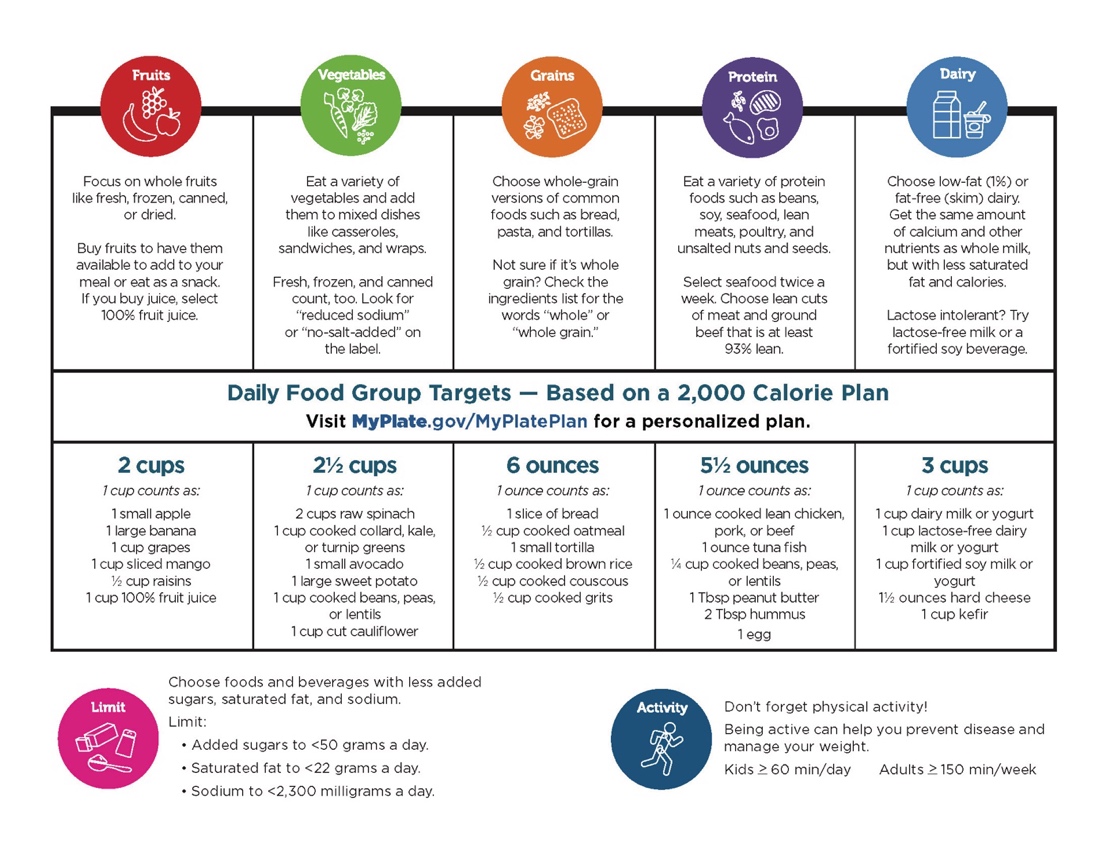
In a 2000 calorie diet, 7-9 servings summed over fruits, vegetables, and grains vs. 6-7 servings summed over protein and dairy. 3-4 servings of protein where a serving is 1 egg or 3 ounces of meat means eating a meatless 2-egg breakfast and maybe a single hamburger patty at lunch and that's pretty much your daily protein.
Hardly some carnivorous revolution.
Suffice to say, I don't think any American actually followed the old guidelines, and I doubt any will follow this one either.
[1] https://www.dietaryguidelines.gov/sites/default/files/2020-1...
Meat contains essential fats to various degrees while protein powder does not at all. Usually, protein powder ([1] as an example) is not exactly matched to the human profile of amino acids [2], that means extraneous amino acids will be converted to glucose and stored as fat.
[1] https://explosivewhey.com/blogs/fitness-nutrition/what-is-wh...
[2] https://pmc.ncbi.nlm.nih.gov/articles/PMC11291443/
Notice that ratio between leucine and methionine is 3/1 in consumption profile and is much higher in the whey protein profile. This leucine most probably will be wasted.
"Industrially manufactured food products made up of several ingredients (formulations) including sugar, oils, fats and salt (generally in combination and in higher amounts than in processed foods) and food substances of no or rare culinary use (such as high-fructose corn syrup, hydrogenated oils, modified starches and protein isolates)..." [1]
[1] https://en.wikipedia.org/wiki/Nova_classification
I highly recommend Chris van Tulleken's Ultra-processed people for a more indepth read on this fat correlation (excuse the pun :))
If we assume that lions' best diet is beef [1], then chicken [2] would be less optimal for them.
[1] https://tools.myfooddata.com/protein-calculator/171797/100g/...
[2] https://tools.myfooddata.com/protein-calculator/171140/wt9/1
Look at the amino acid ratios. Leucine to valine ratio is about 0.66 for chicken and 0.8 for beef. This means that protein synthesis will be bound by valine in case of chicken and what is not used in the protein synthesis will be converted to glucose and then stored as fat. Chicken will be about 80% (0.66/0.8) as nutritious as beef, judging just by two essential amino acids ratio.
At least aspartame increases insulin secretion in them.
But why use one of your best resources for research..
https://nutritionsource.hsph.harvard.edu/healthy-eating-pyra...
On the other hand, potatoes are down to near zero this year (bullwhip effect, last year there were crop failures and prices were way up so farmers planted more potatoes). Doesn't necessarily translate to consumer prices but nobody considers potatoes to be expensive anyway.
Many foods in the United States are sweetened with high fructose corn syrup (which is very cheap compared to cane sugar because growing corn is very cheap in the United States because of climate, infrastructure, and extensive government subsidies). In soft drinks, the syrup is roughly 55% fructose, 45% glucose.
Table sugar is usually sucrose, which is a compound sugar (disaccharide) comprised of one fructose and one glucose molecule. In many bottled soft drinks, the low pH of the beverage hydrolyzes the sucrose into its component sugars, resulting in a solution of 50% fructose and 50% glucose.
Chemically, we're comparing a 55/45 mixture of fructose and glucose to a 50/50 mixture of fructose and glucose. HFCS has become a bogeyman in American society, but evidence since the 1980s seems to show that, when it comes to soda, the excess fructose isn't nearly as bad as the whole "recreationally drinking 40g of instantly available sugar" part.
Mexican coke does taste different, but it may have more to do with the other flavorants and the bottling process than the source of the sugar.
Here's a fantastic video about this all: https://www.pbs.org/video/everyone-is-wrong-about-mexican-co...
Edit: I found a cool 2014 study that actually assayed the sugar content in various soda pop brands: https://www.sciencedirect.com/science/article/pii/S089990071...
Looks like some HFCS-sweetened soda pop has up to a 70/30 fructose/glucose ratio. It's also worth noting that corn syrup contains maltose and various polysaccharides not present in table sugar, but I think most of that is refined out in colas, since there only seems to be 1% maltose present in the colas analyzed by this paper.
AGEs are also present in vegetables and legumes, but certain meats like bacon contain unbelievable amounts relative to other foods. (Interestingly: Rice contains almost no AGE's.)
Full guide: https://pmc.ncbi.nlm.nih.gov/articles/PMC3704564/
Sure, but these companies mostly want to engineer the cheapest shit they can legally sell. It's also valid from regular food, it's a race to the bottom, and that's why veggies/fruit are less and less nutritious over the years
https://pmc.ncbi.nlm.nih.gov/articles/PMC10969708/
> It matters because a lot of people can't afford the diet suggested here.
#1 economy in the world baby!!! 75% of your country is overweight or obese but somehow they can't "afford" good food
It feels a bit Orwellian in some way - Oceania is always the enemy, Saturated fat was never the enemy.
Meat is ok, I try and consume fish and chicken with the odd bit of beef, but the amount of chemicals that goes into processed meat like sliced ham would make a chemist blush.
I wrote a light hearted blog piece just before the new year on giving up processed meat if anyone is interested:
https://tomaytotomato.com/no-ham-anuary/
Also mandatory South Park clip:
[1]: https://www.reuters.com/world/china/brazil-surpassing-us-top...
Probably most of them, but definitely not all of them. https://nltimes.nl/2025/08/18/dairy-cows-netherlands-never-g...: “The total number of dairy cows in the country reached 1.5 million last year. Of these, over 460,000 cows—roughly 31 percent of the national herd—did not spend any time outside“
A factor with cows kept for milking is that you want them to be able to walk to the milking robot at all times, and moving food to where the robot and the cows are can be easier than moving the robot to where the food and the cows are.
There's no way this is true, so I looked up nutrition facts-
A 12oz can of coke has 39g added sugars and chocolate milk has 6 grams added sugars for the small cartons they have at schools.
This is the first chocolate milk I found - https://www.kleinpeterdairy.com/products/fresh-delicious-mil...
In other words, coke has more than six times the added sugar as chocolate milk in containers that they are readily available in.
Btw, Mountain Dew has 46 grams sugar per can.
Milk Sugar Content (per 8 oz. serving): 24 grams sugar (12 grams natural sugar, 12 grams added sugar)
According to https://www.nhs.uk/live-well/eat-well/food-types/how-does-su...:
    Adults should have no more than 30g of free sugars a day,
    (roughly equivalent to 7 sugar cubes).

    Children aged 7 to 10 should have no more than 24g
    of free sugars a day (6 sugar cubes).
one by one
completely untrustworthy
I fully expect weather .gov at some point to be taken over, nothing is sacred with these a-holes
https://404media.co/dhs-is-lying-to-you-about-ice-shooting-a...
impeach them all
European NutriScore "assigns products a rating letter from A (best) to E (worst), with associated colors from green to red. High content of fruits and vegetables, fibers, protein and healthy oils (rapeseed, walnut and olive oils) per 100 g of food product promote a preferable score, while high content of energy, sugar, saturated fatty acids, and sodium per 100 g promote a detrimental score." https://en.wikipedia.org/wiki/Nutri-Score
Thats right. It was replaced 20 years ago by https://en.wikipedia.org/wiki/MyPyramid
> There’s no vaccine that is safe and effective. [interviewer pushes back, brings up polio vaccine] So if you say to me, “The polio vaccine, was it effective against polio?” I’m going to say, “Yes.” And if say to me, “Did it cause more death than avert?” I would say, “I don’t know, because we don’t have the data on that.”
> The most popular vaccine in the world is the DTP vaccine. [...] That vaccine caused so many injuries that Wyeth, which was the manufacturer, said to the Reagan administration, “We are now paying $20 in downstream liabilities for every dollar that we’re making in profits, and we are getting out of the business unless you give us permanent immunity from liability.” And by the way, Reagan said at that time, “Why don’t you just make the vaccine safe?” And why is that? Because vaccines are inherently unsafe. They said, “Unavoidably unsafe, you cannot make them safe.”
Not going quote the whole thing because it's long, but he repeatedly drives home his point that all vaccines are inherently unsafe, and the injuries and deaths they cause always outweigh their effectiveness against disease.
- https://lexfridman.com/robert-f-kennedy-jr-transcript/
> I see somebody on a hiking trail carrying a little baby and I say to him, ‘Better not get him vaccinated.’ And he heard that from me. If he hears it from 10 other people, maybe he won’t do it, you know, maybe he will save that child.
> If you’re one of 10 people that goes up to a guy, a man or a woman, who’s carrying a baby, and says, ‘Don’t vaccinate that baby,’ when they hear that from 10 people, it’ll make an impression on ‘em, you know. And we all kept our mouth shut. Don’t keep your mouth shut anymore. Confront everybody on it.
- https://www.listennotes.com/podcasts/the-way-forward/hffh-th... timestamp 11:54, 13:30
This one is interesting because the interviewer prompts him with something like "we aren't anti-vaccine, we just want to make sure they're safe" and he does not agree, he repeatedly says, with no qualification, "tell everyone not to vaccinate their children".
I don't believe he has ever voluntarily made a positive public comment about any vaccine. He did during his confirmation hearing, but he was obviously heavily incentivized to do so. During that hearing he did not say his opinion had changed, he simply lied about all past comments and claimed they never happened.
"high scores: braised eye-of-round steak 40.62; broiled t-bone steak (porterhouse) 32.11; grilled lean steak 31.0 " numbers are grams per hundred grams or wiki also reports 25% as the average, thus your factor of 2 error in weight (400 instead of 200).
Sincerely,
You-cannot-read-or-convert-units-or-gather-info-correctly
https://en.wikipedia.org/wiki/List_of_foods_by_protein_conte...
> The DGAs recommend a variety of animal source protein foods (ASPFs) and plant source protein foods (PSPFs) to provide enough total protein to satisfy the minimum requirements set at the Recommended Dietary Allowance (RDA) of 0.8 g/kg body weight for adults and to ensure the dietary patterns meet most nutrient needs [3, 4]. However, over the past 20 years, an extensive body of research has underscored the unique and diverse metabolic roles of protein, and now there is compelling evidence that consuming additional foods that provide protein at quantities above the RDA may be a key dietary strategy to combat obesity in the U.S (while staying within calorie limits by reducing nutrient-poor carbohydrate foods). Instead of incorporating this approach, the past iterations of the DGAs have eroded daily protein quantity by shifting protein recommendations to PSPFs, including beans, peas, and lentils, while reducing and/or de-emphasizing intakes of ASPFs, including meats, poultry, and eggs. The shift towards PSPFs was intended to reduce adiposity and risks of chronic diseases but was primarily informed by epidemiological evidence on The Scientific Foundation for the Dietary Guidelines for Americans, 2025–2030: Appendices | 350 dietary patterns, even in some cases when experimental evidence from randomized controlled trials (RCTs) was available to more specifically inform this recommendation. Another key aspect that DGA committees have inadequately considered are the nutrient consequences when shifting from ASPFs to PSPFs. ASPFs not only provide EAAs, they also provide a substantial amount of highly bioavailable essential micronutrients that are under-consumed. Encouraging Americans to move away from these foods may further compromise the nutrient inadequacies already impacting many in the U.S., especially our young people. Compounding this is the recent evidence highlighting the fallacies of using the unsubstantiated concept of protein ounce equivalents within food pattern (substitution) modeling, leading to recommended reductions in daily protein intakes and protein quality since ASPFs and PSPFs are not equivalent in terms of total protein or EAA density. Given that 1) there is no Tolerable Upper Intake Level (UL) for dietary protein established by the Dietary Reference Intakes (DRIs) and 2) consuming high quality ASPFs above current recommendations has shown no negative health risks in high quality RCTs, it’s unclear as to why previous DGAs encouraged shifts in protein intake towards limiting high quality, nutrient dense ASPFs. It's essential to evaluate the evidence to establish a healthy range of protein intake and to substantiate whether or not limiting ASPFs is warranted and/or has unintended consequences. An alternative approach that may be more strongly supported by the totality of evidence is the replacement of refined grains with PSPFs like beans, peas, and lentils. Given their nutrient dense profile (e.g., excellent source of fiber, complex carbohydrates, & folate, etc.; good source of protein) nutrient dense PSPFs complement but do not replace the nutrients provided in ASPFs (i.e., excellent source of protein, vit B12, zinc, good source of heme iron, etc.). By including high quality, nutrient dense ASPFs as the primary source of protein, followed by nutrient dense PSPFs as a replacement for nutrient-poor refined grains, a higher-protein, lower-carbohydrate dietary pattern can be achieved which likely improves nutrient adequacy, weight management, and overall health. -- https://cdn.realfood.gov/Scientific%20Report%20Appendices.pd... Appendix 4.9
https://pmc.ncbi.nlm.nih.gov/articles/PMC8805510/
> Conclusions: As observed from the food availability data, processed and ultra-processed foods dramatically increased over the past two centuries, especially sugar, white flour, white rice, vegetable oils, and ready-to-eat meals. These changes paralleled the rising incidence of NCDs, while animal fat consumption was inversely correlated.
Here's a site where you can view vaccine schedules across Europe: https://vaccine-schedule.ecdc.europa.eu/
The only outlier is Hepatitis A, which is still recommended in some European countries. On the reverse side, the meningococcal vaccine is commonly scheduled in Europe but not in the US.
You know how people like cold pressed extra virgin olive oil? Or avocado oil? Those are "high quality". Industrially refined/deodorized/hexane-extracted soybean, corn, non-high-oleic sunflower/safflower oil, canola tend to be considered to be on the opposite end of the spectrum.
Deodorizing causes the oil to oxidize, as does deep frying, and that makes a variety of nasty byproducts that seem likely to cause systemic inflammation. And from here on HN the other day, "Inflammation now predicts heart disease better than cholesterol" https://www.empirical.health/blog/inflammation-and-heart-hea...
People in this thread are scoffing at RFK saying that beef tallow fries are "healthy", and while I wouldn't go that far, there seems to be good evidence that it's much healthier to deep fry in beef tallow than the soybean oil most switched to in the 90s. Beef tallow is high in saturated fat, which tends to be relatively stable under heat, and very low in polyunsaturated fats, which tend to be the fats that oxidize the worst. Soybean oil, on the other hand, is extremely high in polyunsaturated fat (60% vs 2-4% for beef tallow). And the big problem with commercial deep frying is that the oil is frequently just topped off rather than replaced, so those oxidization byproducts build up over time. More stable fat is really important there.
I also don't know how relevant this is, but soybean frying oil tends to have silicone-based anti-foaming agents mixed in (polydimethylsiloxane is the one I've seen most commonly) - you can find this in the big jugs at Costco if you want to check it out. Silicone generally doesn't seem great to be swallowing - I think it's pretty inert, but it seems likely to me to have mechanical properties that your body's not quite used to dealing with effectively. This is just me being biased about eating something that's pretty obviously not food, though, I haven't seen much on the subject.
Hydrogenated oils are now well known to be bad (trans fats). So Crisco/creamed vegetable shortening, very low quality.
So yeah, there are higher and lower quality oils, especially once they've been degraded via high heat over a long period and oxygen exposure in commercial or industrial frying processes.
If we phrased it from a carbon perspective that would probably help it be more popular, at least for beef which is a huge methane emitter.
This is entirely top-down totalitarian shit.
https://en.wikipedia.org/wiki/Gleichschaltung
> [T]he secret of propaganda [is to] permeate the person it aims to grasp, without his even noticing that he is being permeated. Of course propaganda has a purpose, but the purpose must be concealed with such cleverness and virtuosity that the person on whom this purpose is to be carried out doesn't notice it at all.
Note well that something being true, or false, or rooted in truth or falsehood has no bearing whatsoever on whether or not something is propaganda, or can serve as effective propaganda.
Cardiovascular disease is the NUMBER ONE cause of non-accidental death in adults. It kills almost twice as many as cancer. Recommending high cholesterol foods as staples is grossly irresponsible and will result in millions, perhaps billions of curtailed life-years.
The latest conclusion seems to be that the deadly combo is ultra processed foods with high calorie density. That’s what causes us to overeat garbage. Ultra processed low calorie foods are often still junk, but not what is killing us.
https://peterattiamd.com/high-protein-diets-and-cancer-risk/
> Health Secretary Robert F. Kennedy Jr. has directed the Food and Drug Administration to review the nutrients and other ingredients in infant formula, which fills the bottles of millions of American babies. The effort, dubbed “Operation Stork Speed,“ is the first deep look at the ingredients since 1998.
> “The FDA will use all resources and authorities at its disposal to make sure infant formula products are safe and wholesome for the families and children who rely on them,” Kennedy said.
https://news.wttw.com/2025/06/03/kennedy-has-ordered-review-...
You need at least 0.8g / kilo (referring to 0.4g / pound) if you are doing nothing heavy, like walking to the office.
If you do moderate sports, you are hitting 1.0g / kilo immediately.
If you do some more extensive sports, like 3 - 4 days / week in gym, you jumü to 1.2 - 1.4g / kilo.
Bodybuilders are quite above :-))
Regarding the number of chicken breasts - scary for me, Im enough with a half one every second or third day.
There was a great movie about vegan & bodybuilding with known sports people: The Gamechangers - https://en.wikipedia.org/wiki/The_Game_Changers
red meat and colorectal cancer https://pmc.ncbi.nlm.nih.gov/articles/PMC4698595/
> As a summary, it seems that red and processed meats significantly but moderately increase CRC risk by 20-30% according to these meta-analyses.
red meat cardiovascular disease, and diabetes: https://pubmed.ncbi.nlm.nih.gov/37264855/
> Unprocessed and processed red meat consumption are both associated with higher risk of CVD, CVD subtypes, and diabetes, with a stronger association in western settings but no sex difference.
[1]https://link.springer.com/article/10.1186/1741-7015-11-63?ut...
They are against transit funding, urbanism, bike lanes, etc, and are pro-automobile and pro-car-dependency. Remember when Republicans literally killed high speed rail in Ohio?
They are essentially anti-city almost as a base concept. See all their political jabs at cities like New York, Chicago, and San Francisco. One of the healthiest states in terms of obesity rates, California, is the party's punching bag.
The party is trying to end ACA subsidies and is against universal healthcare and access to preventative care. How will Americans access dieticians and nutritionists if they can't afford private health insurance?
How will Americans eat real food if Republicans decide to hold food stamps hostage every time there is a budget dispute?
Trump himself is known to be anti-exercise on a personal level. [1]
[1] https://nypost.com/2026/01/01/us-news/president-trump-explai...
Cranberry's & nut mix - 34g (total) have 8g of protein
1 cup of milk - roughly 8g of protein
This is a pretty light breakfast of 16g of protein. How about a 'big, bold breakfast':
2 eggs - 12 g of protein
4 bacon strips - 12 g of protein
1 cup of hash browns - 3 g of protein
(other carbs pancakes etc going to have < 1g of protein)
So in the 'big, bold breakfast' => 27 g of proteins, I would be 3g behind my daily, average protein intake for the morning.
2 hamburgers for lunch, that's 30g of protein, keeping me close to my daily, average protein intake for lunch.
8 oz steak for dinner, thats 56g of protein.
In total: 27+30+56 = 112g of protein, just 4 g over needed daily, average intake of protein.
Resisting the sarcasm, this is not reasonable.
[1] Perkins https://perkinsmenus.com/hearty-mans-combo/#:~:text=Two%20eg...
https://food-guide.canada.ca/en/
Ctrl+F'd and didn't see any of those words mentioned a single time either. What a corrupt country Canada is.
What is the top thing shown on the plate here?
One common description is that it includes lots of ingredients you wouldn't find in your kitchen.
It sometimes also includes ingredients that have been turned into extremely fine powder, and other very heavy industrial processing. My way of thinking of this is: adults shouldn't eat baby food. Some fast food essentially becomes way to easy to absorb.
I think this interview had a really good description about the problems of the "ultra-processed" label.
https://www.youtube.com/watch?v=JAPgzCiSk9Y&t=377s
But at least the label is triggering some interesting discussions and awareness about bad aspects of industrial fast food.
In OP, they say "Protein target: ~0.54–0.73 grams per pound of body weight per day". Given that an average male weighs 200lbs in the US[1], we're looking for 108-146g protein/day. If your protein only comes from chicken breasts, and given that an average (52g) chicken breast has 16g of protein[2], you'd have to eat 8 chicken breasts per day to fulfill those requirements. Factoring in your other meat (something with lunch, and a bit from other sources like cheese), if you skip meat in your breakfast, yeah, you'd need like four with dinner to hit targets.
Your diet is your business of course, but I'd consider tracking your diet for a few days to see how the numbers add up.
[1] https://www.cdc.gov/nchs/fastats/body-measurements.htm
[2] values for "1 unit", whatever that is: https://fdc.nal.usda.gov/food-details/171477/nutrients
No, I bought a kitchen scale and did everything by weight, it seemed like the only sensical solution. This is probably a good time to plug Cronometer! I'm not affiliated, just been a happy paying customer for a few years now. https://cronometer.com/
For fried food, I'd worry way more about the raw caloric density and the overeating that can be induced by hyperpalatable foods[1] than oxidation.
The buffoonery continues. These irrational statements are straight out of the meat industry playbook - of course again lacking in any credible citations. And all you had to do was spend even 5 seconds reading a public encyclopedia to avoid this embarassment https://en.wikipedia.org/wiki/Phytoestrogen#Effects_on_human...
https://youtu.be/sGG-A80Tl5g?si=yFnHO9cX3apu1yBh
I think cows get to much blame
Pizza as a vegetable was 2011[0], so Obama years. And the ketchup was Reagan as president, not governor.
Note that this legislation did not classify pizza as a vegetable ... it disallowed regulations that would have made the amount of tomato paste in pizza no longer be classified as a vegetable (i.e., it continued to be so classified) ... but the disallowed change in regulations still would have classified a larger (4x) amount of tomato paste to be classified as a vegetable. And of course tomato paste is not the same thing as catsup (or ketchup).
And then my point was about the huge amount of added sugars.
Anyway the government dipped into the stockpiles and all is good now.
https://www.researchgate.net/figure/PDCAAS-values-for-variou...
> And the big problem with commercial deep frying is that the oil is frequently just topped off rather than replaced, so those oxidization byproducts build up over time.
> polydimethylsiloxane
> Safety and environmental considerations: According to Ullmann's Encyclopedia of Industrial Chemistry, no "marked harmful effects on organisms in the environment" have been noted for siloxanes. PDMS is nonbiodegradable, but is absorbed in waste water treatment facilities. Its degradation is catalyzed by various clays.[49] The 2020 re-evaluation of food additive purposed PDMS (E 900) by the European Food Safety Authority found no safety concerns with PDMS in food for its reported use cases, although they did recommend the setting of a maximum limit for potentially toxic cyclopolysiloxanes in E 900 leftover from the manufacturing process.