zlacker

[parent] [thread] 172 comments
1. acabal+(OP)[view] [source] 2023-05-18 15:44:13
I've been railing against cars in the US for years and years. The thing is that today most people in the US under the age of 60 grew up in cars, usually in a suburban environment, and it's actually impossible for them to imagine what life without a car might even look like. It's like trying to describe a color. If we can't even visualize an alternative, how are we supposed to achieve the alternative?

Only by traveling to places that were developed before cars took a chokehold on the world can people realize how nice it is to live without them absolutely everywhere.

Many Americans get a taste of that when they vacation to Europe. They often choose to leave their suburb and spend their 2 weeks in urban environments like Barcelona, London, Munich, Paris, Rome, etc., that where built for people and not cars, because it's so pleasant to live like that, and because letting cities develop for people first leads to cities that people actually want to be in, with car-free streets, plazas, promenades, etc. (Yes, today those places are also full of cars. But, unlike American cities, their skeletons are people-first and cars are the invasive element.)

It could be argued that so many problems of American life - weight gain, loneliness, fracturing of the social fabric - stem from how we've isolated ourselves in unwalkable suburbs, where there's no spontaneous social interaction because everyone's always in a car, and where our only exercise is the walk from the parking lot to our desk.

What's depressing is visiting developing countries and seeing them start to ape the worst of American car life. Places like Colombia, which I visit often, are building shopping malls, big-box stores, parking lots, suburbs, and freeways, while after almost 100 years of that type of car-first development in America we're only just starting to realize that actually it might not be that great.

replies(16): >>Tade0+HU >>bluGil+yf1 >>lotsow+tj1 >>pyuser+wm1 >>User23+8n1 >>thomas+Cq1 >>cpursl+vs1 >>thefou+Ut1 >>cal5k+bu1 >>mixmas+Oz1 >>UncleO+0B1 >>cscurm+fB1 >>phpist+BG1 >>odessa+3H1 >>johnwa+3I1 >>fooker+nM1
2. Tade0+HU[view] [source] 2023-05-18 19:47:58
>>acabal+(OP)
> Many Americans get a taste of that when they vacation to Europe.

What I don't like about this is that people (even urbanist bloggers) tend to form their opinions on their experience as tourists, while reality is much more nuanced and full of tradeoffs.

Case in point: I once visited my friend in Bilbao and the one thing I couldn't get over was that despite this being a beautiful, walkable, full of life city jobs were hard to come by and low-paid. Youth unemployment in particular in Spain stands at a whopping 46%.

replies(2): >>karmel+oW >>bombca+Fg1
◧◩
3. karmel+oW[view] [source] [discussion] 2023-05-18 19:55:32
>>Tade0+HU
Were jobs hard to come by in that city because it was walkable, beautiful, and full of life? I'm guessing not, and there are other factors causing that.

NYC is beautiful, walkable, full of life, and you sure can find a job there. Same with the Boston area.

I've lived in both walkable and car-dependent areas for years. I am one of the people who grew up in a car-dependent small city who couldn't imagine not owning a car 10 years ago.

Now that I've lived in both, sure, there might be tradeoffs living in a walkable neighborhood, but if you build a neighborhood with the amenities you need, walking for most things is simply amazing. Having a car is useful for getting out, but it now becomes a "once in awhile" thing, almost a luxury, if you have a nice market and some restaurants nearby. And then you can do things like ZipCar or other options for the rare times you need to drive.

replies(2): >>ghaff+Sm1 >>Tade0+7p2
4. bluGil+yf1[view] [source] 2023-05-18 21:37:17
>>acabal+(OP)
There are walk-able tourist areas in the US as well that people enjoy, but couldn't imagine living in. The reality in Europe is cars are still the dominate mode of transport for most people. Even if the best walk/bike/transit cities cars have a very large mode share.
replies(2): >>scyzor+2l1 >>diggin+Or1
◧◩
5. bombca+Fg1[view] [source] [discussion] 2023-05-18 21:42:55
>>Tade0+HU
Rome is fantastic to visit as a tourist. But I've visited for work, and everyone I interacted with drove from home to work, because they didn't live or work in the central old-town tourist areas but out in the CBD and other parts of the city.
replies(1): >>bertil+dm1
6. lotsow+tj1[view] [source] 2023-05-18 21:56:57
>>acabal+(OP)
I dunno. I’ve been to all of those European cities and they were nice to visit for a week as a tourist but the density along with everything that goes with it: noise, smells, crowds etc were always a reminder that I only want to be there on a brief visit. I’m my suburban city, I simply hop in my vehicle and can be anywhere I want in 3-15 minutes.
replies(6): >>bertil+wl1 >>diggin+ym1 >>davidw+0n1 >>acabal+sr1 >>ivirsh+tv1 >>epolan+ez1
◧◩
7. scyzor+2l1[view] [source] [discussion] 2023-05-18 22:04:40
>>bluGil+yf1
As a European and as an American… I agree! Sort of - there really are far more walk-able spaces here in the EU in cities.

But if anything, Europe is too car centric as well. The consumer upper middle class and child bearing families still seek out suburbs unfortunately.

I always talk about this but live in a utopian dystopian socialist modernist neighborhood complex from the 1960’s. There is a health clinic downstairs, schools, library, market-shops, park areas all 5 minute elevator ride down. Most residents still have cars unfortunately - the parking area is packed with them.

◧◩
8. bertil+wl1[view] [source] [discussion] 2023-05-18 22:06:42
>>lotsow+tj1
> noise, smells, crowds

Those are caused mainly by cars. Take away the cars and there’s a lot more space and fresh air for everyone.

replies(1): >>sokolo+2r1
◧◩◪
9. bertil+dm1[view] [source] [discussion] 2023-05-18 22:10:16
>>bombca+Fg1
Rome is an excellent example of a city with an extensive local rail system that everyone would love to use. Still, disinvestment and lack of organization have made it unreliable and unusable.

Every time I go there, I make a point of using public transport, and it’s maddening how a 20-minute journey by bus becomes hellish because the station was moved, but no one knows why or where or cares.

It doesn’t need more than someone in charge who cares.

replies(1): >>bombca+zp3
10. pyuser+wm1[view] [source] 2023-05-18 22:11:24
>>acabal+(OP)
I live in a city which has horrible public transit. It’s the result of faddish idea after faddish idea.

The reforms and improvements have consistently made things worse.

Now the city is completely changing bus routes.

Maybe you’ll have a ride to work. Maybe not. Maybe it will be quick. Maybe not.

People’s entire lives are being rearranged.

The folks at the lowest level of importantance are folks who send their kids to private schools.

The municipality is like “not our problem - public schools offer free transit. You’re chosing to send your kid to a private school, you drive them yourself.”

Note how the city is telling people to use cars, not public transit, because the city doesnt endorse what they’re using it for.

And if you want to take a bus to church Sunday morning? Hahahahahah! There would probably be a lawsuit from church/state people.

Etc.

I simply don’t have confidence public transit will be there when I need it.

replies(1): >>myroon+xs1
◧◩
11. diggin+ym1[view] [source] [discussion] 2023-05-18 22:11:41
>>lotsow+tj1
A well designed city makes most errands faster on foot than in a car.

Even when cars are prioritized, traffic makes even the smallest errands a problem eventually; roads simply don't scale.

And cars are by far the loudest thing about cities at almost all times. They make the very air hostile with pollution and heat. And, worst of all:

> I simply hop in my vehicle and can be anywhere I want in 3-15 minutes

You do this at the direct expense of everyone else in your city. You make the streets unwalkable and the city unlivable. You are insulated from the sounds and dangers that you are creating around you. (I'm just using you as an example, I don't actually blame you for taking the only option you've been given.)

replies(2): >>HPsqua+Yq1 >>ilyt+Hv1
◧◩◪
12. ghaff+Sm1[view] [source] [discussion] 2023-05-18 22:13:18
>>karmel+oW
And pretty much all the people I know in Boston also own cars because they visit friends outside of the city, go out of town for weekend activities that often involve transporting a lot of gear, etc. So, yeah, you can get by day to day but people I know also want a car.
replies(3): >>Karrot+iq1 >>tomthe+qw1 >>Symbio+tB1
◧◩
13. davidw+0n1[view] [source] [discussion] 2023-05-18 22:14:14
>>lotsow+tj1
I lived in Italy for a number of years, and it's not noisier or smellier than where I now live in Oregon. Truth be told, it was quieter because here in Bend, Oregon, there's a "parkway" that runs right through town and even though we're not at all right next to it, it's quite loud with car noises when the wind blows right (wrong).

Italy isn't perfect and I could talk about that country's problems a lot, but in terms of transportation, it was more a "right tool for the job" place than here, where we'd walk to many things, ride bikes to others, take the train occasionally, city busses some, and yes, use the car too for some stuff.

replies(1): >>RigelK+IA1
14. User23+8n1[view] [source] 2023-05-18 22:14:48
>>acabal+(OP)
It's easy for extraurban people to imagine what life without a car is like because the Amish are a thing. And most people don't want that lifestyle.
◧◩◪◨
15. Karrot+iq1[view] [source] [discussion] 2023-05-18 22:30:34
>>ghaff+Sm1
There's nothing wrong with that either. The Dutch, known for their bike and ped friendly streets and great transit, are also known to love their summer trips where they drive around and tow camping trailers. Japanese families in less urban areas frequently have a car for family trips or for shopping for home goods. There's no way transit will ever completely displace the car, the economics will never pencil out.

Having the option to drive when there's copious amounts of transit is empowering. It lets you go hiking into the mountains where it wouldn't be economical to run even a bus at greater than 1 hr headways or haul your ski and snowboarding equipment to the slopes. It lets you ferry around your aging parents who are starting to have cognitive issues. It means when your children are still very young you can keep them from being a nuisance on the bus. Being forced to drive because there's no transit and you know your brake pads are shot and scraping against your rotors but you don't have the money or time to fix your car is dreadful.

16. thomas+Cq1[view] [source] 2023-05-18 22:32:29
>>acabal+(OP)
> What's depressing is visiting developing countries and seeing them start to ape the worst of American car life.

A lot of bad decisions were made in Europe stemming from American city planners after the second world war. Like David Jokinen's influence on Amsterdam and The Hague: https://viewpointvancouver.ca/2019/10/27/the-1960s-when-the-...

It's strange that people are so eager to export (and import) urbanism ideas around the world without much understanding of the cultural differences and needs.

replies(2): >>diggin+Ls1 >>milkyt+Tu1
◧◩◪
17. HPsqua+Yq1[view] [source] [discussion] 2023-05-18 22:33:44
>>diggin+ym1
Car-centric design makes things unwalkable; other models make things undriveable. It's a competition.
replies(6): >>diggin+lr1 >>acabal+As1 >>cpursl+5t1 >>fomine+AI1 >>mperha+zM1 >>Moldot+To2
◧◩◪
18. sokolo+2r1[view] [source] [discussion] 2023-05-18 22:33:57
>>bertil+wl1
I visit Amsterdam periodically for business. In the city center, where there are very few cars, there is far more noise, smells, and crowds than I would care to live with everyday.

Density of people brings those three annoyances, cars or no cars.

replies(2): >>cpursl+gt1 >>webdoo+6B1
◧◩◪◨
19. diggin+lr1[view] [source] [discussion] 2023-05-18 22:35:39
>>HPsqua+Yq1
Undriveable isn't bad though. We don't really get any value from driving for everyday trips over walking/biking/transit. And any decent walkable designs don't prohibit necessary driving such as delivery and emergency services, so they're not truly undriveable. It is a competition, but dying from cancer is also a form of competition. We don't always have to give both sides equal standing.
replies(1): >>google+2w1
◧◩
20. acabal+sr1[view] [source] [discussion] 2023-05-18 22:36:04
>>lotsow+tj1
For those who live in such cities (and not just visit), everything they want to do is a 3-15 minute walk, not a drive. You can get groceries, stop at a cafe, go to a doctor's appointment, and pick up your kids from school (or better yet, they can walk themselves, because their school is nearby and getting killed by speeding SUVs is not a concern) - all within a 15 minute radius. If the walk is truly too far, a metro stop is often nearby.

Living in such places is eye-opening!

replies(3): >>carlos+ix1 >>bombca+r62 >>lotsow+uc2
◧◩
21. diggin+Or1[view] [source] [discussion] 2023-05-18 22:37:57
>>bluGil+yf1
> There are walk-able tourist areas in the US as well that people enjoy, but couldn't imagine living in.

Like Disneyland? Of course nobody could live there. But actual walkable neighborhoods tend to be prohibitively expensive because they're extremely desirable.

replies(1): >>bluGil+XV1
22. cpursl+vs1[view] [source] 2023-05-18 22:41:33
>>acabal+(OP)
You are spot on - I have a thesis that most of Americas issue stem from its poorly thought out build environment.

Recommended reading:

https://www.goodreads.com/book/show/125313.The_Geography_of_...

◧◩
23. myroon+xs1[view] [source] [discussion] 2023-05-18 22:41:39
>>pyuser+wm1
Feels like you're taking reasonable prioritization personally. Over 90 percent of students attend public school:

https://nces.ed.gov/fastfacts/display.asp?id=55

And private school attendance is mostly higher income families:

https://www.educationnext.org/who-goes-private-school-long-t...

Unfortunately public transportation resources are limited, but prioritizing the vast majority of lower income public school routes over the vast minority of higher income private school routes makes sense

replies(2): >>pyuser+4y1 >>pfannk+gA1
◧◩◪◨
24. acabal+As1[view] [source] [discussion] 2023-05-18 22:41:47
>>HPsqua+Yq1
The point is that driving should not be required to live a full life, and in fact it's much more pleasant to live without cars everywhere.

The goal of driving is to get from point A to point B. But when point A and point B are a 5 minute walk, why drive at all? Well, in America we designed our cities and suburbs to make the distance between A and B as large as possible. But we didn't have to do that!

replies(1): >>chung8+3z1
◧◩
25. diggin+Ls1[view] [source] [discussion] 2023-05-18 22:43:01
>>thomas+Cq1
Because it feels like prosperity. In a town with no public transportation and very few cars, getting a car would feel awesome. And it's just a lot easier for 1 well-off person to buy 1 car than for the entire town to get good public transit.
replies(1): >>thomas+lt1
◧◩◪◨
26. cpursl+5t1[view] [source] [discussion] 2023-05-18 22:44:31
>>HPsqua+Yq1
The Netherlands begs to differ.
replies(1): >>rad_gr+Zz1
◧◩◪◨
27. cpursl+gt1[view] [source] [discussion] 2023-05-18 22:45:35
>>sokolo+2r1
That’s Amsterdam. Go visit some less touristy cities in The Netherlands.
replies(2): >>sokolo+Ou1 >>eythia+Bje
◧◩◪
28. thomas+lt1[view] [source] [discussion] 2023-05-18 22:46:07
>>diggin+Ls1
> it's just a lot easier for 1 well-off person to buy 1 car than for the entire town to get good public transit.

Sure, once the town is already built for cars. If it wasn't, having a car would be a pain with no parking and no space in the streets.

The question is why cities choose/chose to rebuild themselves for cars in the first place, and continuously in the third world as suggested by the OP and the book "Urbanism Imported or Exported: Native Aspirations and Foreign Plans" by Joe Nasr and Mercedes Volait.

replies(1): >>bombca+s72
29. thefou+Ut1[view] [source] 2023-05-18 22:48:24
>>acabal+(OP)
As someone who's lived in Manhattan, it's not all a panacea you make it out to be.

Taking the subway is a pain in the butt. If you try to come home when it's after 11pm, you get to wait 30+ min for a train.

When you want to get the groceries, you have to somehow shuffle all that stuff home, either with a cart or just have your hands suffer in the cold, and then have a four-story walk-up.

Sure, it's charming, but living there takes some real grit. By the way, those places are all expensive comparatively.

replies(5): >>progru+Qu1 >>loloqu+sB1 >>zip123+YF1 >>Tiktaa+VI1 >>theGnu+uN1
30. cal5k+bu1[view] [source] 2023-05-18 22:50:00
>>acabal+(OP)
> What's depressing is visiting developing countries and seeing them start to ape the worst of American car life.

What a patronizing take. Cars are freedom - you can go where you like, when you like, with whom you like, and you can do it without dealing with crowded, noisy, sometimes dangerous buses/trams/subways. It's as true in the developing world as it is here.

As for such things happening in Colombia, it turns out that Colombians like the same things as Americans - they just previously didn't have the money to afford them.

Like, what's the alternative? Developing economies go from grinding poverty to bicycle-centric urban planning utopia by... top-down fiat? How do you propose to stop Colombians from voting with their wallets when they choose to eat at chain restaurants, shop at big box stores and then take the freeway back to their air-conditioned 2000 sq ft houses in the suburbs? "Sorry Mr. Middle Class Colombian, I know you really like McDonalds... but trust us, we're saving you from your own bad choices."

replies(10): >>acabal+Nv1 >>geyser+cB1 >>zip123+TE1 >>Tiktaa+DI1 >>tvaugh+3L1 >>jodrel+fR1 >>Apollo+FU1 >>brails+Fk2 >>Moldot+Nn2 >>Jeremy+rz3
◧◩◪◨⬒
31. sokolo+Ou1[view] [source] [discussion] 2023-05-18 22:53:00
>>cpursl+gt1
I have. Most of them seem to be car-centric, to the point where many of my work colleagues living there don’t even have an OV card (and were shocked when I said I had one as a tourist).
◧◩
32. progru+Qu1[view] [source] [discussion] 2023-05-18 22:53:34
>>thefou+Ut1
And for women, the subway is not just a 24/7 whimsical, wild, and grimy place, like it is for me…
replies(1): >>mixmas+Bz1
◧◩
33. milkyt+Tu1[view] [source] [discussion] 2023-05-18 22:53:58
>>thomas+Cq1
> It's strange that people are so eager to export (and import) urbanism ideas around the world without much understanding of the cultural differences and needs.

It's not even just cultural differences and needs. It's the lack of questioning in decisions and groupthink.

Tax per acre used to be a metric that was used in urban planning decisions. That was mostly thrown away when people started to want cars. A primary metric then became level of service. LOS was a way to measure traffic volume but didn't necessarily mean increased net economic output, although it was nearly used as one. It doesn't paint the picture correctly for municipal urban planning in a financial sense.

For sustained economic vitality in a very simplistic form, the infrastructure and municipal services costs should be subtracted from the amount of tax revenue gained from the land. Basically, is this land making the city money or is it costing the city money. This info can be used to adjust taxes, plan better built environments, amongst other things.

If that was regularly being measured throughout the last 100 years and acted upon, I imagine much of the car dependent areas of the world would look a lot different. If you talk to urban planners today about this (which I have), many still don't use it at all.

◧◩
34. ivirsh+tv1[view] [source] [discussion] 2023-05-18 22:56:04
>>lotsow+tj1
Currently living in Munich, it is the quietest place I ever lived. Also super clean, like more than Singapore.
◧◩◪
35. ilyt+Hv1[view] [source] [discussion] 2023-05-18 22:57:55
>>diggin+ym1
IMO the default mode of transport should be scooters. They don't take all that much space than a person(unlike car) but (like car) can move far faster

The infrastructure is all here already. They pollute less (ICE) and the no pollution electric ones are far more affordable than EVs. Like 4 of them fit in one parking space. They have storage space for some small groceries too.

Sadly winter and rain sucks.. i guess at least for rain those scooters with roofs could cover that.

replies(4): >>rad_gr+Hz1 >>akomtu+5C1 >>jodrel+bU1 >>woodru+j12
◧◩
36. acabal+Nv1[view] [source] [discussion] 2023-05-18 22:58:19
>>cal5k+bu1
> Like, what's the alternative?

This is, of course, the inability to visualize a different life that I referred to in my original post. There are many alternatives to car-oriented life, as cities that grew before cars plainly evidence. Those are the cities that people want to spend their vacations in.

Instead of building shopping malls with parking lots, Colombia could relax zoning to allow chain restaurants and McDonalds near housing, and build dedicated bike lanes to get to them. Instead of building suburbs and freeways, it could build more public space like open pedestrian plazas to give people a feeling of space, and metros/bus rapid transit to make it easy to get around. Colombians who want to live a quiet suburban-style life can still do that in a rural home, which could be connected by rail when traveling to a city is required - but their choice to live a suburban life should not require those of us in cities to give up our space for wide roads to fit their cars and endless free car storage, at the expense of our way of life.

These options aren't the only alternatives Colombians could have, nor are they a fantasy - they exist today in places like Europe and parts of Asia.

Cars are not a requirement for human flourishing. We only designed our lives to make them that way.

replies(3): >>thauma+TA1 >>lcnPyl+5B1 >>zanny+oR1
◧◩◪◨⬒
37. google+2w1[view] [source] [discussion] 2023-05-18 22:59:09
>>diggin+lr1
Some places are really hot/humid you know, it's nice not to have to bike and need a shower for a small errand
replies(2): >>alista+8B1 >>diggin+kH3
◧◩◪◨
38. tomthe+qw1[view] [source] [discussion] 2023-05-18 23:01:46
>>ghaff+Sm1
Yeah I mean that’s totally fine. When I lived in Boston it was much more common to see people rent cars for that purpose, but either way it’s completely okay.

The infrastructure should support that sort of trip out of the city. It’s intra-city car use that’s a disaster, and our infrastructure should not support that.

◧◩◪
39. carlos+ix1[view] [source] [discussion] 2023-05-18 23:06:03
>>acabal+sr1
Sorry, but I really have to ask: Why did you chose 15 minutes specifically as your time frame?
replies(2): >>sethri+Yz1 >>Symbio+JA1
◧◩◪
40. pyuser+4y1[view] [source] [discussion] 2023-05-18 23:10:52
>>myroon+xs1
Schools, public and private, generally employ their own bus drivers.

So it’s not like the anybody at the city transit office is saying “let’s divert resources from public schools to private schools.”

They’re saying “we don’t do schools at all, because the only schools we would be providing services for are private, and we don’t want to encourage people to go to private school.”

Wealthy private schools often have their own buses. Less well off ones, don’t.

So it isn’t even about benefiting the poor over the wealthy.

Catholic schools generally have their own buses, while schools affiliated with historically black churches don’t.

Regarding why I take it personally, the condescending and hostile attitude of city officials make it clear it is personal.

This is specific to where I live now. I’ve lived in places like the Bay Area and New York, and this attitude doesn’t seem to exist.

replies(2): >>bombca+172 >>brewda+gn3
◧◩◪◨⬒
41. chung8+3z1[view] [source] [discussion] 2023-05-18 23:16:29
>>acabal+As1
And it isn't. If you prioritize your life around not driving you can still live a full life.
replies(1): >>dev1n+wE1
◧◩
42. epolan+ez1[view] [source] [discussion] 2023-05-18 23:17:59
>>lotsow+tj1
Those are huge cities, smaller centers are heaven without being non sense absurdities of two story one family houses. Go to Lausanne, Geneva, Munich, Nice, etc.
replies(1): >>landem+lX1
◧◩◪
43. mixmas+Bz1[view] [source] [discussion] 2023-05-18 23:19:21
>>progru+Qu1
Uber and taxi are still around.
replies(1): >>rad_gr+mA1
◧◩◪◨
44. rad_gr+Hz1[view] [source] [discussion] 2023-05-18 23:20:31
>>ilyt+Hv1
Yeah. Screw scooters. People riding those don’t care about pedestrians. I’ve been knocked out by one of those things. They’re more dangerous than cars. Cars at least move on designated roads while scooters just zip past pedestrians and can come from anywhere at any time.
replies(2): >>alista+uF1 >>ilyt+A14
45. mixmas+Oz1[view] [source] 2023-05-18 23:21:07
>>acabal+(OP)
Washington DC is a cheaper alternative if already in North America.
◧◩◪◨
46. sethri+Yz1[view] [source] [discussion] 2023-05-18 23:22:43
>>carlos+ix1
Perhaps: https://en.wikipedia.org/wiki/15-minute_city
◧◩◪◨⬒
47. rad_gr+Zz1[view] [source] [discussion] 2023-05-18 23:22:48
>>cpursl+5t1
That’s why there’s a 5 lane highway from Utrecht to Amsterdam?
replies(1): >>cpursl+iB2
◧◩◪
48. pfannk+gA1[view] [source] [discussion] 2023-05-18 23:24:37
>>myroon+xs1
It sounds like they are specifically deprioritizing private schools below where they are in terms of natural demand though? Seems like they should they should just address areas by demand, regardless of the type of demand.
◧◩◪◨
49. rad_gr+mA1[view] [source] [discussion] 2023-05-18 23:24:56
>>mixmas+Bz1
So you still need to have cars and a city designed for them to operate. Edit: What about ambulances, police, fire service, deliveries, postal services…, public transportation…?
replies(2): >>mixmas+lE1 >>jodrel+qT1
◧◩◪
50. RigelK+IA1[view] [source] [discussion] 2023-05-18 23:26:52
>>davidw+0n1
As someone who just got back from a two-week vacation in Italy, I couldn't agree more. We did sightseeing, groceries, ate out, and travelled extensively without using a car. Public transport and walking made everything easy. It's a failure of imagination in the U.S.
replies(1): >>bombca+f62
◧◩◪◨
51. Symbio+JA1[view] [source] [discussion] 2023-05-18 23:27:10
>>carlos+ix1
Because the comment they are replying to says everything is within a 3-15 minute drive.

(I'll extend it to a ¼—15 minute walk. I happen to live above a kiosk, it is nearer than the car in the basement.)

◧◩◪
52. thauma+TA1[view] [source] [discussion] 2023-05-18 23:27:49
>>acabal+Nv1
Colombia has some astonishingly beautiful natural settings.

Surely you're not suffering from an inability to visualize vacationing outside of a city?

53. UncleO+0B1[view] [source] 2023-05-18 23:28:33
>>acabal+(OP)
> The thing is that today most people in the US under the age of 60 grew up in cars

Most of the people in the US under the age of 100 grew up in cars.

◧◩◪
54. lcnPyl+5B1[view] [source] [discussion] 2023-05-18 23:28:59
>>acabal+Nv1
Sometimes I imagine an alien visiting Earth (America) for the first time and assuming cars enslaved humanity to force us to build convenient paths for them and harvest their food and bring it to convenient locations. I don’t see a practical difference.
replies(1): >>zamnos+LE1
◧◩◪◨
55. webdoo+6B1[view] [source] [discussion] 2023-05-18 23:29:02
>>sokolo+2r1
Maybe you should move to the moon then, because you either have density that allows you to enjoy nice services and comforts or you live in the boonies where you need a car and perpetuate the inefficient consumption of resources.
◧◩◪◨⬒⬓
56. alista+8B1[view] [source] [discussion] 2023-05-18 23:29:13
>>google+2w1
So prioritize e-bikes or scooters.
◧◩
57. geyser+cB1[view] [source] [discussion] 2023-05-18 23:29:29
>>cal5k+bu1
It's not patronizing. Seeing people make mistakes (what you believe to be mistakes!) can be sad.

> without dealing with crowded, noisy, sometimes dangerous buses

Yes because cars are neither noisy or dangerous nor do the occupy any space in cities.

> Like, what's the alternative?

There are alternatives to building very car centric infrastructure.

> How do you propose to stop Colombians

He didn't.

58. cscurm+fB1[view] [source] 2023-05-18 23:29:48
>>acabal+(OP)
> It could be argued that so many problems of American life - weight gain, loneliness, fracturing of the social fabric - stem from how we've isolated ourselves in unwalkable suburbs, where there's no spontaneous social interaction because everyone's always in a car, and where our only exercise is the walk from the parking lot to our desk.

It can be argued but would be false as other societies have more of those but have less car users.

◧◩
59. loloqu+sB1[view] [source] [discussion] 2023-05-18 23:31:52
>>thefou+Ut1
> just have your hands suffer in the cold

Ever heard of gloves?

◧◩◪◨
60. Symbio+tB1[view] [source] [discussion] 2023-05-18 23:32:01
>>ghaff+Sm1
No idea about Boston, but in Copenhagen the result is a family probably owns one car for these trips, rather than two.
replies(1): >>ghaff+CC1
◧◩◪◨
61. akomtu+5C1[view] [source] [discussion] 2023-05-18 23:35:27
>>ilyt+Hv1
Are you riding a scooter for your day to day errands? How do you deal with being stuck in the 5pm traffic under 90F sun? How do you ride it when you're a bit unwell (flu, cold)? What do you do with your helmet, boots and protective gear when you go to a restaurant?
replies(2): >>alista+N53 >>ilyt+j24
◧◩◪◨⬒
62. ghaff+CC1[view] [source] [discussion] 2023-05-18 23:38:13
>>Symbio+tB1
If that's the only use, probably. Although a lot of jobs in the Boston area are in the surrounding suburbs and commuter rail is mostly unsuitable for those for people who want to live in the city.
◧◩◪◨⬒
63. mixmas+lE1[view] [source] [discussion] 2023-05-18 23:49:16
>>rad_gr+mA1
A lot fewer.

Many folks like to read these pieces from an extreme viewpoint, that they want to eliminate all cars everywhere.

A few moments thinking and you realize it would only be practical in downtowns, and alleys would still exist. Visit Wash.DC or London if still unsure. Street maps a cheap substitute.

replies(1): >>rad_gr+UE1
◧◩◪◨⬒⬓
64. dev1n+wE1[view] [source] [discussion] 2023-05-18 23:51:16
>>chung8+3z1
Unfortunately, in the U.S. this is not true.
replies(1): >>brewda+NK1
◧◩◪◨
65. zamnos+LE1[view] [source] [discussion] 2023-05-18 23:53:27
>>lcnPyl+5B1
It would be a contest with cats, whom we scoop up poop for.
replies(1): >>alexjp+gT1
◧◩
66. zip123+TE1[view] [source] [discussion] 2023-05-18 23:54:48
>>cal5k+bu1
Freedom? Cars as freedom is such a misconception. They are highly regulated. They take up so much space that they are difficult to store and require subsidized storage everywhere one goes. They create massive amounts of pollution both in particulates and noise, causing health problems to those that have to live near them. Cities are not noisy--cars are noisy. They certainly have their use but the negative externalities are exceptional and are not paid for by the users of the cars.
replies(1): >>bluGil+RX1
◧◩◪◨⬒⬓
67. rad_gr+UE1[view] [source] [discussion] 2023-05-18 23:54:49
>>mixmas+lE1
I lived in London. You have streets everywhere exactly for that odd moment when any of those services need access.
replies(2): >>kettle+pH1 >>mixmas+ZV1
◧◩◪◨⬒
68. alista+uF1[view] [source] [discussion] 2023-05-19 00:00:16
>>rad_gr+Hz1
They’re talking about Vespas not Razors.
replies(1): >>rad_gr+iG1
◧◩
69. zip123+YF1[view] [source] [discussion] 2023-05-19 00:02:35
>>thefou+Ut1
Manhattan should:

- remove 90% of street parking

- make the remaining 10% incredibly expensive and time limited to short durations which makes it so that spots are always available for someone that actually needs it for something like moving

- cut down every other road to be impassable by cars or extremely limited

- add wide, safe, protected biking/scooter lanes + bike parking in all the freed up space

- lower speed limits everywhere to cut down on noise and increase safety

replies(2): >>nayuki+VP1 >>mwbajo+0X1
◧◩◪◨⬒⬓
70. rad_gr+iG1[view] [source] [discussion] 2023-05-19 00:06:08
>>alista+uF1
How do you know what they’re talking about?
replies(2): >>alista+xG1 >>ilyt+H14
◧◩◪◨⬒⬓⬔
71. alista+xG1[view] [source] [discussion] 2023-05-19 00:08:10
>>rad_gr+iG1
Context… You can fit well more than 4 kick scooters in a parking space. And kick scooters don’t have internal combustion engines. And motor scooters usually have a storage bin under the seat big enough for a helmet or two, or two bags of groceries.
72. phpist+BG1[view] [source] 2023-05-19 00:08:47
>>acabal+(OP)
>>and it's actually impossible for them to imagine what life without a car might even look like.

I can visualize it just fine... High Density, people stacked onto of each other vertically, small dwellings where you need to shop for food every day or every few days, extreme cold or extreme heat is a problem, as is rain...

Instead i look out to my 3/4 acre homestead, lined with mature tree's and limited density... and say... yes I prefer this. I prefer going to to store every 1 or 2 weeks, I prefer not having an upstairs neighbor stomping around, I prefer not having to deal with stairs or neighbors only separated by a wall...

replies(2): >>kalenx+Dh2 >>Sidebu+Gp3
73. odessa+3H1[view] [source] 2023-05-19 00:12:35
>>acabal+(OP)
i would say bike autists equally struggle to imagine what it is like to live anywhere besides the most population-dense, infrastructurally developed 15 square miles on the face of the earth. i have a very good sense of what it is like to live without a car as i did so for 20 years and it fucking sucks. i have no desire to have to bike 10 miles in 80+ degree heat with a saxophone in one hand and a guitar in the other ever again. i have no desire to experience the vibrant living of being packed into an 11pm vomit comet ever again. i have no desire to have to pad every commute & outing with an extra 45 to 60 minutes of stops ever again.
replies(1): >>Karrot+qQ1
◧◩◪◨⬒⬓⬔
74. kettle+pH1[view] [source] [discussion] 2023-05-19 00:15:02
>>rad_gr+UE1
You're arguing against an imagined extreme. Nobody is saying "eliminate streets".

The closest thing to 'eliminating streets' you see people advocating for is streets in urban cores that are pedestrian / bicycle first and car second.

Deliveries can be still go down those streets at off hours and slowly. If necessary emergency vehicles can still access those streets and turn on their sirens to clear people out.

London and Europe have tons of streets like that and most US cities have none.

75. johnwa+3I1[view] [source] 2023-05-19 00:19:09
>>acabal+(OP)
The replies are full of people that can't imagine life without cars. I grew up in a suburb of Edmonton, I know what it's like to just "know" that cars are freedom and a way to get to ever conceivable place. I left that place 20 years ago and I could make a long reply about what it's like to live in various sized cities in Japan and Europe but let me just say that not needing a car to get from your house in a town to restaurants, grocery stores, shops, parks, etc offers much more freedom than needing a car to get to such things. And there are a lot of places where you can live in a town, even on an acreage and still be in the town and able to get to a train station to get to a nearby city, if your argument is that you can't stand cities and need your space.

Car-people can't imagine a town instead of a suburb and can't imagine that you can get from a town to a city by train or bus. Or that you don't need to travel to some far-off place with a huge car to get a ton of groceries because you can walk a few blocks and pick up the ingredients for dinner.

replies(1): >>bombca+f72
◧◩◪◨
76. fomine+AI1[view] [source] [discussion] 2023-05-19 00:22:06
>>HPsqua+Yq1
You can drive Tokyo but it's just expensive to park
replies(1): >>nayuki+nQ1
◧◩
77. Tiktaa+DI1[view] [source] [discussion] 2023-05-19 00:22:27
>>cal5k+bu1
> Cars are freedom

Only for the wealthy, and the car is the most expensive form of transportation that only the relatively wealthy have access to. For everyone else not wealthy enough to own a car the over investment in car infrastructure has made life worse and made them less free, as the under investment in transportation alternatives limits their access and ability to travel.

BBC's new season of race around the world featured Canada this year, and contestants were staggered at the lack of public transportation options, forced into illegally hitchhiking rides to finish the race. Such is the dearth of transportation options for people who do not own a car.

replies(2): >>bluGil+MX1 >>mantas+Wd2
◧◩
78. Tiktaa+VI1[view] [source] [discussion] 2023-05-19 00:24:43
>>thefou+Ut1
> you get to wait 30+ min for a train

That's an implementation detail of a very old and underinvested system.

In contrast with Vancouver's automated skytrain, waits for trains are typically 2-4 minutes.

Better things are possible

replies(1): >>mwbajo+BW1
◧◩◪◨⬒⬓⬔
79. brewda+NK1[view] [source] [discussion] 2023-05-19 00:40:57
>>dev1n+wE1
It can be but you have to make your choice of housing location priority number one. Then worry about employment, raising a family, etc. Not easy at all which is why so few do it.
replies(1): >>diggin+NH3
◧◩
80. tvaugh+3L1[view] [source] [discussion] 2023-05-19 00:45:32
>>cal5k+bu1
> What a patronizing take.

I've lived in Chile the past twelve years. I often say I feel like a time traveller. I feel like I'm from the not too distant future. Chile feels like what California felt like growing up in the 70s and 80s, only with smart phones. People here throw trash wherever ... just like we did in California in the 70s and 80s. People here love their cars, and think of them as a status symbol and an extension of their identity ... just like we did in California in the 70s and 80s. Before I came to Chile I lived in Los Angeles and had to commute each day for over an hour each way. I also lived in Amsterdam and had to commute by bike each day for 20 minutes. I never owned a car the entire time I lived there. I was much better off mentally, physically, and economically in Amsterdam for this reason alone. I was freer too. A lot has changed in Chile since I arrived, especially in car ownership, and car-centric growth. I would not say that it's natural or the obviously best choice to prefer a car-centric future. The future Chile is creating for itself is not the one I would choose. There are alternatives.

> Like, what's the alternative?

Building the infrastructure for cars is a choice. Prioritizing cars over other modes of transportation is a choice. So make different choices.

I live in a small town. It's just six square blocks, but is densely populated with multi-story condos, and lots of shops and restaurants. But the streets are filled with cars. Cars are double parked on the sidewalks, and traffic moves at a snail's pace. It's loud, dirty, and unsafe. We could easily close the streets to cars, encourage people to take mass transit (we have collectivos and busetas) by making it expensive to park outside of the town center, require the numerous gated communities nearby to incorporate more amenities, like markets and pharmacies, to discourage trips by car, make it safer to bike by building ciclovias, and so on. But we don't, because we choose not to, sadly.

replies(1): >>garte+3q2
81. fooker+nM1[view] [source] 2023-05-19 00:58:51
>>acabal+(OP)
I have grown up in a country with excellent public transport and not much personal car ownership. I currently live in US and completely disagree with your take on cars.
◧◩◪◨
82. mperha+zM1[view] [source] [discussion] 2023-05-19 01:01:29
>>HPsqua+Yq1
Except driving is the only transportation option which regularly results in the death of people walking/biking outside of that car. Walking/biking/rail/bus kill virtually no one, cars kill tens of thousands annually.

Discouraging driving is a reasonable public health measure for a safer society.

◧◩
83. theGnu+uN1[view] [source] [discussion] 2023-05-19 01:10:51
>>thefou+Ut1
I mean just get your groceries delivered.
◧◩◪
84. nayuki+VP1[view] [source] [discussion] 2023-05-19 01:30:21
>>zip123+YF1
> make the remaining 10% [of street parking] incredibly expensive and time limited to short durations which makes it so that spots are always available for someone that actually needs it for something like moving

I see you studied the work of Donald Shoup, the author of "The High Cost of Free Parking".

◧◩◪◨⬒
85. nayuki+nQ1[view] [source] [discussion] 2023-05-19 01:33:42
>>fomine+AI1
Residential streets in Tokyo are narrow and sometimes barely fit one car.

As for parking, well, it's market price. It's expensive because parking has been subsidized as the default in vast majority of the world.

◧◩
86. Karrot+qQ1[view] [source] [discussion] 2023-05-19 01:34:12
>>odessa+3H1
Sure and that's your choice. But if I, a bike autist, want to live somewhere with density, where do I go? How many open units of housing are available for bike autists? If there was plenty of space for dense and sparse living then people would self-select, based on preferences and time in their life (maybe choosing a suburb when their child is very young and needs a lot of support but moving out once their children need autonomy.) Right now in America, the vast majority of housing is hostile to bike autists. That's why the title of this piece is "How to quit cars" because we've mandated car centric development in the US for almost a century.
◧◩
87. jodrel+fR1[view] [source] [discussion] 2023-05-19 01:41:15
>>cal5k+bu1
> "What a patronizing take. Cars are freedom - you can go where you like, when you like, with whom you like, and you can do it without dealing with crowded, noisy, sometimes dangerous buses/trams/subways. It's as true in the developing world as it is here."

Cars are a straight jacket, a two-ton $10k deadweight, you have to drag them everywhere with you, you can't go anywhere without them, you always have to return to where you left them, you have to baby them with concentration - they can't even go in a straight line without your constant guidance and if they could you legally can't let them; you get in one and you are trapped to the roads (no shortcuts down small walkable alleys or through parks), trapped in the flow of traffic (no pausing by a shop window and popping inside for a look), you're charged by the minute by the cost of gasoline, seatbelted into a fixed position for the duration, with an explosive airbag charge constantly pointed at your face because of the high chance you or other people can't safely control them, they're your responsibility when you aren't near them (they stop you from drinking alcohol with friends for example, or for parking irresponsibly), they're amazingly complex and costly systems to maintain, costly to insure. And you pay enormous amounts of tax to maintain the road network which needs to sprawl everywhere at enormous expense.

What's "freedom" about that?

American cities weren't designed for cars, they were bulldozed for cars. Car companies illegally bought up streetcar companies and sent the streetcars for scrap. Cars were killing so many pedestrians that car companies came up with the term "Jaywalker" to mean "country bumpkin walker" and propagandised it into blaming pedestrians for car drivers hitting them. Car companies are pushing SUVs in advertising because SUVs have a legal loophole about being 'light trucks' where they don't have to meet as strict safety and efficiency regulations so they are more profitable; it isn't that "Americans like SUVs", it's that "Americans are being told to want SUVs" so they do.

They stop you dealing with crowded, noisy buses and trams by being crowded, noisy traffic offloading that problem to everyone outside your soundproofed cage.

Walking is freedom - you can go where you like, when you like, with whom you like, and you can do it without dealing with crowded, noisy, sometimes dangerous buses/trams/subways, or rush hour or full car parks or car park fees or tailbacks. And without spending money or needing to be rich, without being confined to a car, without having responsibility of the safety of your passengers and all others around you, without having your attention constantly on controlling a car, without having to divert to a car park, look for a car park, or return to the same car park before you can go anywhere else, without being stuck in traffic, without being stuck to roadways. Walking with metros and trams and trains is freedom with a boost - optional, convenient, power assisted walking. (Bikes can be fun, but designing a city around requiring a bike sucks in the same way that designing a city around requiring a car sucks; design the city around not needing My Personal Metal Transport Vehicle(tm) and then add a little bit of that back in as necessary/helpful/fun).

> "How do you propose to stop Colombians from voting with their wallets when they choose to eat at chain restaurants, shop at big box stores and then take the freeway back to their air-conditioned 2000 sq ft houses in the suburbs?"

What happened in Amsterdam in the 1960s is the Jokinen Plan[1] proposed to demolish some working class neighbourhoods and run a six-lane highway into the city center, assuming that Dutch people would want to live in the suburbs and drive to the city like Americans do. Instead the people voted against it, and it turns out that making safe and convenient pedestrian and bike routes separate from car roads makes walking and biking safer and more pleasant, and so more people walk and bike for journeys instead of driving, which reduces car traffic and fumes and the need for big wide roads, which makes walking and biking even more pleasant. They didn't ban cars by fiat - surprise, lots of people don't want to drive for every single journey. (Possibly because driving is inconvenient, effortful, boring, and it's uncomfortable to be trapped in a fixed position for an hour looking at concrete and car-butts and road signs).

[0] https://i.imgur.com/hzDCcSg.jpeg - this is a "freeway" because you don't pay a toll to drive on it. And because of all the freedom these people are enjoying.

[1] https://en.wikipedia.org/wiki/Jokinen_Plan

replies(1): >>userbi+u92
◧◩◪
88. zanny+oR1[view] [source] [discussion] 2023-05-19 01:42:38
>>acabal+Nv1
It's worth mentioning most European cities didn't skip cars entirely. Amsterdam in the 70s was as much a traffic sewer as Detroit. They just realized they fucked up in the 80s and spent 30+ years correcting course.

Most rebuilt postwar European cities were built for cars. Then the people realized that sucked, often quicker cuz their legs y built environments accommodated cars poorly, and instead we got effective metro systems instead.

replies(2): >>always+h52 >>VHRang+jx2
◧◩◪◨⬒
89. alexjp+gT1[view] [source] [discussion] 2023-05-19 02:01:52
>>zamnos+LE1
By that logic dogs would probably win since you have to literally pick theirs up twice a day with your (admittedly covered) hand instead of scooping it just once in the morning.
◧◩◪◨⬒
90. jodrel+qT1[view] [source] [discussion] 2023-05-19 02:02:34
>>rad_gr+mA1
Cities existed before cars, including cities with ambulances, police, fire services, deliveries and public transportation. Yes you still need places to move through and ways to move things, cities weren't a single failed monolithic building before cars. What you don't need is 1 million people with 1 million cars and 2 million parking spaces so they can each drive 3 miles to work at 8am and 3 miles home at 6pm and leave their cars unused 23 hours every day.
replies(1): >>nayuki+m82
◧◩◪◨
91. jodrel+bU1[view] [source] [discussion] 2023-05-19 02:08:37
>>ilyt+Hv1
The default should be walking, the default should never be having to buy a product and drag a product around with you and needing two arms, two eyes, a sense of balance and constant concentration while using it so that you don't injure others with your product, it's as wrong-headed as designing everywhere to need stilts or designing everything to be hot so you need to wear oven gloves all the time. Places and things should serve humans as far as possible, not humans serving capitalism's need to sell things. (And 50 people in a bus fit in ~four car spaces and aren't getting wet in winter).
replies(1): >>ilyt+W14
◧◩
92. Apollo+FU1[view] [source] [discussion] 2023-05-19 02:13:20
>>cal5k+bu1
People fail to realize the car less dream begins to fall apart as soon as you have something niche you enjoy.

If your goal is to simply eat, great, public transit enables this easily with many choices.

If your goal is to eat at a very specific restaurant, 4 miles away, this would take you less than 10 minutes by car, but could easily be 30 to 40 no car, with at least one transfer.

And I don't know, I'm not old by any means, but I've definitely noticed the value of time now. Saving an hour round trip is very valuable (and one of the reasons remote work is so popular).

replies(3): >>ben-sc+Zm2 >>Moldot+so2 >>amroch+my2
◧◩◪
93. bluGil+XV1[view] [source] [discussion] 2023-05-19 02:26:21
>>diggin+Or1
Door county Wisconsin would be an example of a place where people live. The locals all have cars, but tourists often spend time walking around the town (they drive to the towns)
◧◩◪◨⬒⬓⬔
94. mixmas+ZV1[view] [source] [discussion] 2023-05-19 02:26:30
>>rad_gr+UE1
Again, it doesn’t mean streets cease to exist.

Old world streets are narrow and sometimes cobblestone. Usually enough.

Compare that with the 50 foot wide boulevards of suburbia, USA. One job I had you couldn’t even cross the street for half a mile because it was built like a freeway.

replies(1): >>rad_gr+bF4
◧◩◪
95. mwbajo+BW1[view] [source] [discussion] 2023-05-19 02:35:59
>>Tiktaa+VI1
With my car, I don't have to wait at all and I can go straight home.

I don't believe all these posts against cars are from humans, especially on this website. Surely, technologically savvy folks like us would have learned to appreciate why decentralized systems (like cars) are better than centralized systems (like mass transit) for their flexibility.

replies(2): >>woodru+V02 >>userbi+P92
◧◩◪
96. mwbajo+0X1[view] [source] [discussion] 2023-05-19 02:40:33
>>zip123+YF1
I'm going to get downvoted for this but transplants like you made Manhattan unbearable to live in.
◧◩◪
97. landem+lX1[view] [source] [discussion] 2023-05-19 02:45:18
>>epolan+ez1
I have no idea what it cost in Munich, but the city center undergrounded the commuter trains and the river. The river appears in Englisch Garden from under a road and is a popular surf spot on a standing wave.
◧◩◪
98. bluGil+MX1[view] [source] [discussion] 2023-05-19 02:51:28
>>Tiktaa+DI1
Everyone in the US is wealthy. What we call poor is still very rich by world standards and a car is well within reach.

The above applies to most counties where someone is likely to read this.

replies(1): >>amroch+3y2
◧◩◪
99. bluGil+RX1[view] [source] [discussion] 2023-05-19 02:52:13
>>zip123+TE1
They are still freedom. Nothing else gives the overall ability to get where you want to go when you want to.
replies(3): >>throwu+102 >>Karrot+x02 >>mbs159+KD6
◧◩◪◨
100. throwu+102[view] [source] [discussion] 2023-05-19 03:16:36
>>bluGil+RX1
I don’t own a car, and looking around at all of the people who do, I can’t imagine making all of their sacrifices.

The total cost of owning a car sets you back enough to impact all other aspects of your life. Cars are inconvenient to store, maintain, and keep from getting damaged or stolen, which seems to be a constant source of anxiety. Keep driving for long enough and they’re likely to maim or kill you eventually. And in the end, they’re not even that convenient - people behind wheel seem to always be pissed. No wonder, I’d be pissed too if I had to spend 20 minutes looking for a spot to park my stinky mobile death trap. You can keep your freedom.

replies(1): >>bluGil+L03
◧◩◪◨
101. Karrot+x02[view] [source] [discussion] 2023-05-19 03:22:38
>>bluGil+RX1
Well, cars and roads. Roads are being made and maintained by your tax money. Some federal and some local.
replies(1): >>bluGil+n23
◧◩◪◨
102. woodru+V02[view] [source] [discussion] 2023-05-19 03:25:28
>>mwbajo+BW1
> With my car, I don't have to wait at all and I can go straight home.

Manhattan, famous for its congestion-free streets :-)

Calling cars "decentralized" is funny, and more than a little ridiculous: American car culture is a result of centralized planning, both of highways and cities. It'd be more accurate to call them "individualized," with the misaligned incentives and commons failures that that implies.

replies(1): >>mwbajo+yz3
◧◩◪◨
103. woodru+j12[view] [source] [discussion] 2023-05-19 03:27:44
>>ilyt+Hv1
I like scooters on an aesthetic level, but I don't know if it's true that they pollute less: my understanding is that most scooters use relatively dirty two-stroke engines, and that much of SE Asia's urban air pollution can be correlated to heavy scooter use.
replies(1): >>alista+I43
◧◩◪◨
104. always+h52[view] [source] [discussion] 2023-05-19 04:11:33
>>zanny+oR1
They never built the sprawling suburbia that much of the US has now though. Public transit remains viable in places built for humans even if it gets colonized by cars for a few decades. Low density suburbs with winding roads doesn't allow for non car transportation to be viable.
replies(1): >>Moldot+4o2
◧◩◪◨
105. bombca+f62[view] [source] [discussion] 2023-05-19 04:22:32
>>RigelK+IA1
Take a two-week vacation to New York, I'm sure you can do it without a car. Or San Diego, or Hawaii.

A vacation is not the same as living somewhere.

replies(1): >>davidw+V72
◧◩◪
106. bombca+r62[view] [source] [discussion] 2023-05-19 04:24:35
>>acabal+sr1
I have lived in the USA all my life and I've never been more than 15-20 minute walk from a grocery store of some kind.

And that's in a quite a few areas from pretty dense single-family urban to apartments to what some might call rural.

You can do it but people don't. Hell, walmart is only 30 minute walk away, but I drive most the time. Probably should get my bike fixed and easily accessible ...

replies(1): >>the_on+A62
◧◩◪◨
107. the_on+A62[view] [source] [discussion] 2023-05-19 04:25:46
>>bombca+r62
I guess it spends where you live. I have done it. Used to have to walk everywhere. Auth the peak, I was walking around 14 miles a day. The walk was short like you mentioned, but I had to cross highway exists over a big hill in scorching humid heat while carrying shit. Not appealing whatsoever.

Frankly the heat is mostly why I stopped walking. I figured at first I might just be out of shape as hell, but I decided to take one today while the rain had cooled down the temperature and it was mostly pleasant. Comparatively I tried to walk the same route a few days back and gave up early because I was drenching in sweat, slunched over, could hardly see in front of me and my head was throbbing.

Infrastructure is a big thing too. When I’ve had to walk in less urban areas with little or no sidewalk, walking on grass next to the road with massive cars zipping past you is unnerving.

◧◩◪◨
108. bombca+172[view] [source] [discussion] 2023-05-19 04:29:34
>>pyuser+4y1
People from Europe don't realize just how local so much of this stuff is. Where I am (small town America), the public school system pays for the school busses, and they handle all the schools in the district, even the private ones. There's a small charge if you want to use them for non-school children (think: daycare).

This setup may or may not be replicated in the next town ten miles away.

And until you've lived your poor life you don't realize what an absolute ass it is to have transit schedules continually changing on you; and the bus may change when it comes but when you have to be at school or work won't, and so the moment you save enough for a car ...

replies(1): >>pyuser+o82
◧◩
109. bombca+f72[view] [source] [discussion] 2023-05-19 04:31:47
>>johnwa+3I1
I love being able to walk a block to the grocery store (though it now closes at 9 PM instead of 11 before Covid, ah well), and I've done that walk during literal national-weather-service-says-you-all-gonna-die blizzards, because walking through snow drifts is easier than trying to drive through them.

But the car adds to that.

◧◩◪◨
110. bombca+s72[view] [source] [discussion] 2023-05-19 04:34:32
>>thomas+lt1
Even before cars existed, there was room for them; look how wide old streets in the USA are (because turning a team of horses takes some space!)

Or look how packed with cars Europe is, even in the tiny streets of Sienna they wedge little cars in everywhere.

◧◩◪◨⬒
111. davidw+V72[view] [source] [discussion] 2023-05-19 04:37:43
>>bombca+f62
Right. I actually lived in Italy for a number of years without a car, and then got one. I used it sometimes, but it's such a difference from "yeah, occasionally I want to go out somewhere tough to get to without a car, for a hike" and "I literally can't do anything without an automobile", as is the case in most of the US.
◧◩◪◨⬒⬓
112. nayuki+m82[view] [source] [discussion] 2023-05-19 04:42:02
>>jodrel+qT1
2 million parking spaces? Hah, try 8M. https://www.fastcompany.com/90645900/america-has-eight-parki...
◧◩◪◨⬒
113. pyuser+o82[view] [source] [discussion] 2023-05-19 04:42:15
>>bombca+172
Yeah American government is "basically whatever people decide to do." We build the "system" out of what people are doing, not the other way around.
◧◩◪
114. userbi+u92[view] [source] [discussion] 2023-05-19 04:51:59
>>jodrel+fR1
Walking is freedom

Want to say that again when you want to go somewhere farther than you can walk in a reasonable time?

replies(2): >>the_co+Eh2 >>jodrel+8c3
◧◩◪◨
115. userbi+P92[view] [source] [discussion] 2023-05-19 04:55:19
>>mwbajo+BW1
I don't believe all these posts against cars are from humans, especially on this website.

I certainly believe they are from humans.

Surely, technologically savvy folks like us would have learned to appreciate why decentralized systems (like cars) are better than centralized systems (like mass transit) for their flexibility.

But many humans are easily persuaded by FUD ("climate crisis" and all that other hogwash.)

replies(1): >>amroch+vy2
◧◩◪
116. lotsow+uc2[view] [source] [discussion] 2023-05-19 05:22:57
>>acabal+sr1
Ok I've done that and still hated it. I've spent weeks staying in apartments in France and Italy with a grocery store on the bottom floor, restaurants, and retail a few blocks away. Good suburbs have these things within walking distance too. It is just a much quieter, calmer walk.
◧◩◪
117. mantas+Wd2[view] [source] [discussion] 2023-05-19 05:38:41
>>Tiktaa+DI1
Only if you insist on buying new and fancy.

Here in backwaters of eastern europe, cars are freedom for everybody. If you're poor and live in backcountry... Get a car for €500 and go wherever you want. If you're poor in the city, you can do the same. Just find a makeshift parking spot. E.g. convert an unused lawn into a parking lot with your neighbours.

replies(1): >>saagar+gx2
◧◩
118. kalenx+Dh2[view] [source] [discussion] 2023-05-19 06:16:14
>>phpist+BG1
You know, that's the funny thing, it doesn't have to be like a Judge Dredd world. I live in what we can describe as a suburb: large streets with parking on both sides, 2000 m² single-family properties, ample space for trees, etc. But at the same time, school is less than 200 meters away. Drugstore on the street corner. Grocery store (a large one) 300 meters away. Public library less than a kilometer away. _Sidewalks_ on both sides of the street. Cycle paths. Buses on the avenues (avenues are large transit streets, streets are smaller and do not go through, so close to zero traffic).

The same way it is unreasonable to think that less car centric cities would solve all our issues, it's just silly to equate "non car-centric environment" to "dystopian cities where people die on the street whenever there is a bit of cold".

replies(1): >>phpist+VM2
◧◩◪◨
119. the_co+Eh2[view] [source] [discussion] 2023-05-19 06:16:24
>>userbi+u92
Unbelievable, that this is all you got from the parent comment.
◧◩
120. brails+Fk2[view] [source] [discussion] 2023-05-19 06:49:45
>>cal5k+bu1
I don't know how Colombian's feel about it, but to me all of that is pretty god damned miserable. Everyone wants what they didn't have before, so it wouldn't particularly surprise me if that alone is compelling enough.

I don't know how many people are begging to have their urban landscapes and culture bulldozed so people can park their cars on it, and I don't know how many people would be excited by the prospect of watching the infrastructure of their cities slowly crumble because the tax base is spread extremely thin and serviced in the most expensive way possible. Maybe that's just me though idk

Everyone seems to like American style fast-food chains though. No matter where you are in EU at least, it doesn't have anything to do how you get there, there's plenty of Dunkin Doughnuts, McDonald's, KFC, etc..

◧◩◪
121. ben-sc+Zm2[view] [source] [discussion] 2023-05-19 07:13:05
>>Apollo+FU1
> If your goal is to eat at a very specific restaurant, 4 miles away, this would take you less than 10 minutes by car, but could easily be 30 to 40 no car, with at least one transfer.

Just tried this out in my city, 6km away to a random point in a dense-ish environment (ie. not out in the suburbs):

* 19 minutes by bike

* 22 minutes by train

* 22 minutes by car

Note that this is a completely unfair comparison. The bike can likely be parked right outside, with the train walking is factored in. For the car this assumes there's parking near where I am, near the destination and that it takes no time at all to find a spot.

The only way to achieve the comparison you've made is to build exactly the kind of car-centric environment being criticized here. Bulldoze the neighboring stores to build car parks. Bulldoze entire neighborhoods to build urban freeways. Rip up tram and train tracks. Defund public transportation. The end result is that maybe your very specific restaurant only takes 10 minutes to get to, but the nearest 30 restauraunts are in a 4 mile radius rather than within walkable distance.

replies(1): >>Apollo+T93
◧◩
122. Moldot+Nn2[view] [source] [discussion] 2023-05-19 07:21:05
>>cal5k+bu1
Bike is the true freedom vehicle, especially ebike. You don't meed a license, don't need to register it, can park easily, can have a beer and drive after, can cover long distance with electric assist, can charge at home. Netherlands managed to combine it with trains between cities to cover long distances and surprise, even there car infra is very good and people can use a car when they really need it. Problem with US infra isn't that it's designed for cars, it's that it is designed for cars ONLY. You don't have freedom to not drive a car if you don't want compared to NL/Switzerland amd even Germany at some degree (German public infra is not so good). By any measure infra in NL, Switzerland, Barcelona and other similar regions is more pro-freedom since anyone can choose any method of transport and arrive+- comfortable to destination, be that car, motorcycle, train/bus /tram or bike
◧◩◪◨⬒
123. Moldot+4o2[view] [source] [discussion] 2023-05-19 07:23:02
>>always+h52
Even this can be fixed by increasing supply of good housing in the city and reducing parking, the problem is it's not in their priority
◧◩◪
124. Moldot+so2[view] [source] [discussion] 2023-05-19 07:26:49
>>Apollo+FU1
People fail to realize that bike heaven NL still has car infra and people can rent/own a car when they need it. The difference is priority: in that place you'll likely get faster to destination with bus/train/bike because infra is optimised in this way and as we know, people will use the most convenient method
◧◩◪◨
125. Moldot+To2[view] [source] [discussion] 2023-05-19 07:32:07
>>HPsqua+Yq1
Carcentric design is also against drivability if you account for inevitable traffic jams
◧◩◪
126. Tade0+7p2[view] [source] [discussion] 2023-05-19 07:33:51
>>karmel+oW
That's great, but my point is that if you go to such a place and see all that spontaneous social interaction, you're just seeing people who can afford to eat out and live close to the city centre. That's not how actually life in such places looks like for most.

My (European) city is walkable by any American definition. Tourists enjoy its XIX century architecture, restaurants, boulevards and such. What they don't see is that the 1,6% unemployment rate is there thanks to huge swaths of barely walkable and frankly ugly industrial complexes providing jobs to which people generally drive or commute a significant amount of time in public transport, because with their credit score it made more sense to get something on the outskirts or suburbs. You won't see them in places visited by tourists because that's far from where they live and they generally can't afford going out that often.

◧◩◪
127. garte+3q2[view] [source] [discussion] 2023-05-19 07:43:54
>>tvaugh+3L1
These are markets that are being developed actively by car companies. This is not a natural evolution or a so far unmet need for freedom but a political and economical campaign to sell more cars to people in "emerging markets".
◧◩◪◨
128. saagar+gx2[view] [source] [discussion] 2023-05-19 08:46:44
>>mantas+Wd2
Still have to pay for gas :(
replies(2): >>Allege+HA2 >>mantas+zM2
◧◩◪◨
129. VHRang+jx2[view] [source] [discussion] 2023-05-19 08:47:08
>>zanny+oR1
Exactly, cities like Rotterdamn and Berlin were flattened in WWII. They're still much better to live in without a car than any American city except NYC and maybe Montreal.

The excuse that postwar development is the reason for car dependency in north america doesn't hold water.

◧◩◪◨
130. amroch+3y2[view] [source] [discussion] 2023-05-19 08:55:00
>>bluGil+MX1
A 5000$ bottle of champagne is within reach for me but that doesn't mean it's a good decision. A car would be even worse than that.
replies(1): >>bluGil+W23
◧◩◪
131. amroch+my2[view] [source] [discussion] 2023-05-19 08:57:57
>>Apollo+FU1
Cycling is literally the fastest way to most places within 10km in my city. Trains are second, and cars are the slowest. If your city designed for cars to be the fastest way to get anywhere, there's your problem.
◧◩◪◨⬒
132. amroch+vy2[view] [source] [discussion] 2023-05-19 09:00:16
>>userbi+P92
So everyone who disagrees with you has been brainwashed?
replies(1): >>mwbajo+wy3
◧◩◪◨⬒
133. Allege+HA2[view] [source] [discussion] 2023-05-19 09:30:00
>>saagar+gx2
As someone living in a country with (purportedly) excellent public transport: public transport costs are more expensive than even our nearly 10 dollars a gallon petrol.
replies(1): >>saagar+js9
◧◩◪◨⬒⬓
134. cpursl+iB2[view] [source] [discussion] 2023-05-19 09:36:44
>>rad_gr+Zz1
Between cities, yeah. But also trains, unlike America. And in Utrecht proper there’s multiple options for getting around that aren’t cars. The Netherlands does a great job (maybe the best) designing for multi-mode transportation, including cars.
replies(1): >>rad_gr+oQ4
◧◩◪◨⬒
135. mantas+zM2[view] [source] [discussion] 2023-05-19 11:20:59
>>saagar+gx2
Public transit costs money too. Also, if you drive with your family or friends, public transit gets more expensive. But it uses +/- same amount of gas.

Of course there's maintenance and insurance. But, for example, my yearly insurance is €80. With minimum wage of ~ €700-800. It's not exactly a deal breaker if that allows you to live in countryside and avoid obscene rents in big cities.

◧◩◪
136. phpist+VM2[view] [source] [discussion] 2023-05-19 11:23:35
>>kalenx+Dh2
The problem here also is that assume everyone in the area would want to shop at THE grocery store.. and send thier kids to THE school...

I dont shop at the closest store to my home because I prefer the layout and selection of one that is further away, i know people that take their kids to schools across town because they are better than the one closest to me. (in my area schools are not assigned geographically, we have open enrollment at all public schools)

Cars give you that option, with out it you have THE store, and THE school... sorry but count me out of that

replies(1): >>kalenx+hM3
◧◩◪◨⬒
137. bluGil+L03[view] [source] [discussion] 2023-05-19 12:44:02
>>throwu+102
I.doesn't take that long to find a parking spot.

Whiles there are downsides to a car, they are small compared to the masssivr upside of being about to go where you feel like it. If you live in one of the few places where there is great transit you may not realize how bad it is for most of us who have to wait for a bus that comes every half and hour, and then drives a slow winding route that is barely faster than walking.

◧◩◪◨⬒
138. bluGil+n23[view] [source] [discussion] 2023-05-19 12:52:28
>>Karrot+x02
err, yes. Cars are very expensive, but for most they work to get you to a much larger number of places quickly. Time is very important to travel, cars get to a lot of places very fast. We spend a lot of money, but in return we can get a lot of places and do a lot of things that we cannot without.
◧◩◪◨⬒
139. bluGil+W23[view] [source] [discussion] 2023-05-19 12:54:44
>>amroch+3y2
Trade offs. Everyone has a different situation, but for most people in the world $5000 in a car would enable so many different things they can do that it is worth it (or would be worth it if they could find that $5000 in the first place - for many if they had a car they could earn more than $5000 to pay for it, but lacking the $5000 to get the car in the first place they can't earn enough to buy it)
replies(1): >>amroch+ii3
◧◩◪◨⬒
140. alista+I43[view] [source] [discussion] 2023-05-19 13:05:55
>>woodru+j12
They used to be 2-strokes. Probably still are in many parts Asia and Africa.

But, in the US and EU, new scooters are (almost?) all 4-stroke today due to emissions regulations. Many are fuel injected for the same reason. I'm not sure if they're required to have catalysts - but that's a fairly simple fix (for new models).

◧◩◪◨⬒
141. alista+N53[view] [source] [discussion] 2023-05-19 13:12:32
>>akomtu+5C1
The whole point is if we prioritize transport other than cars, we don't have to sit for hours in 90 degree heat. We walk, take the bus/subway, or bike, scooter, etc.

This doesn't even require everybody to live in a city... I'm outside DC and just moment from my front door, I see plenty of opportunities to make transit better and reduce car usage... I'm 1.5 miles from a subway station, but it's impossible to walk to without crossing 1 or more 6 lane roads. There are bike lanes that lead nowhere (literally end a few blocks before the local school then start a few blocks after, then stop before the local shopping center, then start again after). They just built an expensive bike path/running trail as part of an interstate project but they put it right beside the highway - who wants to walk/run/bike 4' from trucks belching diesel fumes and with dangerous sound levels? They could have built the bike path on the other side of the sound wall, but didn't.

◧◩◪◨
142. Apollo+T93[view] [source] [discussion] 2023-05-19 13:36:51
>>ben-sc+Zm2
>The only way to achieve the comparison you've made is to build exactly the kind of car-centric environment being criticized here.

Or simply live 10 minutes walking from the nearest subway station? The issue is you need to have both sides of the trip essentially on top of a public transit station. Even the cities with great public transit systems will have plenty of areas where the closest station is half a mile away.

replies(1): >>ben-sc+Ng5
◧◩◪◨
143. jodrel+8c3[view] [source] [discussion] 2023-05-19 13:48:19
>>userbi+u92
Shall we take my recent trip to London where it was too far to walk and too far and inconvenient for me to drive?[1] Or when I got to London (by train) I then couldn't drive around because I didn't have my freedom-car and instead used the quicker and cheaper underground train? Or where I couldn't ask my coworkers for a lift because none of them bring cars into London because cars are too expensive and inconvenient? Or where freedom-taxis were less convenient to organise and wait for and slower and several times more expensive than the underground?

Or my holiday which involved a ferry and the freedom-car was too expensive to justify bringing on the ferry and too inconvenient to park this side of the ferry, but the train/bus replacement went right to the ferry port?

Or my trip from home to train station which is walkable (if a little boringly far) and I have the freedom to go through town or through the park or through the suburbs, into shops along the way, and straight into the station whereas by car it's 10-20 minutes of stop/start traffic, no meaningful choice of route, no way to stop in anywhere along the way, the train station has almost no on-site parking and the nearby parking isn't gratis? How does car win for 'freedom' there?

Or how about that I have rarely ever driven more than two hours in a day, but if I want to go somewhere far in my car (such as London and back) I would have to commit to driving eight hours - and if I got there and felt unable (tired, ill) to drive back I would be stuck having to drive unsafely because of the freedom-car ball and chain, or arrange a hotel for the night - whereas a train or coach you don't even have to be awake the whole way, let alone concentrating on moving a two-ton vehicle at motorway speeds? Where's the 'freedom' advantage there?

By the time you are doing regular long car journeys it's eating large amounts of your time and money to the point where you are likely only doing that because you are economically trapped by house prices and job locations, rather than because you are free. Cars are good for the medium-short journey of 5-15 miles which is mostly crummy design of putting big box stores and industrial estates with no options except driving, assuming people will drive to them, and thus self-fulfilling prophecy meaning people have to drive to them. Cars are good at this, but an unthinkably expensive way to be good. Next time you see a road, count the cars in terms of $20,000-$60,000 purchase price each. Five cars to a hundred k, fifty cars to a million dollars. Economic boom or burden on the drivers?

From Malcolm Gladwell's 10,000 hours idea, I am well on the way to being a world expert at my old commute, and trundling back and forth over the same bit of motorway for over a decade, ploughing thousands of hours of my life into pushing a pedal and turning a steering wheel, is not a skill worth developing and not any kind of 'freedom' the likes of which the Founding Fathers or the Ancient Philosophers were discussing.

There have been about 110 billion humans on Earth in all history, and over a hundred billion of them lived their entire lives without ever driving twenty minutes to Walmart, driving an hour to the next town for a coffee and a look around, driving eight hours to see Aunt Margaret once every couple of years, driving twenty hours to go skiiing, or driving a week coast to coast to burn some fossil fuels and feel important. And even today, the majority of car journeys are not people free to visit Aunt Margaret, they are people stuck in commutes or driving to stores who would generally prefer not to do that. If everyone who wanted to, could live a high quality of life close to work, how many car commuters would say "I don't want to live close to work and have more free time and less stress, I want my car commute because that's freedom"? Mostly they will say either "I can't afford to live closer to work" or "that's a horrible place to live" not "I love stop-start driving in traffic on a four lane concrete expressway".

[1] Let's it not pass unnoticed that driving is more than just distance and time; driving safely and concentrating and paying proper attention to the signs and conditions and other drivers is effortful and tiring, navigating in unfamiliar areas can be stressful, driving safely is a responsibility. How many drivers are honestly too tired, too distracted, too ill, too medicated, to be safely and responsibly making their journeys on any given day - but have no other reasonable choice but to cross fingers, pray, hope, and push through it?

[2] Edit: Using this soapbox to call out car adverts showing drivers on almost empty roads, such as this Ford Focus ad: https://www.youtube.com/watch?v=h-gGFaDZc3k whereas most people's experience of driving is more honestly like this https://evinfo.info/wp-content/uploads/2017/03/london-traffi...

◧◩◪◨⬒⬓
144. amroch+ii3[view] [source] [discussion] 2023-05-19 14:17:47
>>bluGil+W23
In what world does owning a car earn you 5000$ per year? A car is literally just an expense
replies(1): >>bluGil+xk3
◧◩◪◨⬒⬓⬔
145. bluGil+xk3[view] [source] [discussion] 2023-05-19 14:29:54
>>amroch+ii3
In any world where you use a car to get to work.
replies(1): >>amroch+Ke4
◧◩◪◨
146. brewda+gn3[view] [source] [discussion] 2023-05-19 14:46:49
>>pyuser+4y1
So the city is saying "schools have their own bus services. Let's prioritize areas and groups that don't."

That makes perfect sense in a constrained system. You sound like you are looking to be the victim no matter what. Without doxxing yourself, care to provide some specific info so we can better understand?

◧◩◪◨
147. bombca+zp3[view] [source] [discussion] 2023-05-19 14:58:42
>>bertil+dm1
I stayed a block from that giant train station thing but I couldn't (be bothered to) figure out how to get to and from the airport, and I had a lot of luggage and that flat-fee taxi is so easy ...
◧◩
148. Sidebu+Gp3[view] [source] [discussion] 2023-05-19 14:59:14
>>phpist+BG1
> small dwellings where you need to shop for food every day or every few days, extreme cold or extreme heat is a problem, as is rain...

These are very odd things to say. A domestic refrigerator and cupboard holds a week's worth of food easily, you don't need 3/4 acres for that. Temperature management is easier not harder in a larger building. As is good roofing. The idea that when someone else says "the store is nearby" they mean "there is literally only 1 store that I can possibly reach" is also a creative worst-case reading.

IDK, this feels more like a dump of ignorant projected fears than a serious criticism.

◧◩◪◨⬒⬓
149. mwbajo+wy3[view] [source] [discussion] 2023-05-19 15:46:11
>>amroch+vy2
Yea. Especially folks that lived in cities their whole life and Europeans that are surprised it takes more than 4 hours to drive from NYC to Florida.
replies(1): >>amroch+Se4
◧◩
150. Jeremy+rz3[view] [source] [discussion] 2023-05-19 15:50:45
>>cal5k+bu1
> What a patronizing take. Cars are freedom - you can go where you like, when you like, with whom you like, and you can do it without dealing with crowded, noisy, sometimes dangerous buses/trams/subways. It's as true in the developing world as it is here.

It seems like many people would opt for this form of social isolation, an illusion that they are removed from the society that is what actually makes our civilization function. But perhaps this "freedom" of fully isolated mobility for the individual is damaging, both to this individual as well as to the fabric of society as a whole.

Maybe "freedom" to be isolated isn't actually good for us, despite how much many of us seem to want it? Maybe like junk food, or social media, or gatcha games, or many other technological marvels of the last century or so, we have a predisposition for addiction to it, but can fail to notice the damage it is doing to us as we embrace it.

If we focused on building a world where personal vehicles at least weren't required, perhaps we would see what we've been doing to ourselves.

For what it's worth, walkability demands a massive housing price premium in the US, so it is obvious that many people do desire it - just as some people clearly desire the freedom to be apart from their fellow humans.

◧◩◪◨⬒
151. mwbajo+yz3[view] [source] [discussion] 2023-05-19 15:51:07
>>woodru+V02
Its not funny. Its accurate. Roads are more decentralized than trains.

Your argument is anti-scientific in a way. We see in nature that decentralized systems are more robust yet you are arguing the opposite.

replies(1): >>woodru+ZL3
◧◩◪◨⬒⬓
152. diggin+kH3[view] [source] [discussion] 2023-05-19 16:34:54
>>google+2w1
I live in one. I still walk when I'm able.
◧◩◪◨⬒⬓⬔⧯
153. diggin+NH3[view] [source] [discussion] 2023-05-19 16:36:42
>>brewda+NK1
You also need a minimum amount of financial comfort and stability, which, in the US, is not easy for many people. Often the poorest neighborhoods are the most car-bound.
◧◩◪◨⬒⬓
154. woodru+ZL3[view] [source] [discussion] 2023-05-19 16:54:35
>>mwbajo+yz3
My point was that they're "decentralized" in the least interesting way: they exist as a "decentralized" structure only by overwhelming centralized effort. Calling them decentralized is like calling suburbia decentralized: it's not even wrong.

Decentralization is not a virtue (or end) in itself when it comes to public infrastructure. Robustness is also not intrinsically tied to it, and there are a variety of senses in which the American road network is not particularly robust: congestion and unsustainable funding schemes are just the first two that come to mind.

replies(1): >>mwbajo+eb4
◧◩◪◨
155. kalenx+hM3[view] [source] [discussion] 2023-05-19 16:56:28
>>phpist+VM2
To be fair, there are actually two grocery stores at walking distance, but I'm nitpicking here. I know this argument very well: "when you have a car, you can spot rebates week after week and reduce your grocery bill!"

That's true, but most people forget to take into account the cost of the car itself. If you spend 10$ in gas and vehicle depreciation to save 8$ on average on your bill, are you really winning?

When I really need to do a big grocery or to find a specific product which my local store does not have, I rent a car from one of the 5-6 carsharing stations near my place (think ZipCar), it cost me 20$ and I can go where I want. Only, I do not have to pay for a car all the time.

Schools are another topic, of course if you live in a bad neighborhood, it might be problematic, but again with a nice public transportation system, it is not an issue (in my home town, _public_ buses have specific routes for students of a given school, dropping them directly next to the school).

We can always devise a situation where you are "limited" by public/active transport ("I am an ER doctor, what should I do if I get called at 2AM on a winter night to an hospital on the other side of the town to save multiple children lives?")­. Sure, in these cases, you should take the car. That doesn't mean that for the overwhelming majority of people, car _would_ not be mandatory (assuming a decent public transportation system and walkable/bikable cities).

◧◩◪◨⬒
156. ilyt+A14[view] [source] [discussion] 2023-05-19 18:14:02
>>rad_gr+Hz1
I also vehemently hate those but I'm not talking about them.

I meant the bigger ones driving on roads (small motorcycles), not the small e-scooters. No mixing up passenger and scooter traffic.

My language have separate word for those types but english for some reason don't...

◧◩◪◨⬒⬓⬔
157. ilyt+H14[view] [source] [discussion] 2023-05-19 18:14:40
>>rad_gr+iG1
Context...
◧◩◪◨⬒
158. ilyt+W14[view] [source] [discussion] 2023-05-19 18:15:40
>>jodrel+bU1
Walking sucks arse. Slow and sweaty. Cycling sure, cities are too small for walking.
replies(1): >>jodrel+q64
◧◩◪◨⬒
159. ilyt+j24[view] [source] [discussion] 2023-05-19 18:18:26
>>akomtu+5C1
> Are you riding a scooter for your day to day errands?

I was driving bicycle for ~10 years and most weather. Scooter would be upgrade.

> How do you deal with being stuck in the 5pm traffic under 90F sun?

You wouldn't if you removed 3/4 of cars and replace them with scooters

> How do you ride it when you're a bit unwell (flu, cold)?

You take a bus. Do you also drive car if you feel terrible ? It's not very safe....

>What do you do with your helmet, boots and protective gear when you go to a restaurant?

I'd imagine if that much traffic moved to scooters the city businesses would accommodate. At least for helmet they often just fit under scooter's seat.

◧◩◪◨⬒⬓
160. jodrel+q64[view] [source] [discussion] 2023-05-19 18:40:06
>>ilyt+W14
Saying "we should arrange these two buildings far enough apart so that people have to cycle, because I don't like walking" is not compelling. Strive to arrange them close enough to walk (or wheelchair) because that maximises accessibility to the most people. If people can afford to - and want to - cycle on top of that base, no problem. But don't make cycling or driving or owning a Cessna the default.
◧◩◪◨⬒⬓⬔
161. mwbajo+eb4[view] [source] [discussion] 2023-05-19 19:07:51
>>woodru+ZL3
" in the least interesting way"

Who cares about being interesting, I can go around outages in the network with a car where trains can't.

You should be arguing for smaller cars not less of them.

replies(1): >>woodru+se4
◧◩◪◨⬒⬓⬔⧯
162. woodru+se4[view] [source] [discussion] 2023-05-19 19:30:21
>>mwbajo+eb4
> Who cares about being interesting, I can go around outages in the network with a car where trains can't.

You, ostensibly[1]!

> You should be arguing for smaller cars not less of them.

I'd be more than happy to take both :-)

[1]: https://news.ycombinator.com/newsguidelines.html

◧◩◪◨⬒⬓⬔⧯
163. amroch+Ke4[view] [source] [discussion] 2023-05-19 19:31:46
>>bluGil+xk3
Using transit to get to work will save you thousands of dollars spent on a car
replies(1): >>bluGil+BO4
◧◩◪◨⬒⬓⬔
164. amroch+Se4[view] [source] [discussion] 2023-05-19 19:32:40
>>mwbajo+wy3
Maybe you're just part of a minority and struggle to come to terms with that
◧◩◪◨⬒⬓⬔⧯
165. rad_gr+bF4[view] [source] [discussion] 2023-05-19 22:35:49
>>mixmas+ZV1
The space in the suburban US has nothing to do with streets being there or not. It’s a combination of a car culture and availability of space to build housing further apart. The car enables that, sure. But care for what you wish.

The alternative is to build denser, sure. But as someone living in Germany and seeing all the Neubau here… is it really so appealing living on 500m2 surrounded by 50 houses like that where neighbours look into your house? Where in the summer you hear everything what other people do? One has 4 children, another one has a dog barking all day, another one likes playing music loud, the odd one does parties every second night, the couple two houses down fights every evening, every weekend there are a couple of bbqs into a late evening, every day some dude mows his lawn so there’s only the Sunday when nobody mows the lawn… there’s nothing appealing in that kind of neighbourhood. You buy a house, you gonna live in it for years, why getting pissed off with your neighbours every second day?

I don’t know, I guess it’s a matter of perspective. The point of view depends on where you sit. I’d choose the suburbs if given an opportunity. Every time I visit the US, I’m jealous of all that space. I don’t even want a big house, no need for 300m2, 160m2 is good enough. I just wish for space around so I don’t have to listen to others all day every day.

◧◩◪◨⬒⬓⬔⧯▣
166. bluGil+BO4[view] [source] [discussion] 2023-05-19 23:58:48
>>amroch+Ke4
Maybe. If there is transit, but most places don't have good transit options. Not just the us either.
replies(1): >>amroch+X25
◧◩◪◨⬒⬓⬔
167. rad_gr+oQ4[view] [source] [discussion] 2023-05-20 00:21:36
>>cpursl+iB2
I have to admit. The OV card is pretty cool.
◧◩◪◨⬒⬓⬔⧯▣▦
168. amroch+X25[view] [source] [discussion] 2023-05-20 03:11:14
>>bluGil+BO4
Wrong. Most people don't have cars and can get to work just fine. Yes, even in the US.
◧◩◪◨⬒
169. ben-sc+Ng5[view] [source] [discussion] 2023-05-20 06:45:50
>>Apollo+T93
The route I picked included ~12 minutes of walking for the train ride. It would likely take around the same mount if not more walking to use a car park.
◧◩◪◨
170. mbs159+KD6[view] [source] [discussion] 2023-05-20 20:14:42
>>bluGil+RX1
You also need a license to use them and have to abide by various laws and regulations, which are literally limiting factors.
◧◩◪◨⬒⬓
171. saagar+js9[view] [source] [discussion] 2023-05-22 00:23:20
>>Allege+HA2
Interesting. Just for you (based on where you need to go) or in general?
replies(1): >>Allege+YV9
◧◩◪◨⬒⬓⬔
172. Allege+YV9[view] [source] [discussion] 2023-05-22 05:38:10
>>saagar+js9
Oh this is talking about straight up prices for the trains. Unless you live near the hubs and need to go to another public transport hub you can easily expect your journey to take 2-3 times the time it'd take if you took a car.
◧◩◪◨⬒
173. eythia+Bje[view] [source] [discussion] 2023-05-23 14:16:16
>>cpursl+gt1
Not even that. I live a little outside the centre of Amsterdam (I could walk to De Wallen in probably 30 minutes comfortably.) Most residents don't go into the centre because it's a mass of tourists who haven't learnt how to walk outside of bike lanes. In my neighbourhood, there still aren't that many cars, the footpaths and bike paths are wider, and it's generally calm and quiet, and I sit on a moderately busy road, a small street off it will be much quieter still. There're a few cafes that I go to that are a bit more central, but it's still mostly outside the really busy area.

I think most people's - even a lot of Dutch people's - experience is getting off at Centraal and walking to some bar in the centre, or going through the shopping areas, and then extrapolating that to everywhere else in the city so all they imagine is that busyness.

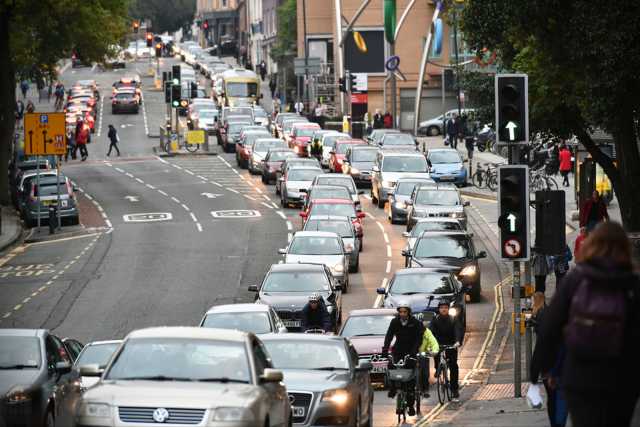
[go to top]