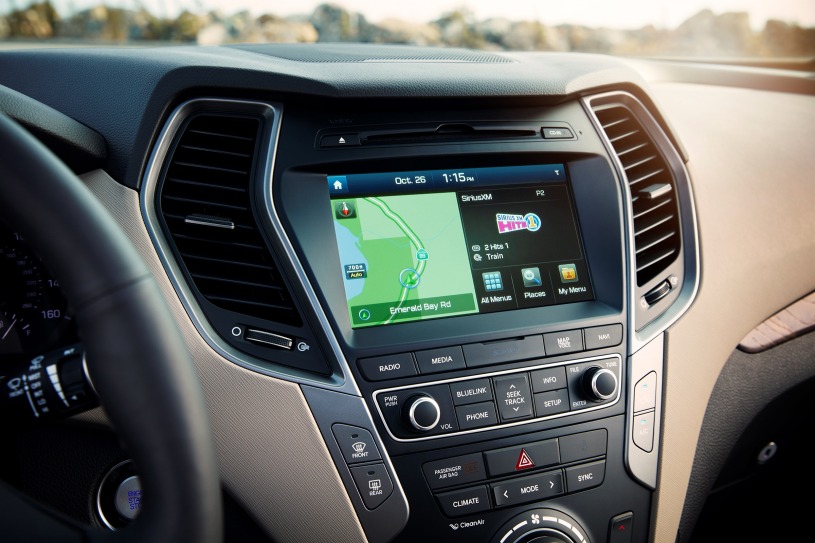
- There are physical buttons (not many)
- It still supports CarPlay (somehow), and
- > The car will recognize the driver and adjust the settings accordingly. And the interior displays can be configured to as much — or as little — information as desired.
However, the speedometer and other critical info will also be driven by this Android system. Hope it doesn’t “crash”
Analog Knobs and buttons
No spyware
You can even do gas to electric conversion cheap and easily if you’re not about that petro life
There’s more than enough usable vehicles in the world some just need more maintenance than others.
The last thing we need is more cars to be produced.
Where is the pro-digital-control constituency hiding out? Surely the manufacturers wouldn’t be going so hard this way if market research bore out quite that degree of resistance.
My next vehicle will be a used something.
Does the definition of Luddite change with each generation's shift in technology?
I still prefer physical controls over digital ones, which seemed to be conflated in your comment. I think this preference bears out in the market as well, since we're seeing some car manufacturers bring back physical controls for certain tasks.
On the other hand, there's also the blatantly counter-consumer choices that also suggest that simply ignoring what people want isn't out of the question. See GM's removal of mobile integration, Mazda's rejection of touchscreens, etc.
And I still don't want to sign in with a Google Account to my vehicle. What happens in those horseshit "my Google account got yeeted by someone in Mountain View with no warning" situations we see every now and then? Then I just... can't use parts of my car I paid for because another company says so?
https://www.macrumors.com/2023/10/23/all-new-carplay-late-20...
> Where is the pro-digital-control constituency hiding out?
Like so many debates online, this one gets polarizing and hyperbolic really fast. Communities around specific car models are more likely to have fans of the UI, and they're unlikely to venture out into other forums discussing the stuff because of how adamant people are that they're wrong.
This is especially handy if I'm navigating new places, where I can get the map right there in front of me. No need to look to the side, so can keep my eyes on the road more.
That said I think Renault has struck a nice balance between digital and physical. AC controls are physical, as is volume/mute and a few more.
All the physical buttons are still available via voice commands, which I also like. If a lot is happening on the road it's sometimes better to be able to keep both eyes on the road and hands on the wheel.
And as much as I dislike touch, at least it works well and the hardware driving the screens is snappy and responsive, like a good tablet.
That said, while in many ways I agree with that sentiment, I have seen vehicle touch screens done well when they are appropriately augmented by physical controls. For example, my car is mostly touch screen but there is a physical spinner in the central console for volume, plus a switch on the steering wheel for volume as well as forward, back and pause buttons. That is, the controls I'm most likely going to want to touch while driving are physical, but controls that I'm likely to use while setting up stuff beforehand (like searching for and selecting a playlist) are on the touchscreen. The biggest screw up in this car is that the buttons for opening/closing the garage door are virtual and behind a menu that autohides after a while, which makes no sense given that 99.9% of the time you're going to be pressing this button twice.
Main point being that car manufacturers definitly screwed up when they followed Tesla's lead of "everything is a touchscreen!", but I don't think pulling everything back to no-touchscreen is the right solution either.
The reason nobody talks about it on forums like this is the same reason moderate people almost never post online. The internet is full of aggressive people who think it's OK to be a bully if they are morally justified. And this is one of those topics where people feel like they have to "defend" their preferences aggressively.
I've posted about this in another HN thread and got some good discussion going. If anywhere is going to have reasonable discussion, this is likely the place.
On to my opinion: I have a 2022 Model Y Performance and a 2023 Model 3 RWD (base model). I am a personal fan of minimalism and I can absolutely see their "intent" with the minimalist approach, but I do think it needs more work in several areas.
Elon once said, "All user input is error." I can see what he means by this. In an ideal world you don't have to change much in a car as it knows your intent.
Where this works well, it works REALLY well. Stuff like climate control, maps/charging, seat adjustments, and more are just "handled" in modern cars and by putting 10+ buttons that are rarely touched out there, you're cluttering up the physical space and increasing manufacturing complexity.
Where this works poorly, it can REALLY hurt. For example, their automatic windshield wipers that use Vision only. They fluctuate between being acceptable to unusable every other update. They are clearly trying to make it better, but a cheap rain sensor would have likely saved them millions in software engineering at this point. And because the windshield wipers are built to be automatic... the manual controls SUCK on a touchscreen.
Personally, when I get into a non-Tesla now, I feel extremely cramped and the cars feel extremely messy to me. The Model Y has a good amount of interior space, but it feels EXTRA big because there's so little visual noise. And realistically, I probably interact with my touchscreen once per drive on average.
I think people tend to think of worst-case scenarios with minimalist screen-centric approaches and pretend like they are frequent occurrences. For some people they will be. If I lived in Costa Rica in the mountains where it rains 95% of the year, I would be really annoyed to have these crappy auto-wipers. But, a simple rain sensor could have made this so much better.
Though today's interfaces are not perfectly optimized or at their end-state yet, I think Tesla is a good example of where we're heading and I love it. Hopefully within 5-10 years I can get into a car, state where I want to go, and everything else is magically handled for me. That is the ideal end state and I think these minimalist interfaces are a step in that direction.
Whether or not this is the future some people WANT is a completely understandable discussion though.
(If they're the stupid ones, what does that make us...?)
For the past few years, we've started to see major UX changes (buttons & mechanical gauges going away) and huge amounts of new infotainment that are now possible because we've stopped hiding the digital nature of everything.
Lots of us hate that, but it does no good to focus the hate on the wrong thing ;)
It’s important while driving that I’m not required to read what’s on the screen to perform common actions. Having to browse to the music app just to pause means I’m spending several seconds not looking at the road.
Just taking a typical infotainment UI and adding a jog dial doesn’t help me at all here.
All of the analog buttons were on the steering wheel, which wasn't necessarily bad, but trying to adjust all of the little things like seat heaters and volume, was a HUGE pain. Especially with gloves on in the cold weather.
We have a 2019 Mustang Convertible and it has buttons for everything. It's trivial to adjust volume, seat heating and climate without having to waiting for feedback.
Anything that forces the driver to take the eyes of the surroundings is bad. Now there is more than meter of it. Some of it so far from the driver that for some of them getting any usable information would take considerable amount of focusing.
Why? Do they want to get people killed?
> It’s important while driving that I’m not required to read what’s on the screen to perform common actions. Having to browse to the music app just to pause means I’m spending several seconds not looking at the road.
Exactly, which is why I love that on my car I can just press a physical button with my thumb on the steering wheel to pause the music.
Yes, at least in theory: I can remove gauges I don't care for, and have the ones I do care for instead.
However in my experience (mostly renting low-end cars so it might be a lot better on the higher end)
- the customisability is very limited, and usually does not have what I'm interested in
- digital screens are used as an excuse for completely worthless animations
- some of the digital readouts ridiculously low granularity / functionality, I've seen digital fuel jauges taking the entire height of the dashboard yet only having 8 segments, that's worse than even the most basic of fuel jauges from the 80s
Anyway like digital displays, I just wish they were more functional, and less shit.
Digital (dematerialised) controls however, are a whole other kettle of fish.
These are just gratuitous technology, that will live in a very harsh environment (many people have to park outside in winter cold or summer sun). It is nothing more than a 1,000 new possible points of failure, yet it will only be repairable as a total system replacement. And after five years, forget it -- the parts will no longer be available.
Car makers brag about their manufacturing being "zero landfill" and are trying for "zero carbon" but how does that square with adding all this unnecessary crap?
But, they are. In intermittent rain one wants to be able to adjust the wiper speed, not press a button on the left stalk then have to touch a tiny button on the touch screen. Likewise, if the windshield is fogging up, the last thing one wants to do is to have to look away from the road and navigate the climate controls on the touch screen.
The example of my car with a lot of buttons:
https://media.ed.edmunds-media.com/hyundai/santa-fe/2017/oem...
What benefit do I get from PHONE being a physical button? Or INFO, or SETUP, or BLUELINK? I shouldn't be using those buttons while the vehicle is in motion. I shouldn't even really be using MAP or NAVI or MEDIA while the vehicle is in motion either, I should be adjusting such things while the car is stopped. And the SEEK/TRACK buttons and volume knob are actually redundant, those controls are also on the wheel so I shouldn't be using those while driving either. And what, I'm going to navigate folders of media while I'm driving with the FILE/ENTER knob?
If the car is stopped, why should I care if its physical or not? I'd prefer the larger screen to actually see more of my media or the navigation or what not when stopped. All these buttons just get in the way when stopped, they're not helpful in the slightest.
And then when I'm actually moving I'd prefer the larger screen as then the navigation and map is much larger so its way easier to understand what its telling me with a fast glance if I'm unsure about the next turn.
About the only buttons I actually need to use here when the vehicle is in motion is the defroster. Everything else here is stuff I probably shouldn't bother touching while in motion. The climate control is auto, so I only end up touching it a few times a year.
I do understand the other poster here talking about a convertible though. Driving when its cold out with the top down I'd probably prefer more physical buttons, but this isn't a convertible.
In the end, all the controls I should actually be using while driving should be on or directly around the steering wheel. I shouldn't have to touch anything in the center console while the vehicle is moving. Ideally, I shouldn't have to take my hands off the wheel at all while the car is in motion.
As for digital gauges vs having needles, I'd probably always take a decent digital gauge. The needles were already digital for decades so any talk about reliability or vendor lock or maintainability is moot. They take up more space than just showing a number. Combined with the fact the digital gauge also shows other useful information like the next turn information for navigation, LKA information, auto-cruise information, etc its way more useful than just a big circle vaguely showing my speed and a big circle showing me RPMs which isn't really necessary 99% of the time in an automatic. There's a slight argument to be made about brightness with night vision but they're usually able to dim pretty dark when you're truly out there. I haven't had a problem seeing while driving around at night even far out in the country with no streetlights.
An interesting Catch-22 situation most of us find ourselves in.
And I'll bet you can't operate the car at all without it.
Modern electronics and 'smart' features etc are just a way to obsolete products that much quicker.
Perhaps simply less information and greater focus on operating a moving vehicle is appropriate.
But auto-wipers work GREAT in cars with rain sensors.
So this isn't a critique of screen-only interfaces, it's more of a critique of Tesla's vision-only approach.
Do new cars appear to be safer because new car owners drive more defensively?
Perhaps bad drivers can only afford old cars and smash them up?
Data is a slippery fish
Saying you crashed your car because your speedometer wasn't working means your shouldn't be driving a car period. Maybe that is the problem today, we rely on information just being fed to us that we lost the ability to function without it or even being able interpret information around without it directly being given to us.
I definitely would not buy a vehicle with a full-screen digital display like the one in this article. The Mazda3 is our newest vehicle. My other daily drivers range in age from 32 years to 16 years.
And when the solid state things fail they are probably more expensive to replace.
I too have replaced instrument clusters (in a Ford) that failed due to age. Two things failed - a couple of capacitors that allow the unit to process the velocity information it gets from the VSS that tells the cluster how fast the vehicle is moving, and the LCD display (liquid crystal) that tracks the accumulated mileage. Both were >25 years old and I fixed the problem by buying a used gauge cluster from a similar vehicle at a wrecking yard. The mileage on the two vehicles was vastly different (300k miles on mine versus only 120k on the donor) and the vehicle age was the same.
On a different vehicle (Nissan) we had a gauge cluster issue where the instrument lights would fail at night or would be ON/OFF randomly as you drove. My wife took the vehicle to the dealership and had them diagnose the issue. $1500 to replace the malfunctioning gauge cluster was their verdict.
Fortunately she did not let them do anything to the vehicle and instead decided to just drive it like it was. For a long time we used a small flashlight to illuminate the dash as we drove at night. I bought a replacement for it from a wrecking yard but didn't install it since I wanted to use it as a known-good example in determining the problem with the original cluster.
Eventually I found some free time and decided to investigate the issue since it seemed like it could be something simple, like a broken trace on the circuit board. I removed a clip-in piece of trim and the six screws holding it in the dash and unplugged the three connectors.
I was intending to use the oven and do a solder reflow but before I got started on that I used my loupe and walked every trace on the board, they were nice and fat and easy to follow. There were no issues anywhere that I could find. It didn't feel like it needed a reflow. I had removed all the bulbs that are used to light the gauges and idiot lights so that I could follow the traces and as I picked them up to begin putting them back in place I noticed that some of them had carbon flashing inside the bulb.
With that information, I carefully separated the ones with the carbon flashing from those without and examined each separately. All of the ones with the carbon had filaments that could be seen to be broken, disconnected etc so those bulbs were effectively burnt out. Turns out that they were in the critical locations used to illuminate the speedometer, tachometer, and oil, fuel, battery, and coolant lights. Those that were still good were down in the group of lights that illuminated only at startup or rarely when there was an issue.
Each bulb, there were half a dozen of them, cost $2 at the dealership. I did some investigating and found that we were not the only ones to have this identical problem and that quite a few people had been suckered into replacing the cluster which cost $520 brand new from the dealership. I guess the rest of our quote was labor to remove the old one and install the new one. Seems excessive to me but maybe some people are okay with paying that kind of money for someone to spend less than 30 minutes removing the cluster, replacing a few bulbs, and reinstalling the cluster.
I found some LED replacement bulbs online and used some of the money that I saved investigating the issue to replace all the bulbs in the gauge cluster and haven't had a problem since. That is more than 10 years ago and the vehicle currently is a daily driver with 265k miles on it.
Personally, I will not be buying anything that requires me to use a touch screen to control it. I guarantee that the dealerships will be no help at all in diagnosing issues with them and will happily roll in the cash they can generate replacing things that shouldn't exist to begin with.
Reminds me of my sister's Ford F150 oil pan leak issue. The oil pan is plastic (for weight control, certainly not durability). After a while they leak. There are thousands of F150s with leaking oil pans and there are no aftermarket oil pans that one can buy to replace the OEM pan.
Her truck is on its 3rd or 4th oil pan. They must replace the pan when it develops a leak. It isn't as simple as replacing a gasket or squeezing some sealant on the old pan and torquing the bolts. You must replace the pan. This means logistically that you are trapped in a supply chain problem when you buy the vehicle since the new pans need to exist before you can use them to replace a leaky pan. When you take your truck to the dealership they may have it for weeks waiting on parts.
Once they get the pan you can relax since it will be installed by trained Ford techs with approved Ford parts. Well not really. Turns out that Ford's bulletin goes into detail about the procedure and in the end reminds the tech that any deviation from their bulletin procedure will result in a leak which will require replacement of the replacement pan since it is now an unreliable, used part.
Vehicle cost a lot of money. Hers has been out of service for this single issue several times for a total of more than a month of lost time.
Somehow I am supposed to trust that a company that produces a vehicle with a plastic oil pan which is not a part that anyone familiar with automobiles would ever consider to be a wear part, can reliably produce a digital display that can remain in service, working perfectly for at least a decade and that once it fails it can easily and cheaply be replaced by the owner if the owner chooses to keep the vehicle.
This is not rocket science people. While scanning wrecking yards looking for parts for a couple of my older, but still well-maintained vehicles, I have found cars and trucks in great condition that are in the wrecking yard because the owner thought they couldn't afford the repair. For one of my vehicles the repair part that the junk donor needed was widely available at any auto parts store for under $100 and could be installed by anyone who had a phillips screwdriver and a metric socket set that included a 10mm socket.
I can't imagine that a digital gauge display will be user-replaceable or inexpensive.
Any argument about swapping the parts not being possible due to DRM or gluing the assembly together can also be applied to something with physical dials. And from the sound of it the dealerships are already unhelpful at figuring out the problem aside from complete replacement, so moving to it being screens isn't a change there at all.
Ford doesn't make displays. The people making the displays are vastly different people from the people making the oil pan. This is a pretty key part you're ignoring here.
As far as the oil pan, the design of the pan probably makes it too complex to manufacture at scale in a material that is more durable. It is not a simple cake-pan style reservoir. It has mating surfaces and ports that would be difficult to reproduce in metal. Here is the TSB that Ford techs need to follow to accomplish this temporary repair.[0]
[0]https://static.nhtsa.gov/odi/tsbs/2019/MC-10164470-0001.pdf
This is true. I agree with this part but would note that the supply chain for replacement screens would be constrained by original production volume and would force most owners to find used screens of questionable quality to avoid paying dealership rates for new screens. Like most vehicle models in a manufacturer's product line, these screens would likely only fit in a single model. I think it unlikely that manufacturers will standardize these units across their product lines so that an owner could simply find a used screen or a new screen from a different model produced by that same manufacturer.
There are probably supply issues here that end up rendering a perfectly good, well-maintained vehicle undriveable when specific components fail.
Then, as you mention, the lock-down of the devices creates another problem when the owner isn't able to access or modify parameters stored in a used screen to update those parameters to fit the vehicle that they own.
It's all a complex set of issues.
I am old. I have been doing all or part of my vehicle maintenance since I bought my first truck in 1976. A lot has changed. Most of those changes are improvements. It is so much easier to identify failed or failing components or sensors today than it ever has been. Vehicles today, like those produced 100 years ago, are durable products with tremendous opportunities to upgrade functionality, capabilities. If we allow manufacturers to turn vehicles into products that fail, with no manufacturer accountability, after only 10 years, requiring replacement of most parts critical to safely operating the vehicle then we have only created another waste stream.
Here you're absolutely equating their failure at making a reliable oil pan as a reason to question them producing a digital display. Ford isn't producing the display. Their failure to make a reliable oil pan is pretty disconnected to them buying screens from an automotive supplier.
Ford isn't producing any displays, so questioning their ability to source a display given their failure at making a good oil pan on one generation of one vehicle is pretty moot.
As a counter point to displays being unreliable that, I've had Ford vehicles with displays that have lasted well over a decade so far, and to my knowledge still work. I've never had an automotive part have the display just fail on its own, personally.
As for them deciding to stop supplying them, eventually they'll also stop supplying the "analog" gauges as well, so its once again a moot point. That "analog" display can still fail requiring replacement. You're not avoiding that problem having needles instead of an LCD.
Buying a car with analog needles isn't going to make that part more available if it becomes one of the last models with analog needles. Screens can be pretty standardized.
Worse than the guages are touchscreens. Ok for the radio, not ok for the windscreen wipers
I have to swap the 30-pin cord out for a Lightning connector. I have Apple's 30-pin-to-Lightning adapter, which is the only decent solution to their idiotic removal of the headphone jack because it restores the audio line out and power in at the same time.
It's academic at the moment because I have to pull the engine out of the car to replace the heads; a bunch of Ford engines had a defect where they blow spark plugs out, destroying the hole in the cylinder head.