- 1. Supply chain / component R&D -
You will be very, very hard pressed to source a pre-existing, high quality, non-exclusive 5.4" display with a hole punch. If you end up doing this as your own startup then you're going to start by trying to buy off the shelf parts to keep costs down. But that display you want is simply not on any of the development roadmaps for the major component manufacturers. The industry has its own momentum, and the component suppliers have also been looking at the trendlines so they are building bigger and bigger.
If you can't find the screen you want in a catalogue then you have to pay someone to build it. Convincing BOE et. al that your phone will sell enough to pay off R&D costs is unlikely, so be prepared to pay several million bucks in NRE to make it worth their time (it might still not be) and the wait a year for them to spin up the fabs. So ~$5M and 9-18 months later you have a display.
- 2. Big players are uninterested, not uninformed -
Big companies are drowning in market data. They know some people really, really want small phones. But it's a long-tail opportunity they're willfully ignoring, and people who need phones will still buy something even if reluctantly. I've been in the meetings, small phone advocacy goes nowhere.
Also I'm a little surprised you're hoping an online petition will work after your prior experience trying to influence your acquirers. I presume you saw the inside of Fitbit / Google and how decisions are made...
but... aren't they influencing the trendlines by doing this? if the only things manufacturers make are bigger and bigger, they then get to use the sale of those bigger items as justification to continue to make bigger items?
Also seems a bit weird with more eco-awareness going on that some manufacturers wouldn't explore/embrace 'smaller' in some sense. At scale, it would mean less materials, less shipping, less warehouse space, etc. Apple made a huge stink about getting rid of a wall plug in their packaging, and... over hundreds of millions of units, that little bit doesn't hurt.
Wouldn't more 5" screens (vs 6"+) require less power, less weight/shipping, and less input materials?
3. Android OEMs can't make a good small phone, even if there was the demand to produce it at scale
Because of how efficient Apple's SoCs are compared to Snapdragons, Android phones typically have much larger batteries than iPhones while getting about the same battery life. Big battery requires a big phone. The occasional somewhat small Android phone (for example Galaxy S10e) tends to have awful battery life.
The consumer hardware duopoly of Apple and Samsung are the only ones who seem to actually drive manufacturing trends. There are also tons of devices being made for the Chinese market, but you can't buy those because they're usually locked up in supplier agreements and honestly they don't meet "flagship" specs for display quality.
Component suppliers, true we-make-parts manufacturers, are not really trying to influence the big picture so much as make sure they are running their manufacturing lines at capacity. And if they are building panels on spec for open market sales, they are going to build >6" displays because it's a higher probability they'll actually sell at volume.
i.e. the Pixel 5 will last about 10% longer than an iPhone 12 on a single charge, but it achieves this with a battery that is about 45% bigger (2,800 mAh vs 4,080mAh). Both have the same size screen (in fact, the iPhone is slightly larger).
I would argue that they don’t know what people want at all, since market data just reinforces previously held assumptions. For example if you surveyed people in 2006 what kind of phone they wanted, most consumers would probably ask for a better flip phone. It wasn’t until Apple came along and defined a new market that Smartphones even became a thing in the mainstream consciousness.
Works great, especially considering the display is not quite small enough for me in the first place.
Majority of the time I enjoy a full screen experience with a tiny bezel. If I need the selfie cam it silently and very quickly is there.
I think they didn't catch on as they are complicated and inhibit IP68 ratings.
But I think I'll struggle to move on from it. The notches and hole punch cameras just look like an irritating defect when I use them.
[0] https://www.androidauthority.com/pop-up-camera-phones-slider...
And as OP pointed out, Apple makes a smaller screened smartphone, so they exist. In some comment on this post someone said that it accounts for 3% of Apple's phone sales.
How big is the group of people that want a smaller smart phone but aren't willing or able to switch to Apple? Who knows. My intuition says not many, but maybe we'll find out through OP's efforts. I'm an iPhone user and the only reason I haven't switched to something like the iPhone Mini is because I want the better camera on the pro's.
a) guaranteed not to be on until it's out
b) never eats screen space, ever
My current phone is a 7pro. I haven't seen a good replacement yet.
And nobody I know has changed their communication. Discord, text, call. Everyone in my milieu is painfully average.
Why does the author want an Android? The iPhone mini would do the job right? I have a iPhone mini for the same reasons of size, premium feel and price.
It would be cool to hear what the founder of Pebble has to say about "why Android". Has he said it anywhere else?
> # Why don’t you just use an iPhone Mini?
> I actually do now! I switched from Android back to iPhone in late 2021 because the Pixel 6 was too ridiculously large. This was my first iPhone since the OG iPhone.
> But only 5% of all iPhones sold are Minis (roughly 10m phones per year). This means that Apple may decide to kill the Mini. For Apple, 10m phones is peanuts. But for an independent company 10m units per year would be spectacular.
> If Apple kills the Mini, those people will need a new home. An Android phone (with Beeper for iMessage) might be an adequate alternative.
[... snip ...]
The Homer was a car that Home Simpson built to exactly what they wanted without any tradeoffs for off the shelf components, trends, or sensibility of what currently was common.
It's also somewhat design by committee, with features like a more luxurious bubble for the adults, and a micro-bubble for the kids; presumably so you can ignore anything but the screams or silence.
I also suspect this fictional car might have been an ingredient in the market shifting from minivans to SUVs. Those don't have such great audio isolation but were even taller than the minivans (which were taller than station wagons). Or it could be the 'backup camera' finally reaching a tolerable price level.
It can even take pictures in the dark because the display will be used as a floodlight, though in that case aiming doesn't really work unless the software brightening is sufficient to at least gain an idea.
Front camera also works as a mirror in a pinch, much easier than trying to aim the back camera then flipping the phone around and finding out how off you were.
Do people taking selfies even use the front camera? I feel like image quality is really rather poor for that use case but it's not my jam.
The simpsons also did the canyonero:
>[...] personally, after 6 months of iOS I am itching to get back to Android. Why? The notification system SUCKS on iOS compared to Android. It’s impossible to move files between apps. Hard to get any work done on it. Beautiful hardware though!
However, in this day and time when it comes to established tech such as a smart phone, sometimes the best way to 'innovate' might be to give people what they actually want. Sure not all companies can cater all niches. But hopefully someone will! Im also a small phone advocate.
The main benefit of cars was that if you delay maintenance your transportation doesn’t die.
It targets people that have plenty of cash for a flagship but are willing to forego the top tier specs for a smaller size. Apple prefers you just buy the pro. And if you don't have much cash you can get the reheated 2017 iphone 8 with SE slapped on it :)
I bet if they made a mini T the price of an SE with a more limited camera and screen spec than the current mini it would take 50% of SE sales away.
You can't judge the market viability of one aspect based on a single model.
Co-incidentally I was just glad today morning that iPhone doesn't show the row of small notification icons on the top-bar all the time. And then noticed that notifications don't show on the home screen also. I pulled down the notification list and saw a ton of notifications - I said no thanks and left them all unopened.
I did switch from Android to iPhone recently. I think notifications on iPhone are way better, I get distracted way lesser. Tho I don't get many important or time-sensitive notifications. Just a bunch of transactional notifications.
I'm going to buy a 13 Mini because of Apple's long term support, so it should last me a good few years.
Better flip phone would be good too.
Real example was Pixel until version 4. The only difference between smaller and bigger versions was the obvious screen and battery.
As I said, not my preference and I rarely join, but for example my wife does video calls almost on a daily basis. So the "selfie" camera seems to be increasingly an important feature for the regular user.
Second, it's only iphone. I hesitated for so long to consider it at all because it requires switching environments.
I remember one of the Motorola phones was designed for expansions, but that was pre-USB C. If you had a horizontally symmetrical phone, maybe widgets could solve the problem? Front facing and rear facing, while also being privacy respecting, no notch necessary, and similar resolution to boot. so maybe easier to source. Free up some room on the SOC and relieve some complexity while providing the added benefit of port protection. Presumably this could be applied to SD and obviously 3.5mm jacks.
Front camera, 3mm headset jack are must for me. If I could get a notification LED too... You might be able to get a lot of money out of me!
Look at how long all of the requirement lists posted around these threads are. Some people really want a nice camera, some a headphone jack, some a SD card or big battery etc. I would expect that it's a fact of life in a small phone that you can't fit everything anyone might want, but everyone has a different list of must-haves, making it much harder to make one device that all of the small-phone-wanter market will actually buy.
And price. If you really want some one-off thing, you've gotta pay more for it. Would you pay $2k, $3k, more for a great small phone? Seems likely that such prices would help a lot at getting them made. But in reality, people seem to refuse to pay more than a modest markup over the mainstream model with tens of millions produced. Sorry folks, I don't think it works like that.
I'll be blunt: no I won't. I reluctantly bought the phone I still use (a moto X4) back in 2019, at which point it was already getting old. It was one of the smaller Android phones available at the time; I measured it diagonally corner to corner (including bezel) at 159 mm (6.26 inches). The screen size is 130 mm (5.2 in) according to Wikipedia. This phone is in fact much too big for me, and I'm not happy with it.
But I will be sticking with this phone into the indefinite future: until it breaks, becomes unusable, or a worthy replacement arises (a phone the size of the Nexus 5X or preferably smaller, with my must-have features). In the event I can't get this I will switch to a cheap feature phone since I need something for emergency use. I'll look into the mp3 player market to see if there's something I can use for playing music and audio books, maybe if I'm lucky there's something with a nice screen and an e-reader.
I'm sure you're right and some people are more willing to compromise than me. However, what also seems likely is that many people are somewhere in between and will wait until their current phone is unusable before reluctantly downgrading to whatever the latest model is. Surely plenty of sales are lost due to this.
So supply chains behave like ecosystems.
In the natural world we see insects and animals develop things like bright plumage and big horns because the animal before them was successful in doing the same thing. This behavior can go on for a long time too. Then an asteroid hits (tantamount to bad economic times) and the fast moving generalists seem to succeed better than the highly adapted specialist.
I tried switching to a feature phone and was surprised how often I use a smartphone; and how many people, banks, government organizations, restaurants, etc, assume that you have one.
I decided to die on a different hill-- physical keyboard. The blackberry keytwo wasn't perfect but it was definitely one of my favorite devices I've ever owned.
And now AT&T will no longer support phone calls on it. Planned obsolescence isn't so easy to run and hide from. They will dash your usable, friendly, pleasing devices from your hands and sneer at you for daring to want better.
All told, I've probably bought less than half as many phones as I'd prefer. Yes, I do eventually buy one because they effectively are required nowadays, but that's quite a lot of money that isn't going into these company's hands.
Meanwhile, the rest of the market also seems to be lengthening their time between phone purchases..... and phone manufacturers respond by releasing bigger and more expensive phones year over year over year. I won't try to claim it's the majority of the cause, but surely there's some connection between those two.
We used to have these things in small form factors. Those of us annoyed by where the big companies forced the direction of development are mostly very aware that things have regressed hard.
99/1?
90/10?
80/20?
I don’t know this myself. But I figure that if no one is stepping into this market, it’s probably pretty damn small.
Just a note that this quote, and a similar one by Steve Jobs (‘Market research could never have given us the Macintosh’) are amongst the most misinterpreted in history. Most people see them as saying ‘market research is useless’ - what both were actually saying is that you need to take a new innovation to the customer and _then_ ask them what they think of it.
So no, don’t just flat out ask people what they want - but intuit and give people a little taste of what they could have - and then ask them what they think.
...so, a current flagship? Samsung's Galaxy S22 is smaller than both the Moto X4 and Nexus 5X.
Size comparison: https://www.phonearena.com/phones/size/Google-Nexus-5X,Motor...
In general, phone sizes have stayed roughly constant since the Nexus 5X, though the displays are getting bigger as the bezels get smaller.
I think this is at least partially a feedback loop issue. There aren't manufacturers even making small screens, and the time/cost of doing that isn't seen as worth investing in... because... look at what's selling - larger screens! - which are the only thing we're selling because... look at what's selling!
A small niche player that wants to try a different form factor/size isn't practically able to enter the market with anything but commodity screens.
> I'll be blunt: no I won't.
Agreed. I used my 2005 Motorola Razr until 2020 because I have zero interest in an inconveniently large phone. When the Palm Phone came out I got it as a perfectly-sized replacement.
I won't ever go to a larger phone because if it doesn't fit my pocket, what's the point? Might as well not have one.
I’m typing this on my iPhone 13 mini; saying it’s inferior to the rest of the iPhone 13 is an overstatement.
All of the core features are the same as they rest of the line.
Ironically it’s the largest iPhone I’ve owned, having upgraded from an iPhone 7 and a 6s before that.
There probably won’t be iPhone 14 mini, so I’m glad I was able to get this form factor before I had no choice.
1.fits nicely in pocket. I can sit down comfortably with it in a pair of jeans. No dodgy posture.
2. Won't fall out of my pocket
Its screen is also much less likely to break like has happened with all my old phones when they accidentally fall out of jacket pocket
Moreover, the specification that actually matters for one-handed phone users is the distance between the bottom corner of the phone (where it's held in the hand) and the top opposite corner of the screen, not the top corner of the phone. That's because that point is the furthest you'd ever need to stretch your thumb to use the phone. So actually, the displays getting bigger as the bezels get smaller has been part of the problem.
If you look at the Nexus 5X [1] you'll see that it has an enormous (by modern standards) top bezel. By comparison, a phone like the S22 has basically no bezel at all and will be much harder to use one-handed.
There are vanishingly small numbers of people who will insist on a perfect-or-nothing approach to smartphones. This market segment is unserviceable. Sure, the size will be right, but it won't have the right battery size, or the battery has to be swappable on-the-go, or it didn't have quite the right sd card option, or maybe the software isn't 'polished' enough, or it had to have two headphone jacks. There will be something 'not good enough' and therefore it's passed over even though they want a 'small' phone.
Edit: I'm not sure what the disagreement is but it's objectively verifiable that the 13 Mini does not have the same camera setup as the 13 Pro.
I love my iPhone 12 mini and prefer the form factor, but will go bigger, because of battery life.
So true... And my anecdotal observation suggest another detail that makes small unattractive to brands: the way my social circles happen to be, I crossed path with plenty of owners of various incarnations of the Xperia Compact (r.i.p.). If my observations where representative, the Compacts would come close to outnumbering iPhones. They all wanted a small phone, somewhat waterproof and with a reasonably good camera. Almost all of them identifying strongly with some outdoor hobby like cycling or rock climbing, but wouldn't want a dedicated "outdoor" or "sports" phone. So far so good, looks like a pattern. But they have another thing in common: none of them would ever consider buying a high end phone (the Compacts were, or reasonably close) at or near release price.
I would consider both flagship models, considering the pricing. For me mid-range is < 500€ (and normally way below that) so the iPhone SE doesn't even qualify here in Europe (it's 529€).
My current mid-range phone is a Samsung A52s which costs 329€.
But perhaps my long Android history has skewed my pricing concepts somewhat.
There is a smartphone that meets the needs of a small-phone purchaser, after all, if small is the requirement - the iphone mini. But purchasing that would require some compromise on your hardline requirements, which will be different to someone else's hardline requirements such as a swappable battery.
How about getting one of those foldable screens in the larger standard size, and then just... tucking away the excess inside the phone body?
Y'know, like the marketing material for the iPhone X claimed it was doing: https://qph.fs.quoracdn.net/main-qimg-0fd6daf2b9b742bf5dbf10... (though it actually wasn't.)
I feel like it being smaller is a factor in it having inferior specs: much easier to fit a better camera etc into a larger body.
A low-cost small phone would be the opposite of the SE: not good-specs, bad-screen; but rather all-screen, bad-specs. An iPhone Mini minus-minus.
I only got this one because I couldn't find one smaller.
At the current rate I would have to move to iPhone just to stay a similar size.
However, in practice 'not being able to reach the whole screen with my thumb' hasn't turned out to be a big problem: navigation elements at the top of the screen tend to be less-used (as app devs also take into account that it's a hassle to reach them). If I really need to use them one-handed, I can always 'scoot' my hand up a bit. (I can see how this is harder if you have smaller hands, though.)
A larger screen also actually turns out to be quite nice, as more content fits on it (I'm actually writing this comment on my phone).
Apple has weird economics where I'm sure they profit handsomely from iPhone Mini, but they tend to get rid of things if they don't make $10b annually.
probably because eric has a history of pd from a customer frustration pov whereas your well articulated explanation mainly represents manufacturers' pov.
btw, such kind of math-checks-out logic is what keeps someone from developing the iphone in 2004. everything about mobile then made sense...to carriers and manufacturers.
I think he meant diag screen size? The 11/12/13 are 6.1" while maxs are 6.7"
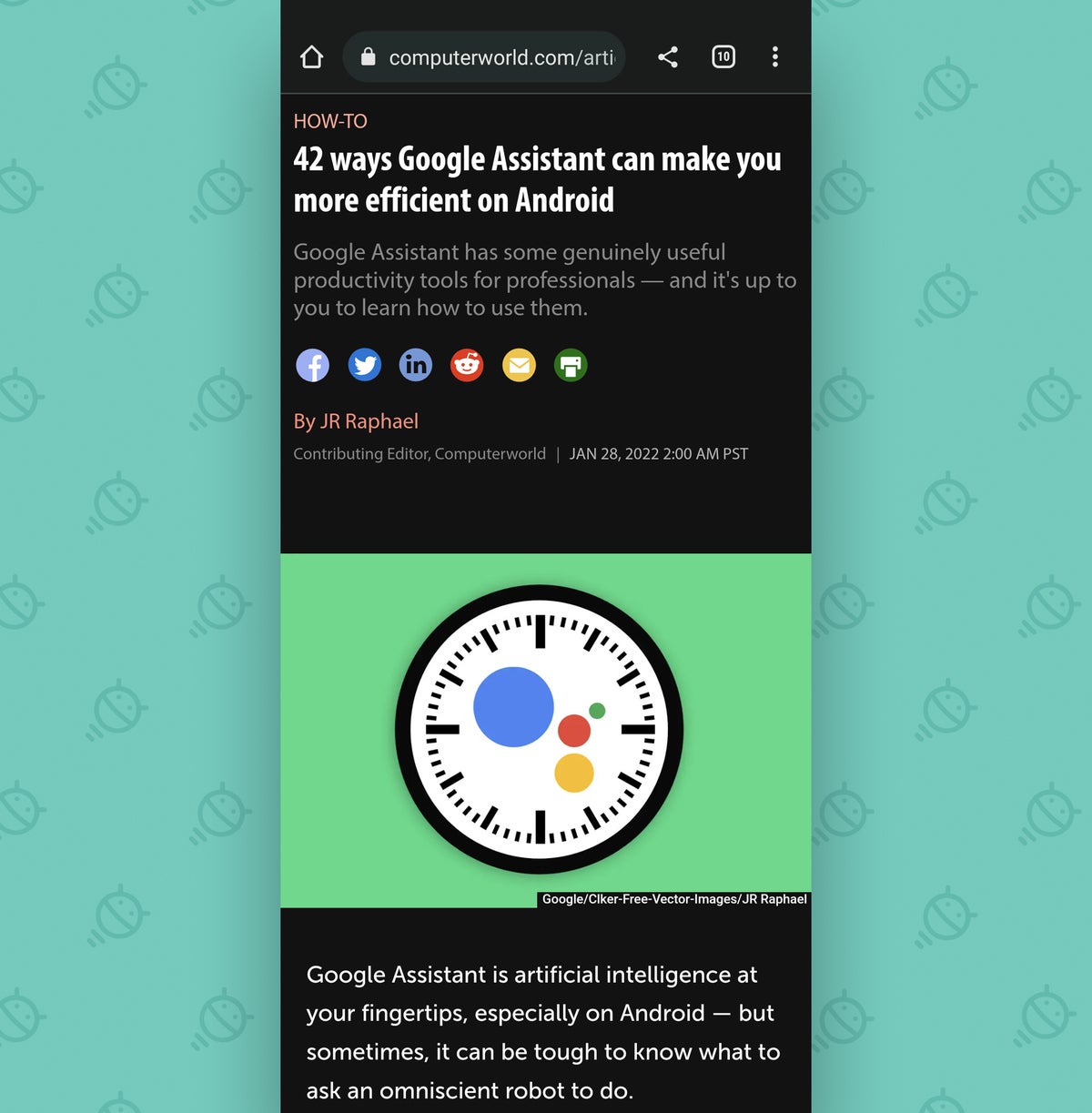
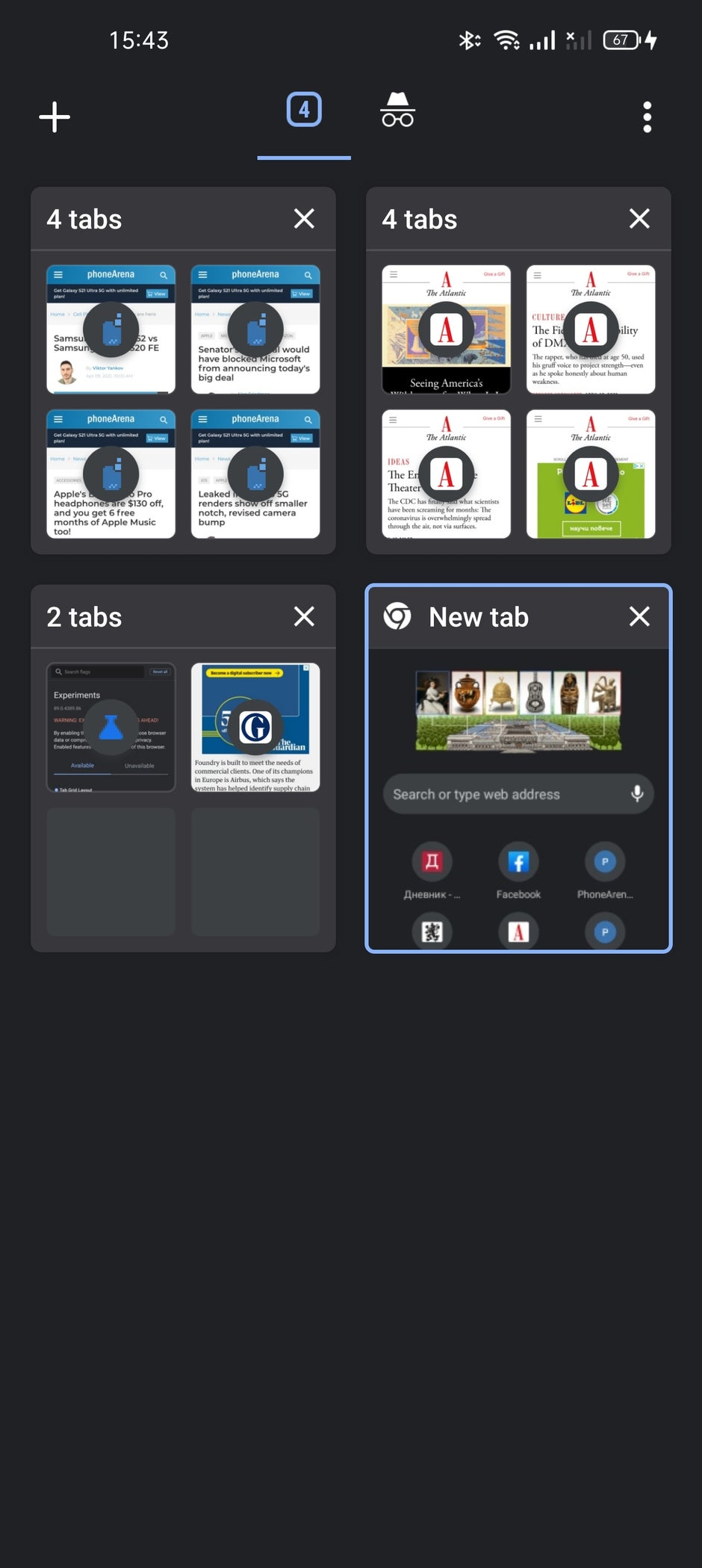
If that's true, then app devs are thoroughly incompetent at it. Take a look at at Chrome on Android. The address bar, tab menu, and settings bar are all at the top of the screen. In 2021, Apple made the same change for Safari, moving the address bar from the bottom of the screen to the top [1]. The tab grid Chrome's push for tab grid [2] made it even worse, because depending on the tab, you may need to reach across the entire diagonal the reach the tab you want. Firefox has the option of putting the address bar at the bottom (and if so, the tabs show near the bottom as well), but the navigation buttons for bookmarks are near the top of the screen.
I don't think mobile developers think about one-handed phone use at all. Based on the designs used, with interactions bouncing all around the screen, it doesn't seem to be a concern at all. Perhaps they assume that everybody holds a phone with one hand and then touches the screen with the other hand.
[0] https://images.idgesg.net/images/article/2022/02/05-chrome-a...
[1] https://9to5mac.com/2021/08/17/ios-15-beta-6-redesigns-safar...
[2] https://m-cdn.phonearena.com/images/articles/372064-940/Scre...
Yes, they are low-resolution by today's standards, something like 800x480. Still, they are available for those who might be considering to produce a really compact phone. Instead, they go to high-end coffee machines and the like, and to RPi tinkerers.
My hunch that the limiting factor would mostly be the battery. Modern radios and modern CPUs and GPUs consume more, and you don't want to market a very slow phone, or a phone that has 6 hours of daily usage worth of battery. And you can't hide as much battery behind a small screen.
It just feels like surely capturing 100% of the market for premium small Android phones (there really are none right now) must be at least as good as yet another large Android phone entering a market full of large Android phones.
If the camera were the same, I suspect many, many more people would buy the mini.
Also the z-flip battery life is atrocious, and the CPU is old prev gen tech.
I really want a top tier foldable.
I think GP probably needs to be more flexible about their "must-have"'s. If you could get a nice phone with a small screen, would a small bezel on top for a camera be such a disaster?
I'd happily replace more often if only palm-sized or smaller phones were available. I'm not particularly price sensitive either, I'll pay top premium price to get a conveniently-sized phone if someone is willing to sell it to me.
13: 71.5 x 146.7 x 7.65 13 Mini: 64.2 x 131.5 x 7.65 3rd gen SE: 67.3 x 138.4 x 7.3 1st gen SE: 58.6 x 123.8 x 7.6
I strongly prefer the 1st gen SE because it's significantly easier for me to use with one hand, it's got a completely flat back (no camera bulge), and it's got a headphone jack and home button.
1. The industry push for thin due to the consumer dislike of thick.
2. The invisible consumer expectation that smaller mobiles should be cheaper.
A mini screen with a fat body (large battery, good camera) is what many functionally oriented people should want, but cost and form will limit consumer desire and make it an extremely niche product?!?
Edit: I am thinking more Canon IXUS cross bred with a 20000mAh powerbank and stock Android One. In fact Canon or another reliable camera brand would be the perfect manufacturer. Fat and robust could work: sell the functionally ugly to practical tradesmen type? Unfortunately writer desires thin and light, which I don’t care about. No need for front-facing camera, instead put a 1” (4:3?) screen on the side of the main camera to allow for pointing/framing when doing selfies.
Functionally oriented people often have other constraints. I have tight constraints for mobiles: I am price sensitive (I break or lose phones), I want vanilla Android (manufacturer skinned often has broken upgrades & broken privacy & broken features), and I generally won’t buy products from extremely niche brands (unpredictable reliability, & trust issues).
I'm not sure about that, sidekicks, plan and blackberry were pretty popular and gaining a lot of mainstream interest for modern 'smartphone' type things
I got an iPhone XR for the low light performance of the camera, not because I needed a new phone.
I got a 13Pro for the cameras and lidar, not because I needed a new phone.
My reality is I want a great camera that fits in my pocket and is durable - that also makes calls, runs Signal, streams Spotify/AppleMusic, and has a usable web browser...
No VC firm is investing millions expecting a 100x return in buggy whip startups though.
* Lower performance due to small battery and poorer heat dissipation
* No physical space to put top-tier camera
The other challenge was that I found it hard to go back to the smaller onscreen keyboard and display. I think I was deluded about my vision being as good as it was 10 years ago!
Do you mean from cars or horses? If the former, early automobiles were far cleaner than the animals they replaced (and still are). Cities faced huge issues with animal excrement and cars represented a cleaner alternative.
https://thenextweb.com/news/bad-news-for-anyone-who-wanted-t...
Lower performance than what? I'm not convinced that's a real issue unless you're trying to make a flagship.
Why couldn't you fit a top-tier camera? That's like a square centimeter.
I’ve owned blackberry phones, windows mobile, even a palm pre.
I’ve had nearly every iPhone since launch.
I’m on an iPhone 13 Pro Max.
Nothing makes me yearn for a smaller screen.
I held an iPhone 3G in my hand last week after finding it in a drawer and was amazed at how it felt too small to be really useful these days.
My gal has a 13 pro max.
My folks have larger phones.
My siblings have larger phones.
My friends, colleagues, business partners, clients, all have larger phones.
The biggest complaint I hear is battery life.
I hope small screen fans find what they want but I do not believe it’s a big market.
The suggestions I'm seeing are yes hole punch, no hole punch, a screen you can use with one hand, just enough battery-filled thickness to have no camera bump, good camera, microsd, fingerprint sensor, headphone jack.
And one person wants a keyboard but I don't think they're suggesting that for this phone.
Once you decide if you want a hole punch or not, I see no issue with implementing the rest of those features in the same phone in a reasonable way.
Ok, let's just accept now that you live in an isolated bubble, if your experience with video calls is "I've seen it used once and to a disastrous result."
I'm not denying your experience, but it's not the experience of the vast majority of the modern world now, across all categories of people. Many people may not use video calls regularly, but most people have had more experience than "seen it used once."
* “Other manufacturers have managed to make a success of selling high-capacity smartphones. BlackView (and, for that matter, Ulephone, Doogee, and AGM) does especially well. Although they come with ginormous cells, they’re primarily designed to be hardy, and can take more of a beating than Mickey Rourke in the boxing ring.”
* “French smartphone manufacturer Avenir Telecom attempted to crowdfund the P18K on Indiegogo, but ultimately failed in a way that was previously unthinkable for a project that’s attracted so much press coverage and public interest. In total, Avenir Telecom ‘sold’ sixteen (absolute) units.”
* “there are people who would benefit from a phone with a 18,000 mAh battery. I’m talking about military users, people working in the oil and gas industry, famers, and even truckers. Avenir did nothing to cater to this valuable niche.”
* “The P18K, on the other hand, lacked waterproofing and shockproofing, making it thoroughly unsuitable for outdoor users.”
* “Avenir Telecom wanted €600 for a phone with the internals of a €200 phone. Without anything extra – like ruggedization – that’s a hard sell. It just didn’t represent good value for customers.”
* “Measuring several inches thick”
I was exaggerating a little by saying 20000mAh: about 5000 to 10000 would probably be sweet.
Also camera lenses on the P18K were not flush with reverse side - ugggh. There should be a proper shutter button (positioning and half-press to hold focus). Lenses needs protection eg. manual sliding shutter which when opened puts phone into camera mode (I have cracked mobile phone camera lenses).
Plenty of people want a proper waterproof camera (low light, macro, Tele, optical image stabilisation) in their pocket, and why not combine that with hardy mobile phone?
I can imagine making the screen plus battery plus the USB port all as a single user-replaceable part? Those are the usual culprits that get broken or need replacing.
Edit: Slight edits above for clarity. Also see Blackview Pro 11000mAh https://thenextweb.com/news/this-bonkers-chinese-phone-holds...
> Avenir Telecom wanted €600 for a phone with the internals of a €200 phone.
This is the big issue. Avenue’s not to blame here. It’s unavoidable, the design is just too non-standard.
If you could get a military contract then it might work.
It looked premium, it felt premium and was the perfect size. If someone could pack more punch with specs in that phone I would buy it for even $1k.
I was thinking much larger optics and mechanicals, similar to a PowerShot N (except with modern video specs): Optical image stabilization, 8x optical zoom, 1/2.3" Sensor (6.17mm x 4.55 mm), Maximum aperture F3–5.9, Macro focus range 1cm. A real camera: even though I realise in the past there have been plenty of failed camera-phones in the marketplace!
https://www.ifixit.com/Teardown/Canon+PowerShot+N+Teardown/6...
https://m.dpreview.com/products/canon/compacts/canon_n/speci...
Worse, they expect it to be cheaper since "it has less screen and battery it must be cheaper to make!"
Apple touts their variable refresh rate for better use of battery than competitors - surely they could put it on the mini and still get it through a day of use.
> until it breaks, becomes unusable
You say no, but then you give two cases in which you would be a person who needs a phone who would grudgingly buy something.
Obviously play the car out a few decades and the emissions were _not_ so clean.
Yes, this phone is hard to use one handed, but the value of the large screen outweighs everything else.
This is true. This is also irrelevant if nobody actually does it. My nexus 7 tablet survived 6 years with a dead battery due to having qi charging. For every phone I've bought since then, I have searched for charging cases and not found even a single one at the time. This includes the moto e2, moto G5, moto G6, and my current Samsung phone (a32 or something, can't recall at the moment; it's the free T-Mobile 5g phone). Basically I wanted something that ideally supported wireless charging, but at minimum was semi-permanently attached to the charging port (charger built into the case itself to protect my port).
If I had an iPhone I would seriously miss the fingerprint scanner but this is not an issue on Android, the in-screen option works amazingly well.
At the time I bought the z-flip 3 my understanding was that the tradeoff was unavoidable. My opinion at the time of purchase was that the incremental benefit of the latest version of CPU, camera and battery were pretty marginal relative to the large benefit from the unique form factor.
I'm not currently in the market but that could well have changed if new foldables have since been released.