I'll be blunt: no I won't. I reluctantly bought the phone I still use (a moto X4) back in 2019, at which point it was already getting old. It was one of the smaller Android phones available at the time; I measured it diagonally corner to corner (including bezel) at 159 mm (6.26 inches). The screen size is 130 mm (5.2 in) according to Wikipedia. This phone is in fact much too big for me, and I'm not happy with it.
But I will be sticking with this phone into the indefinite future: until it breaks, becomes unusable, or a worthy replacement arises (a phone the size of the Nexus 5X or preferably smaller, with my must-have features). In the event I can't get this I will switch to a cheap feature phone since I need something for emergency use. I'll look into the mp3 player market to see if there's something I can use for playing music and audio books, maybe if I'm lucky there's something with a nice screen and an e-reader.
I'm sure you're right and some people are more willing to compromise than me. However, what also seems likely is that many people are somewhere in between and will wait until their current phone is unusable before reluctantly downgrading to whatever the latest model is. Surely plenty of sales are lost due to this.
I tried switching to a feature phone and was surprised how often I use a smartphone; and how many people, banks, government organizations, restaurants, etc, assume that you have one.
I decided to die on a different hill-- physical keyboard. The blackberry keytwo wasn't perfect but it was definitely one of my favorite devices I've ever owned.
And now AT&T will no longer support phone calls on it. Planned obsolescence isn't so easy to run and hide from. They will dash your usable, friendly, pleasing devices from your hands and sneer at you for daring to want better.
All told, I've probably bought less than half as many phones as I'd prefer. Yes, I do eventually buy one because they effectively are required nowadays, but that's quite a lot of money that isn't going into these company's hands.
Meanwhile, the rest of the market also seems to be lengthening their time between phone purchases..... and phone manufacturers respond by releasing bigger and more expensive phones year over year over year. I won't try to claim it's the majority of the cause, but surely there's some connection between those two.
99/1?
90/10?
80/20?
I don’t know this myself. But I figure that if no one is stepping into this market, it’s probably pretty damn small.
...so, a current flagship? Samsung's Galaxy S22 is smaller than both the Moto X4 and Nexus 5X.
Size comparison: https://www.phonearena.com/phones/size/Google-Nexus-5X,Motor...
In general, phone sizes have stayed roughly constant since the Nexus 5X, though the displays are getting bigger as the bezels get smaller.
I think this is at least partially a feedback loop issue. There aren't manufacturers even making small screens, and the time/cost of doing that isn't seen as worth investing in... because... look at what's selling - larger screens! - which are the only thing we're selling because... look at what's selling!
A small niche player that wants to try a different form factor/size isn't practically able to enter the market with anything but commodity screens.
> I'll be blunt: no I won't.
Agreed. I used my 2005 Motorola Razr until 2020 because I have zero interest in an inconveniently large phone. When the Palm Phone came out I got it as a perfectly-sized replacement.
I won't ever go to a larger phone because if it doesn't fit my pocket, what's the point? Might as well not have one.
Moreover, the specification that actually matters for one-handed phone users is the distance between the bottom corner of the phone (where it's held in the hand) and the top opposite corner of the screen, not the top corner of the phone. That's because that point is the furthest you'd ever need to stretch your thumb to use the phone. So actually, the displays getting bigger as the bezels get smaller has been part of the problem.
If you look at the Nexus 5X [1] you'll see that it has an enormous (by modern standards) top bezel. By comparison, a phone like the S22 has basically no bezel at all and will be much harder to use one-handed.
There are vanishingly small numbers of people who will insist on a perfect-or-nothing approach to smartphones. This market segment is unserviceable. Sure, the size will be right, but it won't have the right battery size, or the battery has to be swappable on-the-go, or it didn't have quite the right sd card option, or maybe the software isn't 'polished' enough, or it had to have two headphone jacks. There will be something 'not good enough' and therefore it's passed over even though they want a 'small' phone.
There is a smartphone that meets the needs of a small-phone purchaser, after all, if small is the requirement - the iphone mini. But purchasing that would require some compromise on your hardline requirements, which will be different to someone else's hardline requirements such as a swappable battery.
I only got this one because I couldn't find one smaller.
At the current rate I would have to move to iPhone just to stay a similar size.
However, in practice 'not being able to reach the whole screen with my thumb' hasn't turned out to be a big problem: navigation elements at the top of the screen tend to be less-used (as app devs also take into account that it's a hassle to reach them). If I really need to use them one-handed, I can always 'scoot' my hand up a bit. (I can see how this is harder if you have smaller hands, though.)
A larger screen also actually turns out to be quite nice, as more content fits on it (I'm actually writing this comment on my phone).
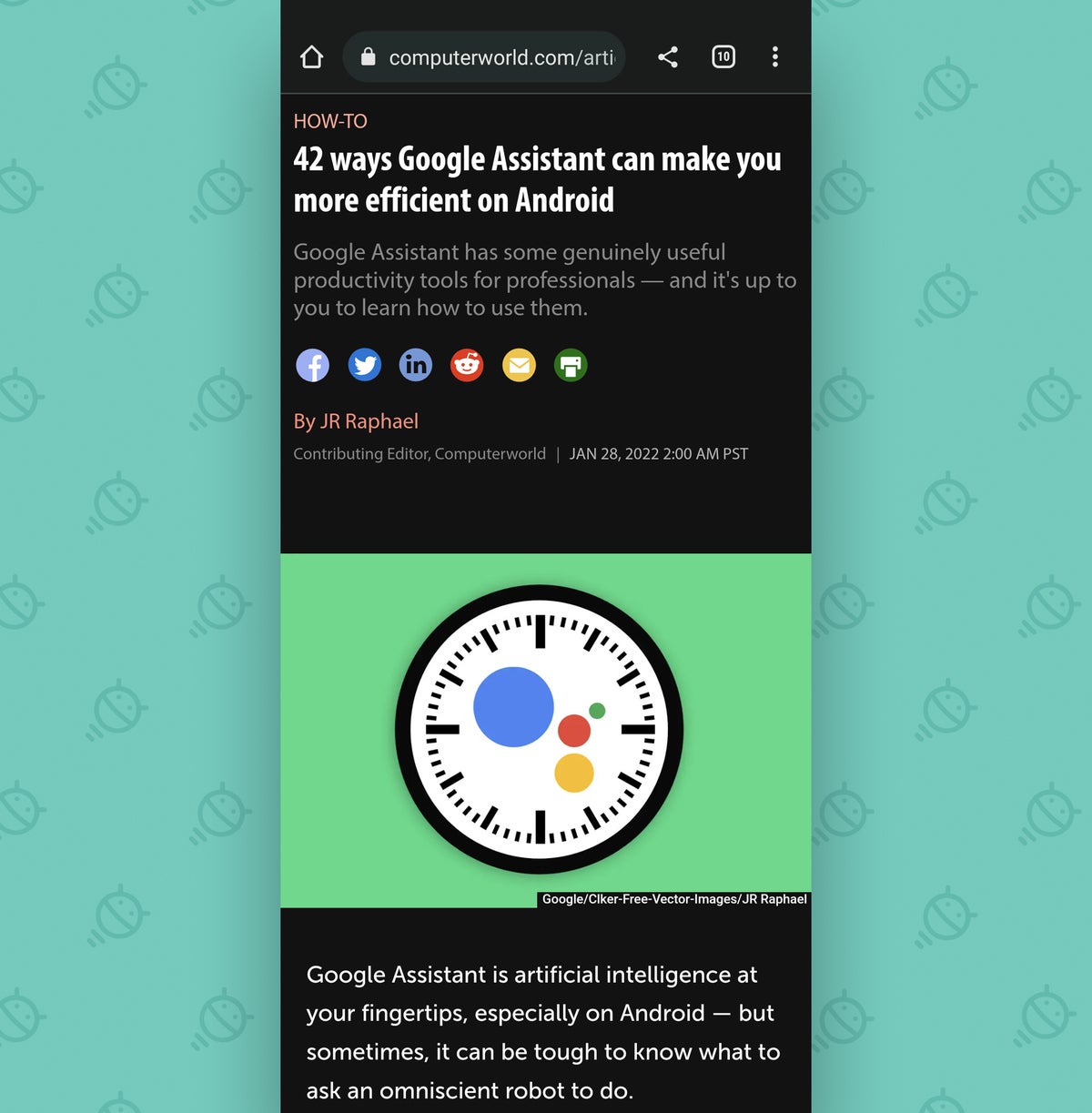
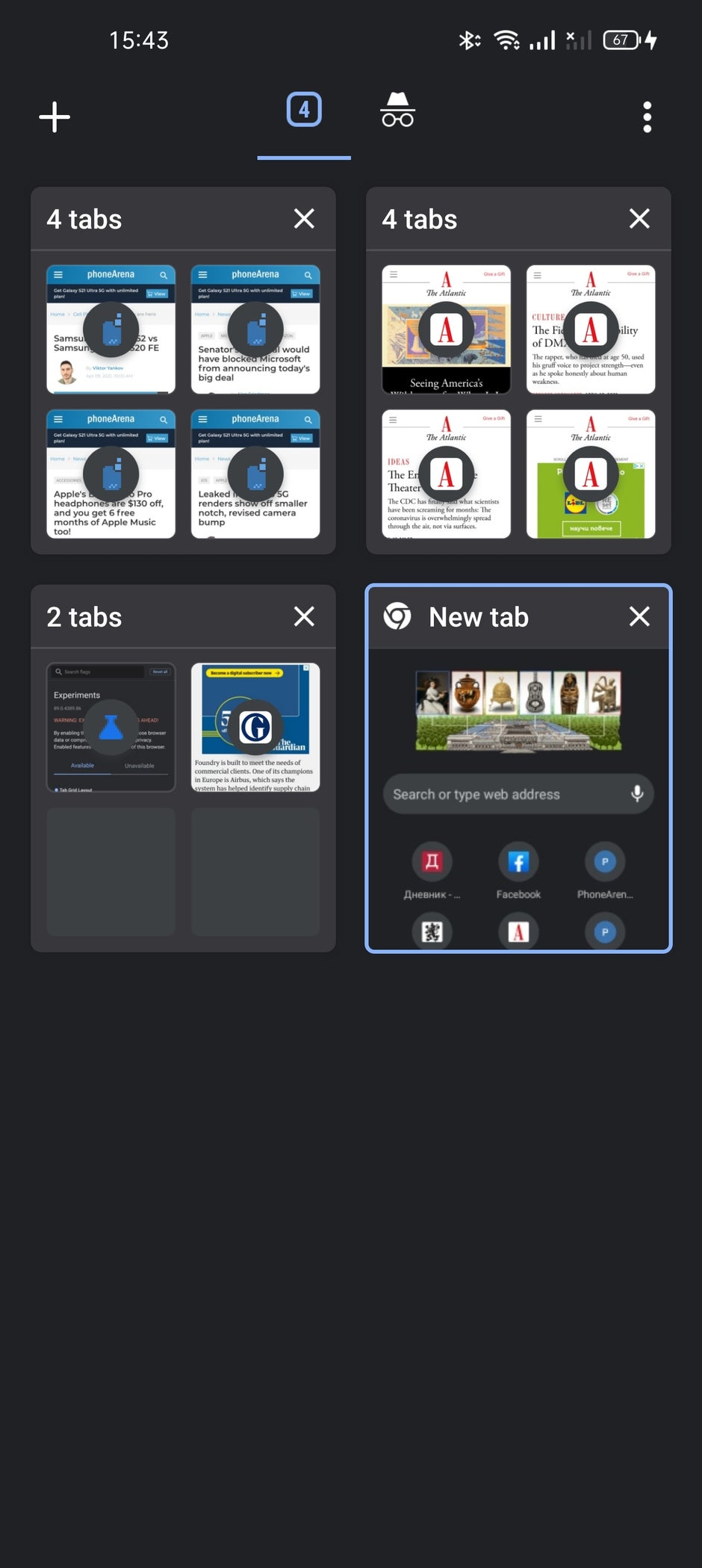
If that's true, then app devs are thoroughly incompetent at it. Take a look at at Chrome on Android. The address bar, tab menu, and settings bar are all at the top of the screen. In 2021, Apple made the same change for Safari, moving the address bar from the bottom of the screen to the top [1]. The tab grid Chrome's push for tab grid [2] made it even worse, because depending on the tab, you may need to reach across the entire diagonal the reach the tab you want. Firefox has the option of putting the address bar at the bottom (and if so, the tabs show near the bottom as well), but the navigation buttons for bookmarks are near the top of the screen.
I don't think mobile developers think about one-handed phone use at all. Based on the designs used, with interactions bouncing all around the screen, it doesn't seem to be a concern at all. Perhaps they assume that everybody holds a phone with one hand and then touches the screen with the other hand.
[0] https://images.idgesg.net/images/article/2022/02/05-chrome-a...
[1] https://9to5mac.com/2021/08/17/ios-15-beta-6-redesigns-safar...
[2] https://m-cdn.phonearena.com/images/articles/372064-940/Scre...
If the camera were the same, I suspect many, many more people would buy the mini.
I'd happily replace more often if only palm-sized or smaller phones were available. I'm not particularly price sensitive either, I'll pay top premium price to get a conveniently-sized phone if someone is willing to sell it to me.
> until it breaks, becomes unusable
You say no, but then you give two cases in which you would be a person who needs a phone who would grudgingly buy something.