Because this will be exploited by the poorest underclass women who will have lots and lots of children to milk the taxpayer (and that's fine!), the resulting market-based salary won't at all be huge.
Change it from tragedy of the commons to mutual cooperation.
I think this is all that needs to be said on these articles.
(There's a lot more that _could_ be said, such as how few actual birthing HN readers there are, but I think the economics is really simple at the root of it.)
Besides, even the countries with really the worst outlook and conditions aren't falling all that fast. Russia since the high point of the 1990s: https://www.worldometers.info/world-population/russia-popula...
Every bit of data seems to show that the wealthier we get, the fewer babies we have.
https://www.statista.com/statistics/1328574/fertility-rate-w...
Having said that, Hungary is trying something interesting. Waiving income tax for life for women who have 4 or more children. That might actually be compelling. https://www.cnbc.com/2019/02/11/have-four-or-more-babies-in-...
1.7 isn't replacement but it's not national extinction. There's a cultural element here besides pure economics.
If there is insufficient supply, housing prices go up.
[1] https://www.aljazeera.com/economy/2023/7/14/japans-abandoned...
[2] https://www.ey.com/en_us/strategy/declining-enrollment-in-pu...
https://www.statista.com/statistics/332502/fertility-rate-in...
https://data.worldbank.org/indicator/SP.DYN.TFRT.IN?page=&lo...
I suspect that a couple years is not enough to draw any conclusions.
The housing prices are extraordinary and the cost for people to live so far north is significant. Maybe we don't need a lot of people being born up north. There's certainly enough people on the planet to make up for any headcount-shortfall with immigration (and in Norway in particular, quite a few people born there move away these days because cost of living is so high).
That could increase demand even if the population decreased slightly (which it didn’t, according to another reply)
No, it's just that the policies aren't changing fast enough to match the drop in culture pressure/attitudes that used to push people to have kids (especially religious ones).
Major things that have pushed people to have kids:
* De facto retirement plan / can actually make you richer (sorta)
* Cultural/religious pressure
* Emotional personal reasons: you want kids because you want kids
Of these three, the first one is obviously not just gone, but actually reversed -- people don't quickly put their grade school children to work on the farm anymore -- and the second one has rapidly declined in the last century. To the extent people in developed countries have kids, it's usually because they just wanna, that's it. Maybe a bit of an exception for immigrant groups when it comes to cultural attitudes, but those tend to regress to the mean for the the country over generations.
Things pushing people to not have kids:
* Kids are extremely expensive in terms of money
* Kids are extremely expensive in terms of energy/labor/time
* Kids are an 18+ year commitment you can't really back out of
* And of course some people just don't see benefit to themselves (this is more a lack of upside than a downside)
Due to the first two things here, having kids generally results in a large change in lifestyle and even standard of living, usually a downgrade on the latter, with things like 'going out' or vacations taking a steep tumble in frequency and/or quality. Lots of jokes about this in parent groups because it's very true for most: kids are intensive and expensive.
The reality is that expectations for parents have never been higher, and if you look at childcare time, the amount of time moms and dads spend with taking care of their kids has gone up, even as the number of kids people have has gone down. People really expect a lot out of parents, people expect a lot out of themselves as would-be parents, and then they look at their material circumstances and how much kids would cost, and think: nah, that wouldn't work.
And for what? The entity that benefits most tangibly from more kids is not the parents, but the state, who wants more workers to keep that worker:retiree ratio solid.
Of course, there is a solution: if the state is the one benefitting in the end, let the state pay: make parenting a net zero financial impact for most families via larger subsidies to cover child-rearing costs. This would remove one of the major issues stopping people from having kids, and partially mitigate another one (to the extent that things like occasional babysitting might be covered).
Making parenting net zero on your budget is a radical suggestion that politically would probably be unpopular, especially among people who absolutely don't want kids: because NOT having kids is currently viewed as the 'smart financial choice', being financially equal with parents would likely be viewed as oppression. They would view it as a subsidy from a childfree lifestyle to a child-supporting one...which is exactly correct, of course, because currently the child-supporting lifestyle ends up supporting the childfree one when it comes time to retire.
Absent a change like this, it's hard to not imagine seeing more and more people avoiding kids as a practical choice: will having kids make you happier than just spending more time with existing friends and family? Uncertain, but it'll definitely leave you with less money, meaning likely less financial security. And of course, it doesn't help that things like homes are increasingly expensive, which means it's harder to afford more space that people reasonably want for their kids. The different components of inflation hit people supporting kids extra hard.
Kids don't have to be super expensive!
This is true, but it's also true for most people they are. To make them not expensive, you have to avoid a lot of things that most people consider a normal, middle-class part of a regular lifestyle or a middle-class way of raising children. I won't dispute that there are probably smarter low-cost ways to raise kids, but we're talking about parents as they are and will continue to be, not parents as some idealistic frugality experts: people will want to pay for music lessons and for vacations to Disneyland. Especially if they were already taking equivalent vacations before they had kids.
Why should I have to pay for your kids?
Because collectively, people having children is what supports society, especially when it comes to people eventually retiring. If there are no more workers when it comes time for you to retire, society doesn't work. If there are not enough workers, society doesn't work well. The proportion of government budgets that different nations are paying out towards elder care via pensions and healthcare is huge and increasing because of changes in this ratio; the fewer workers you have, the more something's gotta give.
Can't we just use immigration?
This actually isn't a horrible idea, it's just that this is likely only a temporary solution, for one simple reason: birth rates are low or dropping nearly everywhere now. You can only take the excess youth from other countries for so long before that won't really work anymore. Eventually, it'll be shuffling deck chairs on the Titanic, especially as more and more developing or previously-developing countries improve their own economic situations.
There are also possible issues with cultural integration of immigrants, but I don't disagree that using immigration as part of the solution is a good idea at least for a while (and certainly, some countries already do this; the US has been below replacement rate for a while but has still had an increasing population).
What about robots doing all our work so we don't need workers?
In the sufficiently long term, yes that might work, we might get fully automated luxury communism (I'm certainly not against the idea). It's just that
a) We don't know how long it'll take until we actually have robots capable of doing all the basic things you need in a society like growing food, constructing buildings, practicing medicine, teaching people things, etc. and also
b) So far, humanity has done an awesome job of basically making up new jobs that require humans every time we get rid of existing jobs that require humans. The number of people we need to grow food has collapsed, the number of people we need for industrial production per unit of <thing> has steadily been decreasing for a long time, and yet somehow we keep coming up with more jobs for people to do, new ideas of what counts as a necessity (your great great grandparents probably didn't consider individual therapy to be one).
Definitely a bit hypocritical of me, since I'm also a part of the problem who doesn't want to have kids. But, at least for me, it's not worth it right at this time.
This is driving up the demand a lot in central areas.
The houses left behind are not desirable for the same reason so many opt to keep them as summer homes, leading to shortages in the districs as well.
A lot of this has to do with jobs. We've lost a lot of jobs in the districs due to various reasons, and at some point these towns collapse. You need a certain minimum number of folks to have a decent school, a hospital etc. Once population drops too low the hospital gets shut down say and it's downhill from there.
[1]: https://www.nrk.no/vestland/byene-vokser-_-distriktene-blor-...
Are you sure most houses in the Nordics are occupied by the same family most of the time?
I TOTALLY agree.
We have a system now where childfree people disproportionately benefit from the socialized state. Not only do they not have to engage in any of the sacrifice (both monetary, time, and personal interests) of raising children, but they also get to suck just as much off the productivity of other people's children later in retirement. You might even get MORE than parents, since social security benefit is based off your average income over 35 working years.
For all of human history, your children were your retirement plan. You benefited directly in the future by how many you had that became successful, productive adults. But now retirement is so heavily socialized in the west that that children often can't directly take care of their parents because they're dealing with their own work and tax burden.
I don't have anything against childfree people (I'm one myself), but this system is fundamentally perverse and self destructive. You can't disproportionately reward people that don't reproduce from the bounty of those who do and expect that system to continue for very long. Like a parasite sucking a host dry, both eventually die.
Another huge problem right now is that the high prices has made it tricky for _older_ people to move, a large rent controlled apartment for an retired person is far cheaper than even the smallest new apartments if the lease is changed, so you have tons of retired people with kids that moved out (or should have moved out) living in 4-5 bedroom flats whilst families are crammed into smaller ones.
The only way out is to buy an apartment/house instead of renting, but here profit-taxation comes into play making elder people hesitant about selling because the huge price increases (often 90%) makes the 30% profit tax almost 30% of their selling price so they actually can't even afford to buy something reasonable since it'd anything relatively smaller would be too expensive for them.
One way out of this would be to lower the profit-tax of a dwelling by 0.5-1% for each year lived in it, that'd make retired people able to sell their dwellings w/o hardly any taxes and should enable a more dynamic market.
Exactly. For years there's been all kinds of shaming of poor mothers. It's drilled into people that being a parent when you aren't financially independent is a bad choice. Not really surprising that people don't want to take that on if they don't have to. Parenting isn't all that popular in the broader political discourse sphere.
It blows my mind that people think this way. You're going to get a lot of children who are wanted for fiscal benefits, but are unwanted from a maternal benefit. So yes, number goes up, but at what non-fiscal cost?
I think I don't even have the button to.
I was just being snippy at the parent comment giving the really tired complaint that it's all about not having enough money (obviously false).
If this is a problem that we want to solve, then the solution IMO is to treat child rearing as the full-time job that it is. I don't mean subsidies or tax breaks, I'm talking a full $70k/year salary for the job of Being A Parent. As a childless person myself, I would support this.
https://www.schroders.com/en-gb/uk/individual/insights/what-...
You can clearly see the impact of ww1 and the influenza pandemic in the 1914-18 period.
Interesting. In USA fertility is tub / U shaped [0]. Filthy rich just hire nannies and bang away and dirt poor have none to negative opportunity cost
[0] https://twitter.com/theHauer/status/1222514313723875332/phot...
I'm just glad they're all perfectly interchangeable.
I strongly feel we should strive to decrease the amount of people on this planet: less people means less resources needed to feed and to house them. It means less pressure on the planet's ecosystems, less CO2 produced, less pollution.
The only ethical way to get to a lower amount of people is to have less children. We should see falling birth rates as a good thing, not a problem to be solved.
Are falling birth rates a problem for the economy, as the article hints? I can see how that's a problem, but if the economy only works well when the earth's population is ever increasing, that's clearly not sustainable. The future needs to be sustainable, or human kind is not going to have a future.
The human population needs to drop 90%
The only people averse to this are the ones running the ponzi schemes...
https://tradingeconomics.com/sweden/the-real-gross-disposabl...
Anyone who's ever lived in a place (at a city, province, or national level) whose population is dwindling knows exactly why. Opportunities are fewer and people are generally less wealthy[0].
[0]: I mean real wealth, like living in a comfortable home and being able to afford hobbies. Not your 401k balance.
Well, you can make the middle-class lifestyle affordable.
It's not Disney vacations that make people give-up on childbirth. It's housing and schooling.
Eg in sweden, deregulation: https://www.thelocal.se/20230627/explained-swedens-plans-to-...
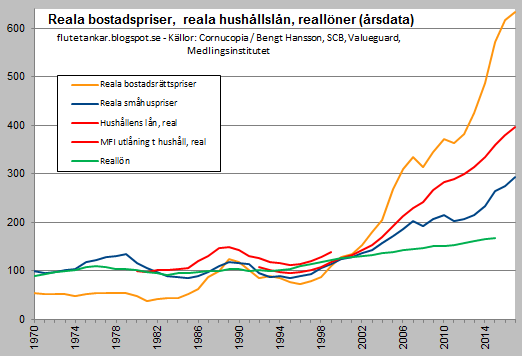
https://2.bp.blogspot.com/-tonEuOE0IXE/WfpBpIzy8rI/AAAAAAAAF...
In fact only Lithuania, Latvia and Estonia of the Northern Europe countries are showing a long term decline.
[1] - https://worldpopulationreview.com/world-cities/stockholm-pop...
Have any other countries seen such a strong fertility rate bump as Hungary? I haven't seen any long trends that look that promising!
Even by just looking at my surroundings, I have some friends who make decent money, and they're still on "no kids" train, even though hiring 24/7 help would just cost them pennies.
If real disposable income is rising, then people have more access to non necessary resources than they did before. So, they have more wealth, but are having fewer babies, which is the general trend.
What about evolutionary pressure - the biological impulse? Or, are we humans post-evolution and have overridden the innate impulse to reproduce?
I don't understand Rotkirch's point here. Of course the kinds of population decline we're on track to experience cannot solve the acute climate change crisis, but it can open up the solution space for human civilization in the long term by giving humanity more time to deal with non-renewable resource constraints and earth system boundaries on a timescale of centuries. There are few ecological problems that would not be easier to solve in a century or two if the human population were closer to 1920s levels.
Near equal (higher) fertility at both extremes might be, but not proof of, the hypothesis the dirt poor and filthy rich are the fertility rate you get when opportunity cost looks near 0.
A bucket you often see stopping at 300+k imo far too low as the lower band of that is usually high stress highly educated long hours professional and small biz owners who have insane opportunity cost to have children.
There's other issues though (see my sibling post to GP)
https://ourworldindata.org/fertility-rate#what-explains-the-...
No, it’s what’s left after taxes, before any actual spending on things like housing occurs.
> Gross disposable household income is the amount of money that individuals in the household sector can spend or save after income distribution measures.
https://www.ons.gov.uk/economy/regionalaccounts/grossdisposa...
I have seen reasons like workspace discrimination, lack of parental leave, economic uncertainty and poverty in general used as reasons why young adults are not choosing to have children and it doesn’t quite make sense to me. Objectively along all those axis, societies have improved with time from the early 1900s and the birth rate keeps falling. Can someone help me understand why European countries keep trying to increase the comfort of their population expecting to increase birth rates? I understand social programs with payouts can be popular and perhaps paying to solve the problem is appealing to the population but I don’t see why we would expect those policies to actually increase fertility. I would understand if this was simply a case of government programs that people like even if they don’t achieve the desired outcome.
I think a much simpler microeconomic analysis explains the decline in fertility: opportunity cost. People in child-bearing age have too much other stuff with a larger expected payout than having children. For example, a lot of people might prefer to work hard to improve their socioeconomic situation or travel the word over raising children. Under this model, more government provided comfort won’t increase fertility because the vast amount of costs in child bearing comes from the opportunity cost. Even in a world without parental discrimination I would find it hard to argue that parents should automatically be promoted in their work but that may actually be the more significant cost. A parent may forgo promotion or other gains for parenting.
I am not sure what a better solution this problem is. We probably need to reframe childbearing in a different way through so that having children is not subject to this type of utilitarian analysis.
You see it's only moral to use other children as fiscal cattle, not your own!
There have been planned economies in various degrees that have subsidized housing, willed industries into existence, that have not done better.
The real issue is that none of our societies have brought certain values into the modern world, particularly values like family and loyalty. And because we have nuclear families now, the neuroses of the parents get focused on the 1-2 children that they tend to have.
Because survival is the goal of every species. It's encoded into the brains of a healthy animal. A falling birth rate is the opposite of that, so from a philosophical point of view it's against our most basic and most important purpose of life.
From a more modern economical point of view a falling birth rate means that a lot of the luxuries we enjoy today are based on the fact that future generations will pay for them. Pensions is the obvious one, people from today won't have a pension tomorrow if tomorrow's young people are less than tomorrow's old people. But forget pensions for a moment, an even bigger issue would be health care. Health care is mostly consumed by old non working people and paid for by the younger working population, if the former hugely outnumbers the latter then it's not hard to see how our entire healthcare system will collapse.
This raises the next big issue: immigration and the loss of a nation's own culture. If a nation cannot fix the problem of the falling birth rate then the only way to sustain itself is by having to import huge amounts of young working age people from other countries, inevitable therefore changing the culture and demographic of the nation itself. You don't have to be a right wing lunatic to see that such a drastic slow shift of demographics will cause a lot of friction and issues over a long period of time before it settles again (essentially when one demographic was mostly replaced by a new one).
> The only ethical way to get to a lower amount of people is to have less children. We should see falling birth rates as a good thing, not a problem to be solved.
Well, a falling birth rate means the extinction of humankind, so it's hardly a good thing. What you mean is that you think that we need a temporary slowdown in births because you think that we have grown by too much too fast. Well, that is possible, I don't know for sure, but if you'd look at a graph of humankind you'd want to zoom out by 100x until you don't see every little blip in acute rises and drops and see a slow but steady growth, because anything else would suggest that we have a fundamental issue with our own survival. Now when our grandparents were born the world had not even 50% of the people we hav etoday, so there was definitely a huge influx of humans over the last 100 years and that is mostly explained through huge improvements in medicine and standards of living, vaccinations, etc., so perhaps there is a good argument to say that a short term fall in births is a good thing to soften the issues we see today from those drastic increases in population, but overall a fall in birthrates is not a good thing.
Sure, if your goal is to have as many kids as possible, that's a different topic. But that's statistically insignificant amount of people as of now.
More relevant is something like Japan. [2] They are currently losing 1 in every 200 people, every year. And that rate of decline is still accelerating. And they have a similar fertility rate to Finland 1.37 vs 1.42. The only difference is that Japan has had its low fertility rate for longer, and so it's closer to the equilibrium rate of loss that such a fertility rate implies, while Finland is closer to their older higher fertility rates.
[1] - https://www.macrotrends.net/countries/RUS/russia/fertility-r...
[2] - https://www.macrotrends.net/countries/JPN/japan/population
> Or, are we humans post-evolution and have overridden the innate impulse to reproduce?
Not entirely, but it it's absolutely common for many people to say they just don't want kids.
Also, the primary thing there is the inmate impulse to have sex, not reproduce. It's just that we've managed to disconnect sex from reproduction.
So we really needed to think of this a few years ago. It might still be possible, but now it is an uphill battle and will be a much higher risk pregnancy to boot.
But agreed, there are costs that might not be offset by the rewards. Nevertheless the statistics remain filthy rich and dirt poor are acting as mirrors on the curve.
People in more developed countries are >10x more productive than people in undeveloped countries.
If we had high birth rates without building housing that would also drive up housing prices.
I'm very much a believer that housing costs are at the root of a whole lot of what's wrong with... everything.
It's long past debate and long past time for neighborhoods to come up with a "vision." We need state and national level mandates for zoning reform and density increase, and if you're against it too bad. NIMBYs had 50 years to come up with something other than obstructionism.
There are 8 billion of us. I think it's a little premature to be worrying about the extinction of homo sapiens. Something tells me when we're not all working 40+ hours a week scrabbling for the same 20% of the resources, just maybe our birth rate will sort itself out.
We are a planet trying to find the resources for eight billion human beings and we already know the backbone of our global agriculture solution is an unsustainable fossil-fuel-based phosphate cycle.
People choosing to not have replacement-number of children is one of the more humane ways to balance the cold equations for subsequent generations.
Your original post was saying that it is OK for population decline in the northern countries because it is too expensive to live there. And population growth in other (less productive) countries is fine because it evens out.
A 'generation' is equal to a birthing window, so ~20 years. And these are exponential systems, because they keep multiplying against themselves. If you start with a population of 100 and a fertility rate of 1 then your first generation will be 50 people, then 25, then 12, then 6, then 3, then 1, then extinct. By contrast imagine for comparison if this group had a fertility rate of 4. It'd go to 200 people (4x as many), 400 (16 times as many), 800 (64x as many ignoring rounding), and so on. All in one human lifetime! Pretty insane.
It's really counter-intuitive how fast fertility changes will change the face of the Earth! And now consider demographics. If you want to predict fertility it's easy: high religiosity, low income, high conservatism, low education. And vice versa for predicting low fertility. And while people can obviously differ from their parents, it's equally obvious that most people will end up like the parents. So the group having lots of kids is also the group that's generally not too bothered by climate change. And the group not having kids is the group that is concerned about climate change. Guess who's going to win that argument in the future?
This also applies to just about everything. By not having children you're essentially conceding your opportunity to have a 'voice', even if not your own, in the future of humanity. People talk about things like wanting to transfer their consciousness into a computer, but that's nonsense. There is no "transferring" anything - you might create a chatbot in your likening, but you'll be dead all the same, and that chatbot will be along as soon as somebody gets bored of running totally_sentient_chatbot_v2.37.exe. Human immortality is a social thing - and little more than a continuation of the species. And we all get to choose whether we want to play our own little part in that, or not.
This population shift has a seriously high risk of causing the global failure of egalitarian democracies, and pushing humanity back into a highly repressive and dangerous state.
1) There's no set "right number" of people who should be living in northern countries, no rule that says we need to replace every emigrant (or unborn person) with an immigrant. If it's too expensive to live up north, maybe just... Fewer people just live up north.
The population of Norway, right now, is higher than it's ever been in the country's history. Maybe a population decline looks more like a correction to a "right" amount?
2) To the extent that more people are needed, one can assume that the headcount shortfall from lower birth rate will be filled with skilled immigrants who like the climate and bring a competency that creates enough value to afford the cost of living.
Hard to predict. The resulting chaos could cause outsized environmental damage. On the other hand, the environmental damage caused by wars tends to be short-term (in contrast to the damage caused by, say, fossil-fuel-based energy production and agriculture, which is perpetually-increasing damage to feed the needs of a society with a stable population and status quo).
But you're making an excellent point. I'm certainly not advocating for societal collapse. I, for one, think the risk of such is a bit overblown (societies tend to adapt, not implode, even in the face of demographic turbulence).
Besides, automation's supposed to make up for much of the labor shortfalls anyway.
But I still think it's relevant, because it shows it is possible to get those rates back up again. They went from a rate of 1.247 to 1.826 in 20 years. Still nowhere near where it should be, but that's relatively rapid progress in a good direction. Perhaps more importantly, it also challenges many of the arguments people make about why fertility rates are collapsing in the West at large.
[1] - https://www.macrotrends.net/countries/RUS/russia/fertility-r...
Wage growth compared to cost of living has been flat to negative for decades. Outlook for the future is low. Of course people aren't having kids.
Children were genuinely profitable. Not anymore so birth rates plummet.
Nobody can seriously reason how they are going to increase the overall quantity of children while at the same time increase quality of these children('s lives). It's a tradeoff.
But there is a brighter side, if the whole society still benefits from being economically, demographically and culturally solvent, that may offset that tradeoff's quality of life decrease for these children. As we all see it's quite crappy to be a Little Emperor until you are 18 and then realize that education debt + real estate prices = 8===э
Second: even if this were true, it would still be a net win. Babies now are better than babies 3 years from now.
Also, women have a limited number of fertility years. This would give them the chance to have more.
The open question is whether we're watching a possible regressive backslide... Or the global community pushing forward towards whatever comes after capitalism, because there's clearly a huge slice of those eight billion people that capitalism is doing few favors.
A lot of real estate is being built and most of it is "low cost" economy class, which in the end lets a lot of people who want that, own an apartment and have children. Home ownership statistics are also great.
The pay is meager but at least jobs are there, meaning that if you own an apartment or a house (often inherited from your ancestors in some form) and is employed, and can fall back to Babushkas' safety nest, you can have children and that will not ruin you. Also, actual child care benefits are fine. Long parental leave et all.
Russia also actually saw a lot of economic growth since both 1999 and 1991. Perhaps the most of all ex-USSR countries, save for Baltic states, but in case of Baltics there's a serious job crunch as far as I know. The pay is nice but securing it becomes a headache. In the end it's easier to move westwards.
I'm not sure why you would assume Russian outlook is particularly bad, especially if we're talking before the 2022. After 2022, too early to say.
[1] https://yandex.ru/images/search?text=мурино
[2] https://yandex.ru/images/search?text=кудрово
The problem with Modernity is that the systems and structures that humans have built to ensure continued human flourishing within these deeply rooted social bonds have grown far beyond their original scale. You can blame capitalism, the state, whatever, it doesn't really matter. What's important is that as the state or capital grow (and they have to, or be killed by others which do), they must necessarily tear down the old order; debride the old traditions which hinder its continued growth.
The end-state of this, which we can see best in places like East Asia, or California, is society in which humans are interchangeable chess pieces. People are atomized from any received community or tradition. Thus, reproduction is viewed not as a natural stage of life — an essential component in the ordered tradition in which they live their life — but as an object of luxury consumption. Very luxury! Which is why people in these regions tend to stick to one kid, maybe two (and if you walk around Seoul, you'll see plenty of dogs in strollers: much cheaper!)
In societies which haven't yet reached that end state, we see the same effect as the forces of Modernity inexorably creep in: religion wanes, tradition falters, birthrates fall. Be it Salt Lake or Suzhou, Tehran or Tokyo, we see this pattern in every place wherever Modernity is made manifest.
Russia has lower fertility rate than EU average, at 1.50 vs 1.53. And a higher and faster growing share of Muslim population than Europe.
Overall, death rate is about 1.37x more than birth rate in Russia (999.14 vs 728.02 per 100K in first 10 months of 2023 - link to official stats https://statprivat.ru/demo2020?r=3). In EU it's 10.7 vs 9.5 per 1000 (in a full year), so only 1.12x the difference. Births are 8% lower per 1000 and deaths, 12% higher. Plus, Russia has a higher proportion of Muslim population than any EU country and it grows faster too, so for white population situation is beyond dire: in ethnic Russian majority regions apart from Moscow and St. Petersburg, death rate at 2.5-3x the birth rate is the norm.
If you've been under impression that Russia somehow has some sound demographic policy and/or family culture and is doing better in this respect than any European country, you're just a victim of Putin's propaganda. Compared to EU states, Russia is only better than Bulgaria in this respect.
People vehemently do not want density increases around them or "changes to the character of the neighbourhood", and if driving the birth rate down helps with that goal then they're fine with it.
That said, your analysis is a bit misleading. Because while deaths/births are ultimately what fertility comes down to, it's a long lagging result. Taken to extremes, if a country of 20 year olds had a rapid extinction level fertility rate of 0.1, births would still far outpace deaths for many decades. Vice versa if there was a country made up of mostly of the elderly and then a small number of high fertility youth, deaths would outpace births for many years - in spite of [now] healthy demographics.
So fertility is what matters. And no, I don't think Russia is the epitome of what we should do. They have endless problems including alcohol abuse, a hugely imbalanced sex ratio, high suicide rates, and more. But I do think they're working to solve their problems in a way that is likely to create a better and more sustainable future for themselves. By contrast much of the Western world today seems content to behave in a generally myopic and reactionary fashion. Even in this very thread you see some people positive about lower fertility rates because climate. It's like seeing your house burning down and being happy that you won't have to fix that leaking sink anymore.
[1] - https://www.statista.com/statistics/1033851/fertility-rate-r...
So it would probably be reasonably affordable, but only because you'd make it less desirable to live there. Then enter the general problem of people's complete disregard for other's property in many places in the Western world and those places would become highly unpleasant, if not unsafe, quite quickly - especially if they were very affordable. There's a reason "the projects", everywhere, end up the way they do.
[1] - https://avatars.mds.yandex.net/i?id=e67240f3f995f865b864bee1...
[2] - https://avatars.mds.yandex.net/i?id=05678345cd91e9579bd7e719...
As years go by, life becomes more complicated, not less. With or without children.
Having children also involves sacrifice, improvisation, unpredictability, suffering... and lots of people are apparently allergic to all of those things.
That's why huge subsidies to reach financial parity are probably necessary.
https://en.wikipedia.org/wiki/List_of_federal_subjects_of_Ru... (the data is copied from https://fedstat.ru/indicator/31517# - Federal Statistics service of Russia - but it's closed for access from outside).
1.42 is worse than in 20 out of 27 EU countries and worse than in EU overall (1.53). With much lower readings in Russian-populated regions, i.e. it hangs on Muslims. Of which Russia has more and they grow faster than in any EU country. Some almost purely Russian-population regions rival South Korea in low fertility with <1.0 readings. Probably fertility of Russians themselves is under 1.0 in all regions except Moscow.
Not sure why you are trying to find something good where it simply isn't.
Once you get this rolling you can improve your situation every few years.
The problem with "the projects" is that undesirable people get to live there practically for free. But that is not the case in Russia or China. Everybody lives in some sort of high-rises and has a middle class life.
But, you can also absolutely have a kid there as well.
Otherwise, people would love to be able to afford a house or at least a townhouse, but modern economy gets in the way of that wish, especially from scratch.
Rightfully so. There is no extra credit for unnecessarily burdening yourself.
...in pretty much no sense of the word a "Western" country.
Hey, there could be a connection here! Do we know where children come from?
NOBODY likes the climate.
There's no bad weather, just bad clothing. ;)
- Capital-A Anarchist "late stage liberalism", i.e. a system in which all coercive or hierarchial power structures have been dismantled, including capitalism, nationalism, and the monopoly on violence that is the bedrock of all nation states.
- As a shorthand for chaos and violence caused by an inability to enforce laws.
The latter is a sort of denigration of the former, but it's become so commonly used that people assume it without thinking. To be fair to people using the word this way, there are very few examples of functionally anarchist places that aren't hellholes[0].
[0] The https://en.wikipedia.org/wiki/Autonomous_Administration_of_N... isn't explicitly capital-A Anarchist, but they also have adopted a lot of policies that Anarchists might like.