I think this is all that needs to be said on these articles.
(There's a lot more that _could_ be said, such as how few actual birthing HN readers there are, but I think the economics is really simple at the root of it.)
Besides, even the countries with really the worst outlook and conditions aren't falling all that fast. Russia since the high point of the 1990s: https://www.worldometers.info/world-population/russia-popula...
Every bit of data seems to show that the wealthier we get, the fewer babies we have.
https://www.statista.com/statistics/1328574/fertility-rate-w...
Having said that, Hungary is trying something interesting. Waiving income tax for life for women who have 4 or more children. That might actually be compelling. https://www.cnbc.com/2019/02/11/have-four-or-more-babies-in-...
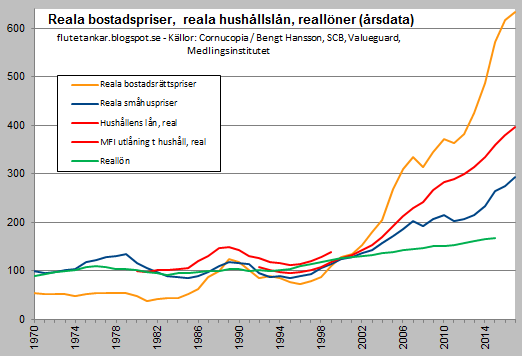
If there is insufficient supply, housing prices go up.
[1] https://www.aljazeera.com/economy/2023/7/14/japans-abandoned...
[2] https://www.ey.com/en_us/strategy/declining-enrollment-in-pu...
https://www.statista.com/statistics/332502/fertility-rate-in...
https://data.worldbank.org/indicator/SP.DYN.TFRT.IN?page=&lo...
I suspect that a couple years is not enough to draw any conclusions.
This is driving up the demand a lot in central areas.
The houses left behind are not desirable for the same reason so many opt to keep them as summer homes, leading to shortages in the districs as well.
A lot of this has to do with jobs. We've lost a lot of jobs in the districs due to various reasons, and at some point these towns collapse. You need a certain minimum number of folks to have a decent school, a hospital etc. Once population drops too low the hospital gets shut down say and it's downhill from there.
[1]: https://www.nrk.no/vestland/byene-vokser-_-distriktene-blor-...
https://www.schroders.com/en-gb/uk/individual/insights/what-...
You can clearly see the impact of ww1 and the influenza pandemic in the 1914-18 period.
Interesting. In USA fertility is tub / U shaped [0]. Filthy rich just hire nannies and bang away and dirt poor have none to negative opportunity cost
[0] https://twitter.com/theHauer/status/1222514313723875332/phot...
https://tradingeconomics.com/sweden/the-real-gross-disposabl...
Eg in sweden, deregulation: https://www.thelocal.se/20230627/explained-swedens-plans-to-...
https://2.bp.blogspot.com/-tonEuOE0IXE/WfpBpIzy8rI/AAAAAAAAF...
[1] - https://worldpopulationreview.com/world-cities/stockholm-pop...
Have any other countries seen such a strong fertility rate bump as Hungary? I haven't seen any long trends that look that promising!
https://ourworldindata.org/fertility-rate#what-explains-the-...
No, it’s what’s left after taxes, before any actual spending on things like housing occurs.
> Gross disposable household income is the amount of money that individuals in the household sector can spend or save after income distribution measures.
https://www.ons.gov.uk/economy/regionalaccounts/grossdisposa...
More relevant is something like Japan. [2] They are currently losing 1 in every 200 people, every year. And that rate of decline is still accelerating. And they have a similar fertility rate to Finland 1.37 vs 1.42. The only difference is that Japan has had its low fertility rate for longer, and so it's closer to the equilibrium rate of loss that such a fertility rate implies, while Finland is closer to their older higher fertility rates.
[1] - https://www.macrotrends.net/countries/RUS/russia/fertility-r...
[2] - https://www.macrotrends.net/countries/JPN/japan/population
I'm very much a believer that housing costs are at the root of a whole lot of what's wrong with... everything.
It's long past debate and long past time for neighborhoods to come up with a "vision." We need state and national level mandates for zoning reform and density increase, and if you're against it too bad. NIMBYs had 50 years to come up with something other than obstructionism.
But I still think it's relevant, because it shows it is possible to get those rates back up again. They went from a rate of 1.247 to 1.826 in 20 years. Still nowhere near where it should be, but that's relatively rapid progress in a good direction. Perhaps more importantly, it also challenges many of the arguments people make about why fertility rates are collapsing in the West at large.
[1] - https://www.macrotrends.net/countries/RUS/russia/fertility-r...
[1] https://yandex.ru/images/search?text=мурино
[2] https://yandex.ru/images/search?text=кудрово
Russia has lower fertility rate than EU average, at 1.50 vs 1.53. And a higher and faster growing share of Muslim population than Europe.
Overall, death rate is about 1.37x more than birth rate in Russia (999.14 vs 728.02 per 100K in first 10 months of 2023 - link to official stats https://statprivat.ru/demo2020?r=3). In EU it's 10.7 vs 9.5 per 1000 (in a full year), so only 1.12x the difference. Births are 8% lower per 1000 and deaths, 12% higher. Plus, Russia has a higher proportion of Muslim population than any EU country and it grows faster too, so for white population situation is beyond dire: in ethnic Russian majority regions apart from Moscow and St. Petersburg, death rate at 2.5-3x the birth rate is the norm.
If you've been under impression that Russia somehow has some sound demographic policy and/or family culture and is doing better in this respect than any European country, you're just a victim of Putin's propaganda. Compared to EU states, Russia is only better than Bulgaria in this respect.
That said, your analysis is a bit misleading. Because while deaths/births are ultimately what fertility comes down to, it's a long lagging result. Taken to extremes, if a country of 20 year olds had a rapid extinction level fertility rate of 0.1, births would still far outpace deaths for many decades. Vice versa if there was a country made up of mostly of the elderly and then a small number of high fertility youth, deaths would outpace births for many years - in spite of [now] healthy demographics.
So fertility is what matters. And no, I don't think Russia is the epitome of what we should do. They have endless problems including alcohol abuse, a hugely imbalanced sex ratio, high suicide rates, and more. But I do think they're working to solve their problems in a way that is likely to create a better and more sustainable future for themselves. By contrast much of the Western world today seems content to behave in a generally myopic and reactionary fashion. Even in this very thread you see some people positive about lower fertility rates because climate. It's like seeing your house burning down and being happy that you won't have to fix that leaking sink anymore.
[1] - https://www.statista.com/statistics/1033851/fertility-rate-r...
So it would probably be reasonably affordable, but only because you'd make it less desirable to live there. Then enter the general problem of people's complete disregard for other's property in many places in the Western world and those places would become highly unpleasant, if not unsafe, quite quickly - especially if they were very affordable. There's a reason "the projects", everywhere, end up the way they do.
[1] - https://avatars.mds.yandex.net/i?id=e67240f3f995f865b864bee1...
[2] - https://avatars.mds.yandex.net/i?id=05678345cd91e9579bd7e719...
https://en.wikipedia.org/wiki/List_of_federal_subjects_of_Ru... (the data is copied from https://fedstat.ru/indicator/31517# - Federal Statistics service of Russia - but it's closed for access from outside).
1.42 is worse than in 20 out of 27 EU countries and worse than in EU overall (1.53). With much lower readings in Russian-populated regions, i.e. it hangs on Muslims. Of which Russia has more and they grow faster than in any EU country. Some almost purely Russian-population regions rival South Korea in low fertility with <1.0 readings. Probably fertility of Russians themselves is under 1.0 in all regions except Moscow.
Not sure why you are trying to find something good where it simply isn't.
- Capital-A Anarchist "late stage liberalism", i.e. a system in which all coercive or hierarchial power structures have been dismantled, including capitalism, nationalism, and the monopoly on violence that is the bedrock of all nation states.
- As a shorthand for chaos and violence caused by an inability to enforce laws.
The latter is a sort of denigration of the former, but it's become so commonly used that people assume it without thinking. To be fair to people using the word this way, there are very few examples of functionally anarchist places that aren't hellholes[0].
[0] The https://en.wikipedia.org/wiki/Autonomous_Administration_of_N... isn't explicitly capital-A Anarchist, but they also have adopted a lot of policies that Anarchists might like.