How about now? https://www.bbc.com/news/articles/ce3ex92557jo
South Africa built nuclear weapons in the 1980s:
https://en.wikipedia.org/wiki/South_Africa_and_weapons_of_ma...
But it never had an orbital launch capability.
Pakistan doesn't have a domestic orbital launch capability but it does have nuclear weapons.
Surprisingly, the United Kingdom doesn't have a domestic orbital launch capability at present though it has had ballistic missiles and nuclear weapons for many decades.
At present, I would say that building a basic implosion-assembled atomic bomb is easier than building a rocket system that reach low Earth orbit. It's a lot easier to build a bomb now than it was in the 1940s. The main thing that prevents wider nuclear weapon proliferation is treaties and inspections, not inherent technical difficulties.
(If you can't xcancel it yourself your hacker card is revoked.)
[1] https://hackaday.com/2024/02/05/starlinks-inter-satellite-la... (and this is two years ago!) [2] https://resources.nvidia.com/en-us-accelerated-networking-re...
https://en.wikipedia.org/wiki/Black-body_radiation
It has nothing to do with the movements of atoms, but just with the spectrum of photons moving through it. It means that eventually, any object left in space will reach that temperature. But it will not necessarily do it quickly, which is what you need if you're trying to cool something that is emitting heat.
https://www.pbs.org/newshour/world/pentagon-embraces-musks-g...
Data centers in space make absolute sense when you want as close to real time analysis on all sorts of information. Would you rather have it make the round trip, via satellite to the states? Or are you going to build these things on the ground near a battlefield?
Musk is selling a vision for a MASSIVE government contract to provide a service that no one else could hope to achieve. This is one of those projects where he can run up the budget and operating costs like Boeing, Northrup etc, because it has massive military applications.
https://en.wikipedia.org/wiki/External_Active_Thermal_Contro...
[1] https://en.wikipedia.org/wiki/External_Active_Thermal_Contro...
[0] https://images-assets.nasa.gov/image/jsc2021e064215_alt/jsc2...
This looks like a valid argument to me, yes. Elon mentioned 1,000,000 satellites - I'm thinking about 3rd version of Starlink as a typical example, 2 tons, 60 satellites per Starship launch, 16,000 Starship launches for the constellation, comparing with 160 launches per year of today's Falcon 9...
The argument about problems of dissipating heat still stands - I don't see a valid counterargument here. Also "SAPCE" problem looks different from the point of view of this project - https://www.50dollarsat.info/ . Basically, out launch costs go way down, and quality of electronics and related tech today on Earth is high enough to work on LEO.
https://www.cbc.ca/news/canada/saskatoon/spacex-cbc-debris-s...
A few things I think of more frequently than they affect my life are:
* https://wiki.roshangeorge.dev/w/Abolish_The_First_Lady - arguing that the FLOTUS role shouldn't exist
* https://wiki.roshangeorge.dev/w/Upward_Mobility,_Downward_So... - perhaps a less original idea that economic mobility leads to poorly performing lower-paying services.
* https://wiki.roshangeorge.dev/w/Blog/2026-01-17/Citogenesis - an example of one way that factoids get upgraded to facts
The website insists that you let it record your voice in order to show you the dangers of AI. Is it trolling the visitor? https://civai.org/talk
what am I missing here?
It's a way to get cheap capital to get cool tech. (Personal opinion.)
Like dark fibre in the 1990s, there will absolutely–someday–be a need for liquid-droplet radiators [1]. Nobody is funding it today. But if you stick a GPU on one end, maybe they will let you build a space station.
Apparently [1]. But "when ketamine is heated, its chemical structure degrades, reducing its potency."
[1] https://innervoyagerecovery.com/can-you-smoke-ketamine/
(Going to go ahead and VPN to my home connection from this airport Wi-fi.)
> Musk admitted to his biographer Ashlee Vance that Hyperloop was all about trying to get legislators to cancel plans for high-speed rail in California—even though he had no plans to build it.
https://time.com/6203815/elon-musk-flaws-billionaire-visions...
putting 1KW of solar on land - $2K, putting it into orbit on Starship (current ground-based heavy solar panels, 40kg for 4m2 of 1KW in space) - anywhere between $400 and $4K. Add to that that the costs on Earth will only be growing, while costs in space will be falling.
Ultimately Starship's costs will come down to the bare cost of fuel + oxidizer, 20kg per 1kg in LEO, i.e. less than $10. And if they manage streamlined operations and high reuse. Yet even with $100/kg, it is still better in space than on the ground.
And for cooling that people so complain about without running it in calculator - >>46878961
>2. The maintenance costs are higher because the lifetime of satellites is pretty low
it will live those 3-5 years of the GPU lifecycle.
1. Assuming 500,000 USD in permitting costs. See 2.
2. Permits and approvals: Building permits, environmental assessments, and utility connection fees add extra expenses. In some jurisdictions, the approval process alone costs hundreds of thousands of dollars. https://www.truelook.com/blog/data-center-construction-costs
3. Assuming a 60MW facility at $10M/MW. See 4.
4. As a general rule, it costs between $600 to $1,100 per gross square foot or $7 million to $12 million per megawatt of commissioned IT load to build a data center. Therefore, if a 700,000-square foot, 60-megawatt data center were to be built in Northern Virginia, the world’s largest data center market, it would cost between $420 million and $770 million to construct the facility, including its powered shell and equipping the building with the appropriate electrical systems and HVAC components. https://dgtlinfra.com/how-much-does-it-cost-to-build-a-data-...
What do you and them know that the countless extremely successful engineers who actually worked with Elon do not?
https://erik-engheim.medium.com/is-elon-musk-just-a-sales-gu...
https://recommentions.com/elon-musk/books/culture-by-iain-ba...
https://www.vox.com/culture/413502/iain-banks-culture-series...
https://fortune.com/2025/12/15/billionaire-elon-musk-say-tha...
> Musk pointed to The Culture series by Iain M. Banks as his best “imagining” of this world. The science fiction novels depict a utopian future where citizens can have virtually anything they want thanks to AI—making money obsolete and leaving citizens free to spend their time doing whatever they love.
- In the EU, the ASCEND study conducted in 2024 by Thales Alenia Space found that data center in space could be possible by 2035. Data center in space could contribute to the EU's Net-Zero goal by 2050 [1]
- heat dissipation could be greatly enhanced with micro droplet technology, and thereby reducing the required radiator surface area by the factor of 5-10
- data center in space could provide advantages for processing space data, instead of sending them all to earth. - the Lonestar project proved that data storage and edge processing in space (moon, cislunar) is possible.
- A hybrid architecture could dramatically change the heat budget: + optical connections reduce heat + photonic chips (Lightmatter and Q.ANT) + processing-in-memory might reduce energy requirement by 10-50 times
I think the hybrid architecture could provide decisive advantages, especially when designed for AI inference workloads,
press x to doubt
> on 21 February 2008, the US Navy destroyed USA-193 in Operation Burnt Frost, using a ship-fired RIM-161 Standard Missile 3 about 247 km (153 mi) above the Pacific Ocean.
https://www.nasa.gov/smallsat-institute/sst-soa/thermal-cont...
But I really hope posts like this don't discourage whoever is investing in this. The problems are solvable, and someone is trying to solve them, that's all that matters. My only concern is the latency, but starlink seems to manage somehow.
Also, a matter of technicality (or so I've heard it said) is that the earth itself doesn't dissipate heat, it transforms or transfers entropy.
But now looking back and accounting for the claims he made there's a pattern.
I saw this article:
https://www.wired.com/story/theres-a-very-simple-pattern-to-...
that said... he did jumpstart the EV industry. He has put up satellites every week for years. He is still a net benefit to all of us.
https://spectrum.ieee.org/underground-nuclear-reactor-deep-f...
Space is not cold or hot - it isn't. It's a vacuum. Vacuum has no temperature, but objects in space reach temperatures set by radiative balance with their environment. This makes it difficult to get rid of heat. On earth heat can be dumped through phase change and discharged (evaporation), or convection or any number of other ways. In space the only way to get rid of heat is to radiate it away.
Superconductors don't have any resistance - and so heating from resistance isn't present. However, no super conducting computers have been created.
https://en.wikipedia.org/wiki/Superconducting_computing
And yes, it is really impressive - but we're also talking about one chip in liquid helium on earth. One can speculate about the "what if we had..." but we don't. If you want to make up technologies I would suggest becoming a speculative fiction author.
Heating of the spacecraft would get it on the warm side.
https://www.amu.apus.edu/area-of-study/science/resources/why...
> The same variations in temperature are observed in closer orbit around the Earth, such as at the altitudes that the International Space Station (ISS) occupies. Temperatures at the ISS range between 250° F in direct sunlight and -250° F in opposition to the Sun.
> You might be surprised to learn that the average temperature outside the ISS is a mild 50° F or so. This average temperature is above the halfway point between the two temperature extremes because objects in orbit obviously spend more time in partial sunlight exposure than in complete opposition to the Sun.
> The wild fluctuations of 500° F around the ISS are due to the fact that there is no insulation in space to regulate temperature changes. By contrast, temperatures on Earth’s surface don’t fluctuate more than a few degrees between day and night. Fortunately, we have an atmosphere and an ozone layer to insulate the Earth, protect it from the Sun’s most powerful radiation and maintain relatively consistent temperatures.
If you want solar power, you've got to deal with the 250 °F (121 °C). This is far beyond the specification for super conducting materials. For that matter, even -250 °F (-156 °C = 116 K) is much warmer than the super conducting chip range of 10 K.
Furthermore, the cryogenic material boils off in space quite significantly (I would suggest reading https://en.wikipedia.org/wiki/Orbital_propellant_depot#LEO_d... or https://spacexstock.com/orbital-refueling-bottlenecks-what-i... "Even minor heat exposure can cause fuel to boil off, increasing tank pressure and leading to fuel loss. Currently, the technology for keeping cryogenic fuels stable in space is limited to about 14 hours.") You are going to have significant problems trying to keep things at super conducting temperatures for a day, much less a month or a year.
Even assuming that you can make a computer capable of doing AI training using super computers this decade (or even the next) ... zero resistance in the wire is not zero power consumption. That power consumption is again heat.
---
> Theoretically you could manufacture a lot of the electricity conducting medium out of a superconductor.
Theoretically you can do whatever you want and run it on nuclear fusion. Practically, the technologies that you are describing are not things that are viable on earth, much less to try to ship a ton of liquid helium into space (that's even harder than shipping a ton of liquid hydrogen - especially since harvesting it is non-trivial).
---
Computing creates heat. Maxwell's demon taught us that doing 1 & 1 and getting one creates heat. Every bit of computation creates heat - superconductor or no. This is an inescapable fact of classical computation. "Ahh," you say " - but you can do quantum computation"... and yes, it may work... and if you can get a quantum computer with a kilobit of qbits into space, I will be very impressed.
---
One of the things that damages superconductors is radiation. On earth we've got a nice atmosphere blocking the worst of it. Chips in space tend to be radiation hardened. The JWST is using a BAE RAD750. The 750 should be something that rings a bell in the mind of people... its a PPC 750 - the type in a Macintosh G3... running between 110 and 200 Mhz (that is not a typo, it is not Ghz but Mhz).
High temperature super conductors (we're not dealing with the 10 kelvin but rather about 80 kelvin (still colder than -250 °F) are very sensitive to damage to their lattice. As they accumulate damage they become less superconductive and that causes problems when you've got a resistor heating up in the cryogenic computer.
---
Your descriptions of the technology for superconducting computers is in the lab, at best decades from being something resembling science fact (much less a fact that you can lift into space).
No, he's not. Dragon is using CotS, non rad-hardened CPUs. And it's rated to carry humans to space.
> AWST: So, NASA does not require SpaceX to use radiation-hardened computer systems on the Dragon?
John Muratore: No, as a matter of fact NASA doesn't require it on their own systems, either. I spent 30 years at NASA and in the Air Force doing this kind of work. My last job was chief engineer of the shuttle program at NASA, and before that as shuttle flight director. I managed flight programs and built the mission control center that we use there today.
On the space station, some areas are using rad-hardened parts and other parts use COTS parts. Most of the control of the space station occurs through laptop computers which are not radiation hardened.
> Q: So, these flight computers on Dragon – there are three on board, and that's for redundancy?
A: There are actually six computers. They operate in pairs, so there are three computer units, each of which have two computers checking on each other. The reason we have three is when operating in proximity of ISS, we have to always have two computer strings voting on something on critical actions. We have three so we can tolerate a failure and still have two voting on each other. And that has nothing to do with radiation, that has to do with ensuring that we're safe when we're flying our vehicle in the proximity of the space station.
I went into the lab earlier today, and we have 18 different processing units with computers in them. We have three main computers, but 18 units that have a computer of some kind, and all of them are triple computers – everything is three processors. So we have like 54 processors on the spacecraft. It's a highly distributed design and very fault-tolerant and very robust.
[1] - https://aviationweek.com/dragons-radiation-tolerant-design
0. https://www.arccompute.io/solutions/hardware/gpu-servers/sup...
The short answer is that ~100m2 of steel plate at 1400C (just below its melting point) will shed 50MW of power in black body radiation.
I will not re-read them, but from what I recall from those threads is numbers don't make sense. Something like:
- radiators the multiple square kilometers in size, in space;
- lifting necessary payloads to space is multiples of magnitudes more than we have technology/capacity as the whole world now;
- maintanence nightmare. yeah you can have redundancy, but no feasable way to maintain;
- compare how much effort/energy/maintenance is required to have ISS or Tiangong space stations - these space datacenters sound ridiculous;
NB: I would be happy to be proven wrong. There are many things that are possible if we would invest effort (and money) into it, akin to JFK's "We choose to go to the Moon" talk. Sounded incredible, but it was done from nearly zero to Moon landing in ~7 years. Though as much as I udnerstand - napkin math for such scale of space data centers seem to need efforts that are orders or magnitude more than Apollo mission, i.e. launching Saturn V for years multiple times per day. Even with booster reuse technology this seems literally incredible (not to mention fuel/material costs).
"SmartIR’s graphene-based radiator launches on SpaceX Falcon 9" [1]. This could be the magic behind this bet on heat radiation through exotic material. Lot of blog posts say impossible, expensive, stock pump, etc. Could this be the underlying technology breakthrough? Along with avoiding complex self-assembly in space through decentralization (1 million AI constellation, laser-grid comms).
[1] https://www.graphene-info.com/smartir-s-graphene-based-radia...
- SpaceX just requested a license to launch up to a million satellites.
- the satellites already have some incredible anti collision software, which I believe Elon has now open sourced.
- the cost to launch 1 kg to space has dropped by a factor of 10 in the past few years and is currently less than $1000. It's perfectly reasonable to estimate that over the next 10 years the cost could drop by another factor of 10, if not more, particularly if the heavy rockets are reusable.
1. https://techcrunch.com/2026/01/31/spacex-seeks-federal-appro...
2. https://starlink.com/updates/stargaze
3. https://www.netizen.page/2025/05/cost-per-kilogram-to-low-ea...
Edit: added item 3
Not necessarily. There are many modern thermos "cups" that are just a regular cup, except with two layers of glass and a vacuum. Even the top is open all the time. (e.g. https://www.ikea.com/us/en/p/passerad-double-wall-glass-8054... )
It's still good enough to keep your coffee hot for an entire day.
Solar panels are 20x more efficient than growing corn for ethanol. Swap out some of those 30 million acres of ethanol corn fields (in the US) and you'll have more energy than you need.
More details here: https://www.youtube.com/watch?v=KtQ9nt2ZeGM
What about gamma rays? there is a reason why "space hardened" microcontrollers are MIPS chips from the 90s on massive dies with a huge wedge of metal on it. You can't just take a normal 4micron die and yeet it into space and have done with it.
Then there is the downlink. If you want low latency, then you need to be in Low earth orbit. That means that you'll spend >40% of your time in darkness. So not only do you need to have a MAssive heat exchanger and liquid cooling loop, which is space rated, you need to have ?20mwhr of battery as well (also cooled/heated because swinging +/- 140 C every 90 minutes is not going to make them happy)
Then there is data consistency, is this inference only? or are we expecting to have a mesh network that can do whole "datacentre" cache coherence? because I have bad news for you if you're going to try that.
Its just complete and total bollocks.
utter utter bollocks.
Starship launch costs have a $100/kg goal, so we'd be at $40 / kW, or $4800 for a 120kW cluster.
120kW is 1GWh annually, costs you around $130k in Europe per year to operate. ROI 14 days. Even if launch costs aren't that low in the beginning and there's a lot more stuff to send up, your ROI might be a year or so, which is still good.
[1] - https://www.polytechnique-insights.com/en/columns/space/ultr... [2] - https://space.stackexchange.com/questions/12824/lightest-pos...
Openrouter is a decent proxy for real world use and Grok is currently 8% of the market: https://openrouter.ai/rankings (and is less than 7% of TypeScript programming)
People are acting like a space data centre would be running a traditional workload. No, it's probably running a military one, some sort of AI powered modern version of Dead Hand (https://en.wikipedia.org/wiki/Dead_Hand). Autonomous warfare could get real dark, real fast.
[0] https://en.wikipedia.org/wiki/List_of_Starlink_and_Starshiel...
[1] https://en.wikipedia.org/wiki/List_of_Falcon_9_and_Falcon_He...
Quote: "emissivity higher than 0.99 over a wide range of wavelengths". Article title "Perfect blackbody radiation from a graphene nanostructure" [1]. So several rolls of 10 x 50 meters graphene-coated aluminium foil could have significant cooling capability. No science-fiction needed anymore (see the 4km x 4km NVIDIA fantasy)
[1] https://opg.optica.org/oe/fulltext.cfm?uri=oe-21-25-30964
https://pluralistic.net/2024/05/17/fake-it-until-you-dont-ma...
Minimizing payload at any point was easily worth a billion dollars. And given how heavy and nessisary the radiators are (look them up), you can bet a decent bit of research was invested in making them lightweight.
Heck, one bit of research that lasted the entire lifetime of the shuttle was improving the radiative heat system [1]. Multiple contractors and agencies invested a huge amount of money to make that system better.
Removing heat is one of the most researched problems of all space programs. They all have to do it, and every gram of reduction means big savings. Simply saying "well a DC will need more of it, therefore there must be low hanging fruit" is naive.
https://paulgraham.com/submarine.html
> Why do the media keep running stories saying suits are back? Because PR firms tell them to. One of the most surprising things I discovered during my brief business career was the existence of the PR industry, lurking like a huge, quiet submarine beneath the news. Of the stories you read in traditional media that aren't about politics, crimes, or disasters, more than half probably come from PR firms.
Musk is running out of runway on his way to infinity dollars and since Tesla is slowly crumbling compared to its valuation, the ideas need to become crazier and crazier: humanoid robots tomorrow, self driving taxis tomorrow, reusable rockets going to Mars tomorrow, data centers in space tomorrow.
It would be fun to watch if Musk wouldn't funnel a lot of money that could be used for good, instead. Imagine how many diseases we could cure with all that money. Or feed and educate the poor. Or how much walkable and bikeable and ultimately liveable infrastructure we could build world wide. Or how fewer plastics we could use, ingest and discard if we could promote healthy and natural alternatives.
And techies fall for his stories every time, hook, line and sinker, because he's speaking about core geek fantasies.
Someone mentioned in the comments on a similar article that sun synchronous orbits are a thing. This was a new one to me. Apparently there's a trick that takes advantage of the Earth not being a perfect sphere to cause an orbit to precess at the right rate that it matches the Earth's orbit around the sun. So, you can put a satellite into a low-Earth orbit that has continuous sunlight.
https://en.wikipedia.org/wiki/Sun-synchronous_orbit
Is this worth all the cost and complexity of lobbing a bunch of data centers into orbit? I have no idea. If electricity costs are what's dominating the datacenter costs that AI companies are currently paying, then I'm willing to at least concede that it might be plausible.
If I were being asked to invest in this scheme, I would want to hear a convincing argument why just deploying more solar panels and batteries on Earth to get cheap power isn't a better solution. But since it's not my money, then if Elon is convinced that this is a great idea then he's welcome to prove that he (or more importantly, the people who work for him) have actually got this figured out.
It may happen one day, but we are very, very far from that. As of now, big countries watch their space corporations very closely and won't let them do this.
Nevertheless, as an American, you can escape state and regional authorities this way. IIRC The Californian Coastal Commission voted against expansion of SpaceX activities from Vandenberg [1], and even in Texas, which is more SpaceX-friendly, there are still regulations to comply with.
If you launch from international waters, these lower authority tiers do not apply.
[1] https://www.latimes.com/business/story/2025-08-14/california...
> Tesla sold 20,237 Cybertrucks in 2025, down from 38,965 the previous year, according to figures from Kelley Blue Book's annual electric vehicle (EV) sales reports.
https://www.cbsnews.com/news/tesla-cybertruck-sales-elon-mus...
> A federal safety report shows that Tesla is recalling 63,619 of its futuristic pickups, and this seems to be the total number of Cybertrucks built since the first one was delivered at the end of 2023.
https://www.arenaev.com/teslas_latest_recall_reveals_real_cy...
> Musk said that it's time to put the Model S and Model X vehicles to rest. Now it's not that huge of a change, given that 97% of Tesla's sales consist of Model 3 and Model Y cars, but the Model S is still the original car delivered by Tesla.
https://www.arenaev.com/tesla_discontinues_the_model_s_and_m...
> The financial report paints a grim picture for the company. Tesla's total profit for 2025 was €3.24 billion. That is a lot of money, whichever way you look at it, but it is actually 46 percent less than what the company made in 2024. The profit margin, which is the percentage of money the company keeps after paying expenses, fell to just 4.9 percent. In 2022, that number sat at 23.8 percent.
> One of the most interesting parts of the financial report is how Tesla made its money. A large chunk of its profit did not come from selling EVs to people. Instead, it came from selling "regulatory credits" to other car companies that need help meeting pollution rules. These credits brought in €2 billion.
> That means 52 percent of Tesla's entire profit for the year came from these credits, not from selling vehicles. If Tesla did not have those credits, the financial results would look much worse. And the problem the company is facing? Those credits are gone; they won't be part of Tesla's business model this year since they were cancelled by the current administration.
https://www.arenaev.com/tesla_profits_drop_as_automaker_star...
Tesla is betting on long shots like humanoid robots and self driving taxis everywhere. There are other desperation moves like merging Tesla (profitable) with SpaceX (I think it's also profitable? but most of its business is governments: risky markets) and xAI (most likely wildly unprofitable, just like Twitter).
as always: imho. (!)
we already had this topic before, an example for another good article regarding physical arguments against this idea would be:
"Datacenters in space are a terrible, horrible, no good idea" ~ late 2025
* https://taranis.ie/datacenters-in-space-are-a-terrible-horri...
TL;DR: It's not going to work.
idk ... maybe elon has something else in mind with this merger!?
cheers,
a..z
You'll note that there is still a frame that it gets unfolded with and that you've got the additional mechanical apparatus to do the unfurling (and the human there to fix it if there are problems.
Again, you'll note that there is frame material there.
You don't have a sheet of glass on it, but space doesn't give you the mass savings you think it does.
Those are cutting edge tech (designed to work at Jupiter's distance) and that's about 40 m^2 of space (ten times more than you're describing) and they mass 176 kg ( https://doi.org/10.1007/s11214-025-01190-6 ). If we assume that scales down linearly, the cutting edge technology for solar panels is 20kg for 4m^2 which is more than your estimates. ... And they have problems and can fail to deploy. https://spacenews.com/cygnus-solar-array-fails-to-deploy/ https://spaceflightnow.com/news/n1105/25telstar14r/index.htm... https://www.nasa.gov/history/50-years-ago-skylab-2-astronaut... https://ntrs.nasa.gov/api/citations/20210020397/downloads/Al...
You'll note that the Cygnus used the same design as Lucy, though smaller.
https://en.wikipedia.org/wiki/Cygnus_(spacecraft)
> Starting with the Enhanced variant, the solar panels were also upgraded to the UltraFlex, an accordion fanfold array, and the fuel load was increased to 1,218 kilograms (2,685 lb).
Digging more into Ultra Flex, https://www.eng.auburn.edu/~dbeale/ESMDCourse/Site%20Documen...
> Specific performance with 27% TJ cells: >150 W/kg BOL & > 40 kW/m3 BOL
So there's your number. 150 W/kg of solar panel array. 1 kW is about 7 kg.
They're not cheap.
https://spacenews.com/36576ousted-from-first-orion-flight-ci...
> In 2011, Orbital replaced Dutch Space on the project and gave ATK’s space components division, which was already supplying the substrates for Dutch Space’s Orion solar panels, a $20 million deal to provide UltraFlex arrays for later Cygnus flights.
https://www.nextbigfuture.com/2022/02/spacex-reusable-rocket... -- looks like target price for Starship launch would be $3--$5m according to the author.
Wouldn't the /kg price to SpaceX be:
3000000/100000 = $30/kg -- 5000000/100000 = $50/kg?
If they recover everything and produce fuel at scale, wouldn't it drop the cost even more.
What many people quote here are commercial rates, I think. SpaceX won't pay those prices.
Can someone check my math
What do you mean we don’t have any plans to avoid that? It is a super well studied topic of satelite management. Full books have been written on the topic.
Here is just one: https://ntrs.nasa.gov/api/citations/20230002470/downloads/CA...
Did you think satelites are kept apart by good luck and providence?
How's that full-self driving promised for decades working out?
How's the destruction of USAID working out (oh you wouldn't know a million dead now)
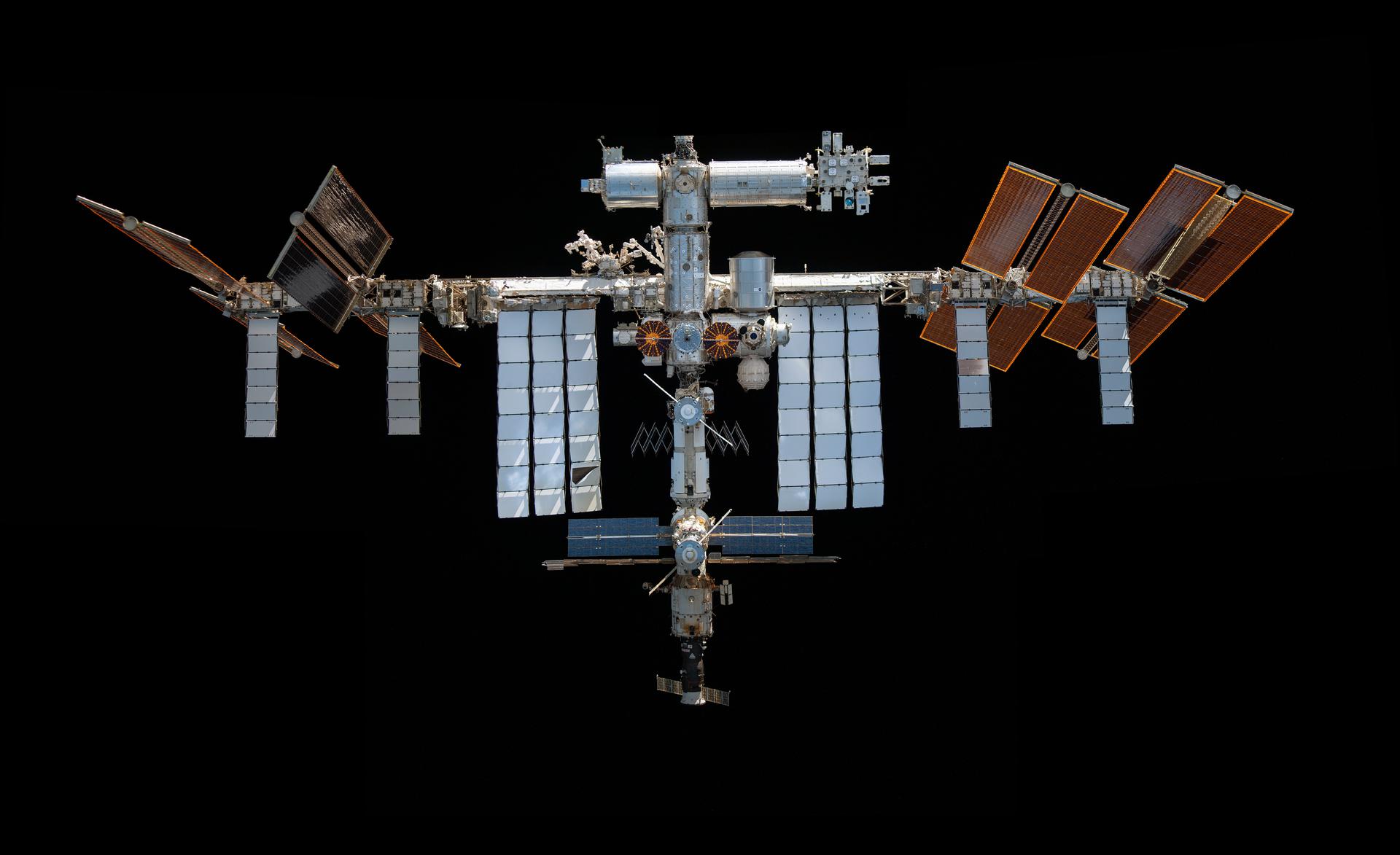
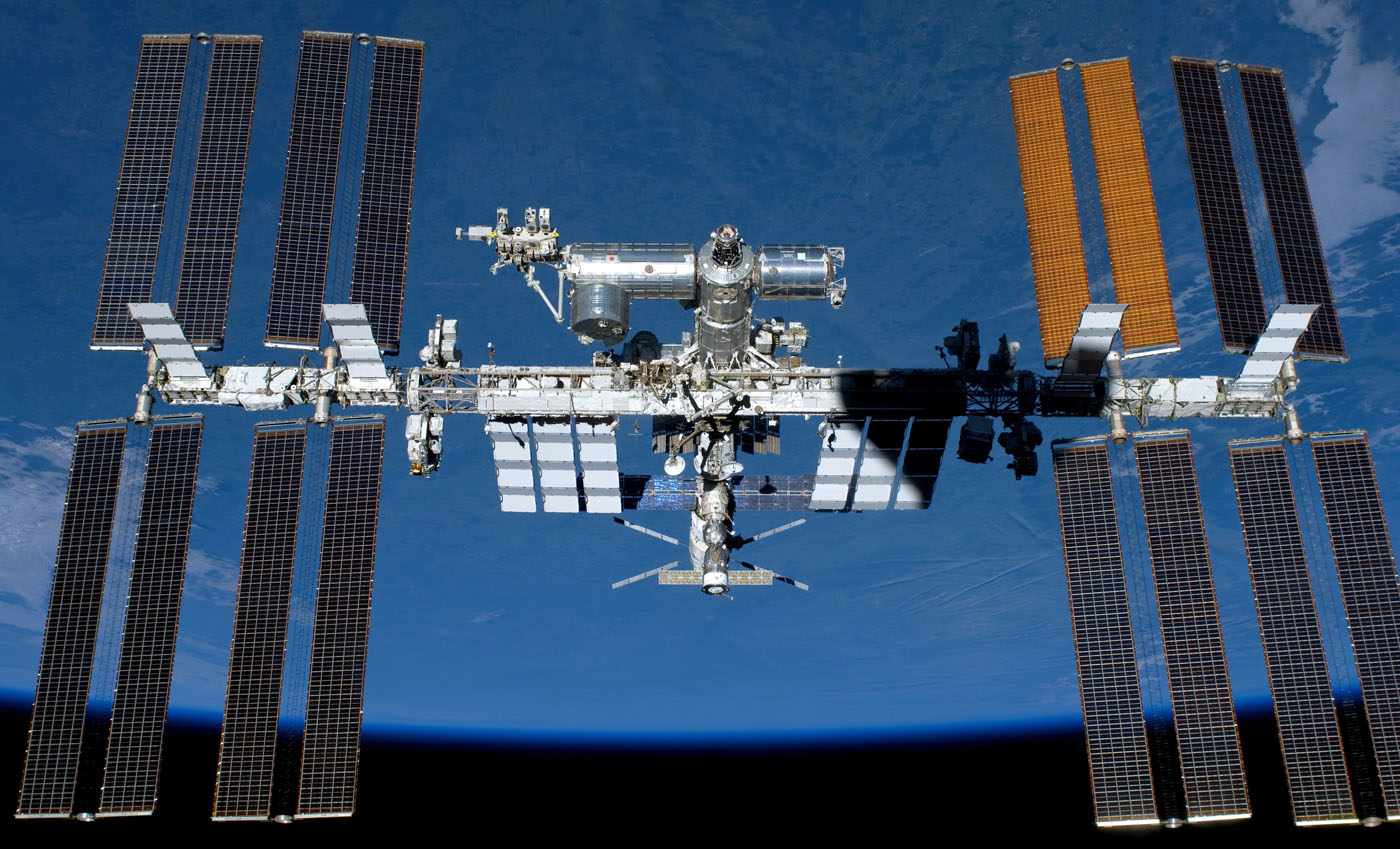
We already have a data-center in space, sort-of, here's how many radiation panels it has to deploy for just the heat produced from the small number of low-power computers
* https://i.sstatic.net/cpIBo.jpg
(ISS, all those white panels are thermal heat radiators)
"So here's what I did. I built a simple model that reduces the debate to one parameter: cost per watt of usable power for compute. The infographic below lets you change the assumptions directly. If you disagree with the inputs, great. Move the sliders. But at least we'll be arguing over numbers that map to reality.
The model is deliberately boring. No secret sauce. Just publicly available numbers and first-principles physics: solar flux, cell efficiency, radiator performance, launch cost, hardware mass, and a terrestrial benchmark that represents the real alternative: a tilt-wall datacenter sitting on top of cheap power. "
"Here's the headline result: it's not obviously stupid, and it's not a sure thing. It's actually more reasonable than my intuition thought! If you run the numbers honestly, the physics doesn't immediately kill it, but the economics are savage. It only gets within striking distance under aggressive assumptions, and the list of organizations positioned to even try that is basically one."
turns out pit mining is good for the environment after all
> [I recommend] all of them, especially Surface Detail
Total pipe dream. They can't take away your servers, but they can imprison you until you provide access. And SpaceX would still fall under the laws of whichever country it's based in. If lawful access is really a problem, laws will be written to make it SpaceX's problem. Relevant XKCD: https://xkcd.com/538/
In Spain, 1kWp of solar can expect to generate about 1800 kWh per year. There's a complication because seasonal difference is quite large - if we assume worst case generation (ie what happens in December), we get more like 65% of that, or 1170 kWh per year.
That means we need to overbuild our solar generation by about 7.5x to get the same amount of generation per year. Or 7.5kWp.
We then need some storage, because that generation shuts off at night. In December in Madrid the shortest day is about 9 hours, so we need 15 hours of storage. Assuming a 1kW load, that means 15kWh.
European wholesale solar panels are about €0.1/W - €100/kW. So our 7.5kWp is €750. A conservative estimate for batteries is €100/kWh. So our 15kWh is €1500. There's obviously other costs - inverters etc. But perhaps the total hardware cost is €3k for 1kW of off-grid solar.
A communications satellite like the Eurostar Neo satellite has a payload power of 22 kW and a launch mass of 4,500 kg. Assuming that's a reasonable assumption, that means about 204kg per kW. Current SpaceX launch costs are circa $1500 per kg - but they're targeting $100/kg or lower. That would give a launch cost of between $300k and $20k per kW of satellite power. That doesn't include the actual cost of the satellite itself - just the launch.
I just don't see how it will make sense for a long time. Even if SpaceX manage to drastically lower launch costs. Battery and solar costs have also been plummeting.
https://www.spaceconnectonline.com.au/manufacturing/4751-air...
https://www.nextbigfuture.com/2025/01/spacex-starship-roadma...
[1] https://www.nlr.gov/news/detail/features/2021/scientists-stu...
I was poorly trying to raise this trite distinction, asserting skepticism falls closer to Opinion than Journalism. The line gets more fine every day. I know. Take it up with them/their peers.
'Rigorous' would be "Billionaire says '<crazy shit>'", not "Billionaire says '<crazy shit>'... and here's how we feel/think about it".
https://climatecosmos.com/sustainability/how-close-are-we-to...
> As conduction and convection to the environment are not available in space, this means the data center will require radiators capable of radiatively dissipating gigawatts of thermal load. To achieve this, Starcloud is developing a lightweight deployable radiator design with a very large area - by far the largest radiators deployed in space - radiating primarily towards deep space...
They claim they can radiate "633.08 W / m^2". At that rate, they're looking at square kilometers of radiators to dissipate gigawatts of thermal load, perhaps hectares of radiators.
They also claim that they can "dramatically increase" heat dissipation with heat pumps.
So, there you have it: "all you have to do" is deploy a few hectares of radiators in space, combined with heat pumps that can dissipate gigawatts of thermal load with no maintenance at all over a lifetime of decades.
This seems like the sort of "not technically impossible" problem that can attract a large amount of VC funding, as VCs buy lottery tickets that the problem can be solved.
[1] https://lilibots.blogspot.com/2020/04/starlink-satellite-dim...
Is it reasonable to use Neo as a baseline? Modern Starlink satellites can weigh 800kg, or less than 20% of Neo. I see discussions suggesting they generate ~73kw for that mass. I guess because they aren't trying to blanket an entire continent in signal? Or, why are they so much more efficient than Neo?
Interestingly the idea of doing compute in space isn't a new one, it came up a few years ago pre-ChatGPT amongst people discussing the v2 satellite:
https://forum.nasaspaceflight.com/index.php?topic=58374.msg2...
Still, you make good points. Even if you assume much lighter satellites, the GPUs alone are very heavy. 700kg or so for a rack. Just the payload would be as heavy as the entire Starlink satellite.
https://caseyhandmer.wordpress.com/2019/08/20/space-based-so...
I would love it to be a thing, but it is not a thing.
> I would assume the people designing this are "very careful" with everything they put in the data center
Which is very nice for Musk, who can spend 30 seconds running his mouth, and people jump to assuming that a) it's being designed, b) by skilled people, c) the math and finances works out already, d) that 'completely obvious' problems must simply be your lying eyes, and contort themselves to put all the effort into defending it.
Even though Musk has a history of lying announcements and not being able to deliver and the 'completely obvious' problems were actually problems that nobody solved. Where is the 2017 full self driving car? Where is the Vision-over-LIDAR success? Where is the Hyperloop that "would be able to whisk passengers from L.A. to San Francisco in just 35 minutes"? Where are the 2025 orbital refuelling test flights for the Moon and Mars schedule, and the plans for how to keep cryogenic liquid Hydrogen cold in Space? Where was the "funding secured" Musk lied about for taking Tesla stock private in 2018 when judges found there wasn't any funding and fined him $20M? Where's the person Musk said in 2011 he could "put on Mars in a decade"? Where's the uncrewed Mars ship in 2022 he announced in 2017? The human voyage in 2024?
> "I'm a physicist myself"
And if someone tells you they have found a quantum zero-point free energy room temperature superconducting over-unity perpetual motion machine, do you jump to their defense because you assume the speaker must be very careful and smarter than everyone else? Or do you say "sounds unlikely; extraordinary claims require extraordinary evidence"?
> "I suppose they could make something like the International Space Station, which would get regular traffic back-and-forth exchanging and servicing hardware as needed."
The ISS cost 100-150 billion, is "larger than a 6 bedroom house", and its solar panels can generate 250 kW. NVidia says their AI datacenter costs $50-60 billion, needs 1GW of electricity, and look at the size of it: https://www.businessinsider.com/why-nvidia-worth-5-trillion-...
You're looking at that multiple-warehouses-structure which could sink the output of an entire nuclear power station, and going with "it would be cheaper if we launched that into space"?
On the other hand Starlink has several thousand satellites up there using solar power to run processors and cooling them with radiators so it's not totally new technology.
Here's a Musk tweet linking some analysis https://x.com/elonmusk/status/2013676764099199156
- Reusable rockets have been a thing since the Space Shuttle in 1981, building on a 1969 plan for reusable space vehicles. - https://en.wikipedia.org/wiki/Space_Shuttle
- Autonomous cars: human chauffeurs and taxis (and trains) so we can be moved around without doing the driving, go back to the first cars. We haven't had the technology to build them (and arguably don't and won't have until we get near AGI).
- Data centers in space ... ???? Bueller? Bueller?
- Humanoid robots were seen in Fritz Lang's Metropolis film in 1927, they've always made sense. What doesn't make sense is lying about having built humanoid robots and then having to admit they were being remote controlled, cough Tesla.
During the day or night, it will never be overhead.
That's incorrect. Lasers can suffer from atmospheric interference and fogging on earth.
Here is a post from NASA explaining why they like laser communications better than RF in space.[1]
[1] https://solc.gsfc.nasa.gov/modules/kidszone7/mainMenu_textOn...