There’s an interesting recent YouTube video from Wisecrack on the topic:
It turns out that this has a direct bearing on my perception of his writing.
For example i don't have to pay for his stories, if the author doesn't like me for the color of my skin or for belonging to people that the author happens to dislike.
I am also allowed to say that these are very objectionable attitudes. And i can also remind other people that these are very objectionable attitudes.
It seems like fretting over the occasional artist that’s been “outed” is a convenient way to pretend that rest of them are somehow saints, when in reality nearly all of them have likely said awful things and treated people quite terribly sometimes. While exceptions might be made for egregious offenders, often the only real difference between the two groups is a lack of visibility into their personal lives. So why get so invested?
If you don't have any friends who have parents who are morally reprehensible, then you don't have many friends.
Matilda was one of my favorite books when I was a kid. There's something in it that hits me right in the soul, even as an adult. I hear you when you say his antisemitism is an issue for you - but - I just can't see how that has any bearing on my relationship with his books. As a child I didn't understand, and now as an adult I can't bring myself to care. Its not like the royalties go to him - he's dead.
I struggle more with Scott Orson Card. Ender's Game and Speaker for the Dead are fantastic books. Both different, and both absolutely excellent. I'd rather not support him financially given he's used his platform to attack gay people. But I also suspect it would have taken someone with a conservative outlook on life to write Speaker for the dead. There's ideas in that book I never hear anyone talk about. Hearing those perspectives has broadened my outlook a little. My life would be dimmer for not having read his books.
I also think a lot of the delight in Dahl's books comes from his unbridled wildness, and his unabashed delight in being a monster to his characters - in ways modern sensibilities don't approve of. I don't think he would have been on board with the modern insistence on political correctness in children's books. I understand the edits, especially if there's netflix deals in the works. But I suspect history won't look kindly on the edits made to his books. Its ok for Wonka to have slaves (so long as they're not african) and straight up murder annoying children, but he can't call someone fat? This all feels very of-the-moment.
For example it can be taken it as a call to others to hate your guts too, and it can play out pretty nasty, if the economy turns bad and if people will start to look out for scapegoats.
This is not something entirely abstract, it happened before.
I wouldn't judge anyone for the deeds of his parents.
Its kind of a weird move but there's plenty of other ways we can weave meaning out of whats happening here.
- We could say "Ha ha - you hate Jewish people but your life's work still involved giving beautiful books for me to enjoy! Sounds like you lose, Dahl!". Taking treasure from a dragon is more virtuous if the dragon you're stealing from is evil.
- Or turn this into a story about mending fences. Here's an antisemite and a semite bonding over our shared love of stories. Sounds like a lived example of us being more alike than we are different, after all. Racism, in all its forms, diminishes through empathy and shared understanding. If two communities read different books growing up, they're much less likely to understand each other. If two communities enjoy the same books, they'll find it easier to connect and build bridges. He may have been antisemitic. Isn't that even more reason to use his life's work to bring people closer together?
This might sound weak or saccharine. But I find it pretty hard to imagine any scenario in which enjoying Matilda will somehow incite people to blame "the Jews" for a bad economy. That sounds pretty far fetched to me.
Did Dahl's antisemitism color much or some of his work? I haven't read that much of his stuff.
How?
Especially when, to my knowledge, there is no anti-Jewish content in his children's books.
That's probably a matter of interpretation, I am not an expert in these matters.
I also don't have to like his books, if I need to check upon these questions on a permanent basis. I got better things to do.
Also this post by @jasonhansel https://news.ycombinator.com/item?id=34849383#34853283
This is a good way of phrasing what I haven't been able to put into succinct language. I also find it interesting when performers and writers want to choose who is allowed to enjoy their publicly available work based on whether or not values align.
The linking of 'secret societies who run the world' to an anti-Jewish message (to the readers of the books) is also a huge stretch and I think it wrong. That the people who actually 'run the world' are hidden was evidently part of Dahl's mindset. It's not an unusual mindset. Dahl attributed some powerful Jews as (at least part of) that 'secret society' in the real world, yes. I've read those anti-Jewish quotes from Dahl before and his thinking on the matter is pretty clear. But Matilda is a work of fiction. It's not at all strange that he reflected those 'secret power group' conceptions in one of his books with a cabal of witches actually running a fictional book world. But I don't think he in any way intended the book to be an explicit analogy to what he thought about our actual world situation, i.e. I don't think witches are meant to be a stand-in for Jews, and the big noses and wigs thing is pretty weak sauce to use to make that case, as I've already addressed. Contrast Matilda here to Orwell's Animal Farm which was written as an explicit analogy to the real world, and Orwell made clear links, e.g. Snowball == Trotsky, showing that he intended it as such. While Orwell's work is partly a warning against communism (and partly just a good story, well told), Dahl's Matilda isn't a warning against 'powerful secret societies who run the world', let alone Jewish ones; the secret, malignant society is simply a good fictional plot device and one that's been used many times before (sometimes with explicit prejudice, sometimes not).
[1] https://www.heyalma.com/is-roald-dahls-the-witches-antisemit...
Dahl "justified the Holocaust"? He killed Nazis, for crying out loud.
Pointing out that Jewish people are heavily involved in the media isn't inherently anti-semitic. Creating a fictional conspiracy where a group controls the media isn't inherently anti-semitic either.
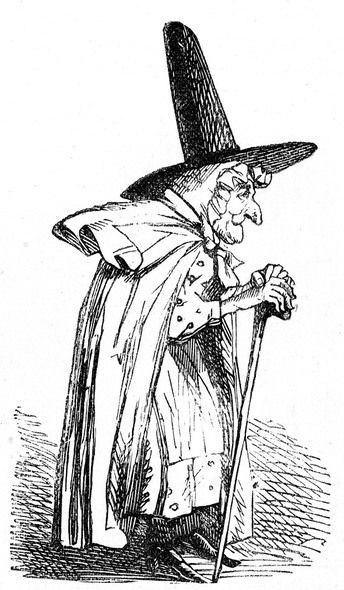
Witches and goblins have had long noses for ever. Describing them isn't antisemitic.
Jews aren't all women. Jews don't all wear wigs. Jews aren't known for turning English children into mice. The list of differences is long.
Am I really having to point all this out to a grown adult?
He also killed at least one Vichy French Air Force pilot .. again there's no indication whether that pilot (or pilots) were Nazis.
We don't get to control how people in the future will reinterpret the stories we have today. People in the future could reinterpret anything. That's their right, once we've moved on.
At a practical level, it makes no sense to live in the shadow of future generations' judgement. We're going to earn their scorn regardless. And so will they, if humanity survives long enough.
The movie paints them with orange colored skin, no one was protesting that edition of the original text.
Perhaps surprisingly large numbers of the military did not support the Nazi ideals.
High ranking members of the military failed to assisinate Hitler several times.
The specific "nitpick" is that the pilot and crew were very likely to not be actual literal Nazis.
That's just history .. the point of current interest now is the question of whether niche ideologies can take over a state and take it to war on the global stage.
'Jews are controlling the media' isn't antisemitic? 'der Stuermer' was depicting caricature Jews with long noses just for the fun of it? And yes, fictional conspiracies were a big deal in antisemitic propaganda - 'the protocols of the elders of zion' is just an example.
And regarding The Protocols of the Elders of Zion. The whole point of that book is that it was passed off as not being fictional. It was fraudulently presented as a real text.
https://www.theguardian.com/books/2020/dec/06/roald-dahl-fam...
“It’s the same old thing: we all know about Jews and the rest of it. There aren’t any non-Jewish publishers anywhere, they control the media – jolly clever thing to do – that’s why the president of the United States has to sell all this stuff to Israel.”
So just talking about conspiracies isn't a good indicator of anti-Semitism.
The thrust of your argument is, Roald Dahl "turned off" his antisemitic thoughts then wrote a book with all these antisemitic tropes in them?
Nazi ideals are bad, we can agree.
WWII is especially complex and resistes being reduced to black and white simplistics because of the same kinds of complications that exist today.
Back in the day the UK Royal Family was even more closely tied to their German cousins, many political groups in the UK were sympathetic to Nazi ideals even if opposed to the war expansion .. and the same was true for the USofA.
But, returning to the original point, I see no evidence that Dahl killed literal actual Nazi's.
Here's one to get you started : https://upload.wikimedia.org/wikipedia/commons/d/d9/Friendly...