the summary being:
- The vertical velocity of the diverted air is proportional to the speed of the wing and the angle of attack.
- The lift is proportional to the amount of air diverted times the vertical velocity of the air
it also debunks the myth of "air flows faster on the top side of the wing, causing lift"
It turns out that flat wings work just fine, but the airfoil shape we see on airplanes is more efficient:
100% completely false.
Imagine you have two particles of air, and they are immediately adjacent to each other. Suppose now that one goes above the wing, and one goes underneath. In your example, the particle going upward goes further in the same amount of time.
But ask yourself this: Why do the particles of air have to arrive at the same time? What mechanism from physics requires that they meet up again at the far end of the wing?
Then ask yourself this: If what you described is true, then how do aircraft fly upside down?
What a lot of people don't know is that the wings are actually installed on a small upward incline, relative to the longitudinal axis of the body. Think of holding your hand out the window of a moving car, and then tilting your hand to catch air under your palm. In aerospace we call this the Angle of Incidence, and most aircraft have a small amount, usually in the 1-5 degree range. So while you might be walking on a perfectly horizontal path as you go to the bathroom over the Atlantic on your way to Paris, the wings keeping you aloft are actually angled such that the leading edge is higher than the trailing edge by a small amount.
Now google any picture of an airfoil and notice that many of them are slightly concave on the underside. This is called Camber, and in a nutshell it creates a "cupping" effect under the wing that intensifies the high-pressure area under the wing and correspondingly increases the amount of air deflected downward. Additionally, the teardrop shape reduces the tendency of air to billow off the trailing edge of the wing in favour of kinda sticking to the wing's surface and following its curvature. This also causes downwash off the trailing edge (i.e. more air going downward, which is a good thing).
That's really all there is to it, from a high level. The wings deflect air downward such that the total momentum change causes an upward force that is exactly equal to the aircraft's weight, and that equilibrium of forces keeps the aircraft aloft.
Obviously it gets more complex than that, because guys spend entire PhD careers researching edge cases, but there's no magic involved.
Note that wings don't have to be of the classic teardrop shape. There are plenty of research papers about lift forces on flat plates. In fact that's classic fodder for an undergraduate assignment. The airfoil shape is beneficial in several ways, some of them quite subtle, but you can think of the airfoil as being the most efficient cross-section for a wing known to science, whereas a flat plate is much less efficient (though it still works).
>I even heard we don't completely understand why it works (?!?).
I don't think that's true. For a while there was the meme about "science says bumblebees shouldn't be able to fly" but that was a clickbait headline because we didn't know enough about the structure and motion of bumblebee wings. That's about all I can think of.
There are certainly areas of ongoing research and exploration (I'm thinking hypersonic flight, novel means of propulsion, aeroelastic structures, etc.) but in general, the physics behind conventional aircraft are quite well-understood.
By chance, in the last few years I've started reading more and more comments debunking this absurd explanation. Not that I understand perfectly now, but at least I know I'm not crazy.
But of course anyone who's seen snow billowing off the back of a car knows that air doesn't just close up behind the object like a ziplock bag: it's messy and turbulent and gets all over your windows while you're tailgating.
"Air flows faster on top" is the Bernoulli explanation. The Bernoulli principle tells us that fast air means low pressure, and low pressure sucks the plane up.
Newton explanation is the idea that the wing pushes the air down, and by reaction, pushes the plane up. Based on Newton's third law.
In reality, both are correct. The Bernoulli explanation is more specific and the Newton one is more generic. But if you want the whole picture, you need the Navier Stokes equations. Unfortunately, these are very hard to solve, so even engineers have to use simplified models.
I personally prefer the Newton explanation. It explains less, but the Bernoulli one is confusing and results in many misunderstandings. For example, that air takes the same time to follow the top side and bottom side of the wing, which is completely wrong.
The common depiction also tends to hide the fact that the trailing edge of wings is at an downwards angle, even though it is the most important part. Nice profiles make wings more efficient, but the real thing that makes planes fly is that angle, called angle of attack.
Focusing on the profile rather than on the angle of attack leads to questions like "How can planes fly upside down?" (the answer is "by pointing the nose up", and that should be obvious). If you are just trying to understand how planes fly, forget about wing profile, it is just optimization.
Flat hand, you feel a pressure at the front of your hand. At the back you should notice is a bit dry.
The pressure at the front is dynamic pressure. The gas piles up as your hand plows into it at speed. The pressure you feel is the mass of air you're picking up and carrying with you. The dryness at the back (you don't feel it per se, but you can notice it) is the resulting area of low pressure created by you plowing through the air. This is drag.
Now. Tilt your hand in the stream, and up your hand will go! The ways you can break this down/visualize it are varied, but in reality are all manifestations of the same phenomena.
Newtonian/Conservation of Energy: Each particle of air impacting the bottom of your hand is +1, each impacting the top is -1. +1 & -1 don't neutralize, so up you go.
The vacuum visualization: imagine a density visualization overlaid on the situation. There's a vacuum bubble over the top of your the hand. Nature hates a vacuum, so everything tries to fill it. The end result of that filling, is that air particles that would otherwise be slamming into the top of your hand get "sucked" into the bubble instead. This is important, because without this understanding, you can't account for things like dumping energy into the flow stream via a spinning shaft or the infamous UFO X-plane, where all the engine power was devoted to keeping air flowing faster over the top surface, allowing the darn thing to get lifted by the relatively unaccelerated air beneath even at 0 velocity of the machine relative to the environment. The key to all lift is making that asymmetry in airflow.
Symmetric airfoils can create lift at Angle of Attack, because while they are symmetric at 0 degrees, they aren't at angles offset from dead on.
There are also some weird degeneracies that you can take advantage of, like using a spinning cylinder and flat strip of material just barely offset from it to create lift with near zero relative forward speed of the apparatus to the surrounding space. (This is a function of viscosity, and the energy of the spinning rod is basically picking up the fluid and accelerating it, it separates from the cylinder and follows the strip of material creating a pressure differential, ergo lift).
Then there is the whole bit about about vortex circulation etc, the main thing to remember though is that air that is trying to fill a void created by an object moving through the air is too busy doing that to neutralize the energy gained by air transferring energy to the bottom of the lifting surface. Ergo, lift. Further, the useful "lift" you make, the more "drag" you'll create as well, because in order to maintain that vacuum you're coaxing all that air on the topside of the lifting surface to head into instead, you have to account for the energy expended in 'picking up and carrying' that air/fluid with you.
Fluid dynamics is weird, complicated, and seems like black magic, but at the end of the day it's all about what you convince the fluid to do instead of smacking into you.
There are gobs of seriously bloody weird equations all around it, but they are mostly useless in terms of being able to visualize what is going on.
Imagining a bubble sucking the lifting surface upward, and the airflow on the bottom pushing the lifting surface upward like a stone skipping on water on the other hand? Gets you good mileage on being able to imagine things.
The vacuum visualization is even more relevant at supersonic speeds, as at that point, your "flight regime" becomes "exotic chemistry occurring is a compressed flow" and an ever increasing column of air getting picked up and carried along with you as you rip a gigantic hole in the atmosphere and carry it along with you; turning aircraft operation into a balancing act between skipping off the atmosphere correctly, and not becoming part of the exotic chemistry you're causing.
Once you get the rudimentsdown though, everything becomes averageable vectors, which makes stuff like KSP with FAR a fun thing to mess with.
I want to go up. I want to use the thrust I have available to achieve that. Would not the most efficient use of the thrust available be the direct and naive approach, of pointing the engine straight up/down? Nope.
Instead, we point the engine horizontally; literally orthogonal to our desired goal. Then we use these "wing" things - they're not complicated, they're just rigid bodies with a shape, which honestly isn't even that unusual of a shape. Now we're not only able to go up (we finally achieve our goal), but we get to go fast in some horizontal direction as well.
I haven't found an explanation for this that feels satisfying to me.
A "stall" happens when the wing is no longer directing air downwards (and thus not providing lift), and is instead just chopping up in the air into turbulent chaos without any consistent direction.
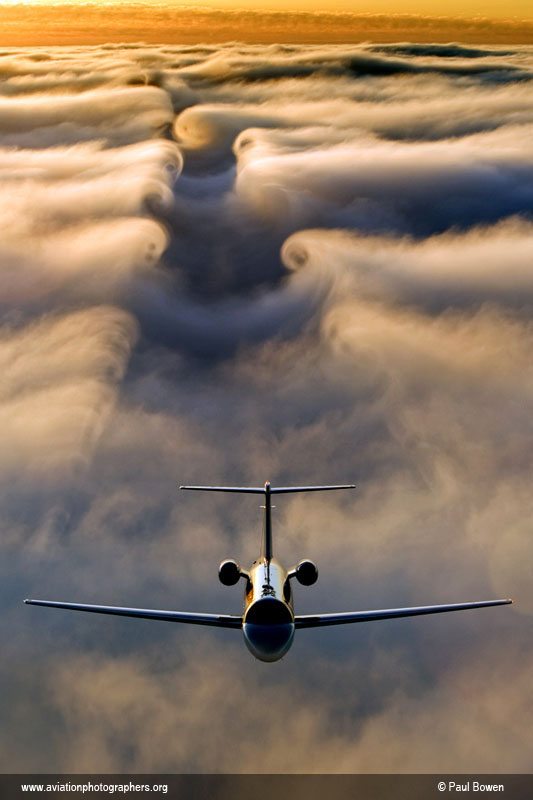
Visuals help: [1] https://aviationphoto.org/wp-content/uploads/2016/11/Paul-Bo... [2] https://www.popphoto.com/sites/popphoto.com/files/import/201... [3] https://imgur.com/gallery/EHW7D [4] https://www.youtube.com/watch?v=dfY5ZQDzC5s&t=192
Now why not use a propeller pointing directly straight down? Well, you just made a helicopter. Helicopters are great, but they are not as fast as airplanes, the main reason is that as it goes forward, one part of the rotor is advancing and the other is retreating, this causes a whole lot of difficulties that doesn't appear when the propeller is mounted sideways.
Now propellers aren't the only way of producing thrust. There are jet engines, but these require significant airspeed in order to be efficient, and you usually have much more airspeed horizontally than vertically.
You can have rocket engines, which are great if you want to get really high, really fast, but they have to carry their own reaction mass, which is impractical in most situation.
Also you can use buoyancy as a form of "thrust", you now have an airship. Efficiency-wise, it is unbeatable. Unfortunately airships are big and slow and not very suited to modern requirements.
As you can see, there is absolutely nothing preventing us from thrusting downwards, it is just that airfoils are very efficient.
Back to your first question: how can 100 pounds of thrust keep a 1000 pound aircraft in the air. Without going into details, it is the same idea as a lever or gearbox (mechanical advantage). We rarely think of it this way for the wings of an airplane, but for propellers, it is a more apt comparison. A variable pitch on a propeller is like a gearbox for your car, and as seen earlier, propellers work exactly like wings.
As for what "thrust" is, it is really just a force, often shown together with with drag, lift and weight, it is provided by the engine. But in the end, there is nothing special about thrust, you can reorganize your forces anyway you want using simple vector math. For example gliders don't have thrust, and they still fly, taking advantage of updrafts.