I definitely buy people with EVs hooning it around the place wrecking their tyres. It is really easy and fun to make use of all that torque. But it's not actually required.
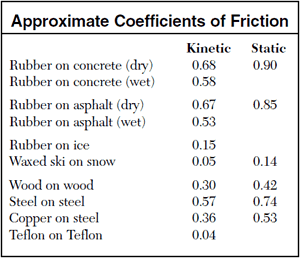
A rail car without rubber takes 10x-50x the distance to brake due to steel on steel friction.
Rubber is consumed from the tyre during acceleration, deceleration, and turning. Little rubber granules will roll off. The only time this isn’t happening is when the tyres aren’t in motion.
This is why you bring extra tyres to track day.
This comment does feel like talking to ChatGPT though, with the detailed clarifications the discussion didn't really require.
[0] https://www.aplusphysics.com/courses/honors/dynamics/images/...
This is why blocking the wheels increases braking distance: you suddenly have to deal with a much smaller friction coefficient.
P.S. Isn't the static coefficient calculated for a stationary object trying to move against a surface? In a wheels locked scenario the wheel is sliding so the dynamic coefficient is the one to look at, accounting for the changed material properties of the heated/melted material.