http://1.bp.blogspot.com/-uTWEATUzgxk/TXQoTibILtI/AAAAAAAAAA...
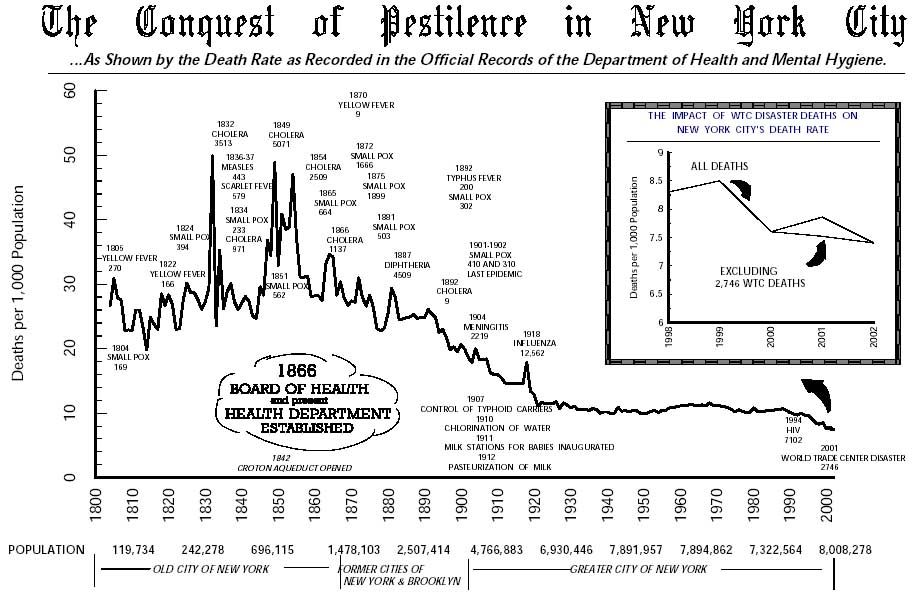
This tracks mortality (rather than life expectency), but shows clearly the tremendous progress made from 1850, with a peak mortality rate approaching 50 deaths per thousand peak (from a baseline of ~30 - 40 per mille) to about 12/mm in 1920, and the present rate of about 6/mm.
From 1950-1970, and for a briefer period in the 1980s, progress was reversed with mortality increasing. There's actually been an impressive (though small realtive to 19th century improvements) reduction since 1990.
Looking at that chart, realise that virtually all the improvement through about 1950 precedes most of what we consider to be modern medicine: advanced cancer treatments, antibiotics, most vaccines, transplant surgeries, genetic therapy, pacemakers, and more. The progress instead comes mostly through increased sanitation and hygiene, as well as reduced environmental contaminations and hazards, though it includes both antisceptics and anesthesia.
We've been paying a tremendous amount in medical advances for a very slight improvement in outcomes.
- Solid waste management and disposal.
- Sewerage systems (New York's came relatively late).
- As the somewhat provocative title of this article suggests, draining of swamps and other means of disease vector control.
- Refrigeration. General food safety improvements.
- Pasteurising milk. That would cut the transmission of TB markedly.
- Indoor plumbing.
- Indoor bathing -- showers and baths.
I haven't seen a breakdown. Laurie Garrett (NYTimes contributor) has long written on public health and epidemics, had a couple of books in the 1990s / early 2000s:
https://www.worldcat.org/title/betrayal-of-trust-the-collaps...
https://www.worldcat.org/title/coming-plague-newly-emerging-...