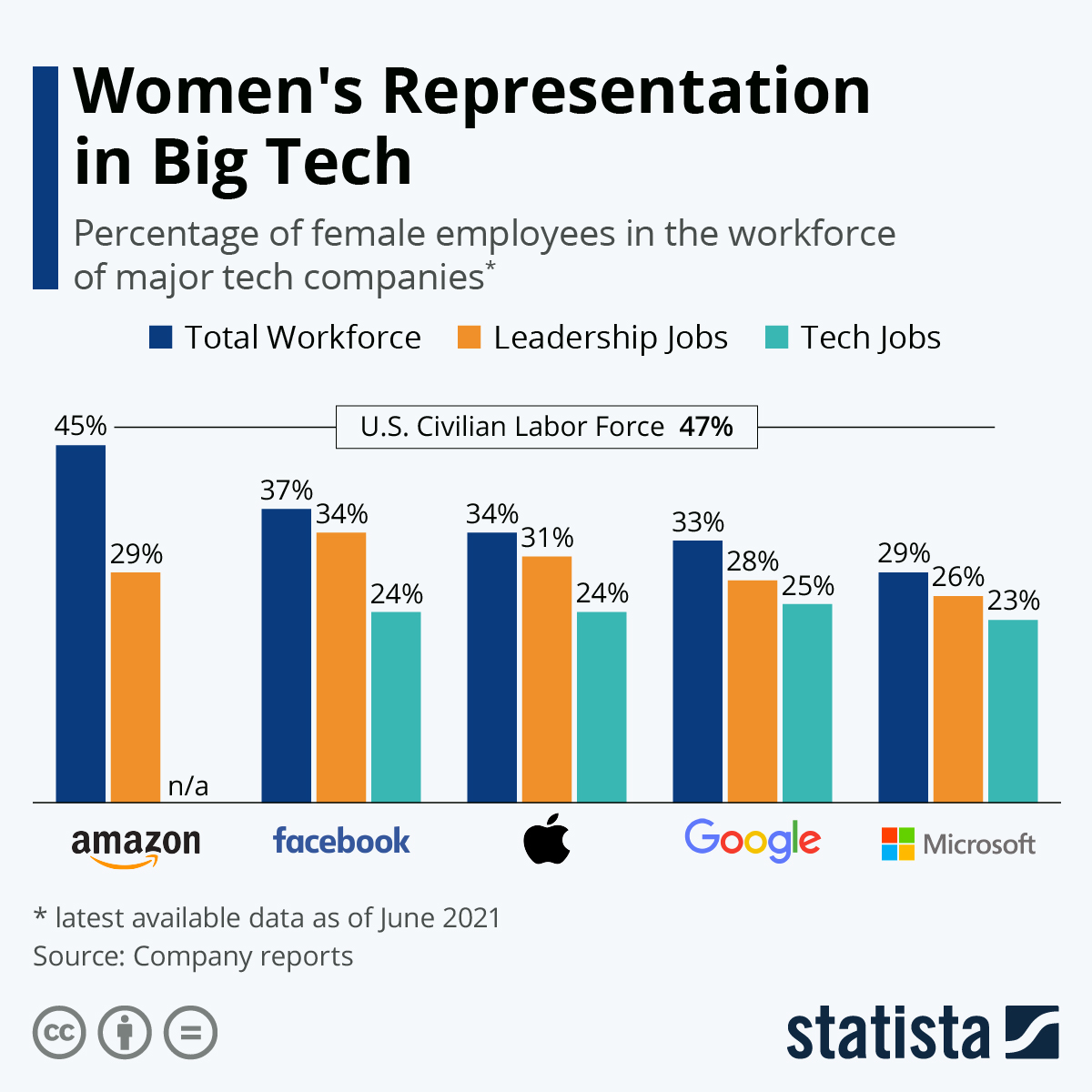
Different demographics have different interests, experiences, and knowledge. It's trivially obvious that getting a broader subset of society to contribute will also broaden the content.
With less than 10% of editors being women, for example, content is guaranteed to be somewhat skewed, even assuming absolutely no ill will by anybody.
Among the famous examples are a scientist's entry being deleted as "not notable" just weeks before she won the Nobel Prize. Or, if you prefer quantitative data, that articles about women tend to emphasise their relationships and children (https://arxiv.org/pdf/1501.06307v2.pdf).
Nothing is stopping you from expressing yourself however you want - just elsewhere, if you can't follow the rules.
fwiw, this very website has its own code of conduct: https://news.ycombinator.com/newsguidelines.html
It focuses on different things than the Wikimedia one, but it's fundamentally the same thing. For both of them, I'd suggest that if there are things that you feel are detrimental, you specifically address them.
Making an empty comment like "new wave of censorship" achieves nothing except saying "I don't like the rules". In which case, fine, there are plenty of other places on the Internet.
https://en.wikipedia.org/wiki/Wikipedia:Mirrors_and_forks
Looks like you're right. Forking Wikipedia is pretty easy from a licensing perspective.
Wikipedia has some severe biases when it comes to what and who counts as notable. For instance, you can compare ”programming pattern” and ”knitting pattern” and try to guess which is a 50 year practice and which is as old as civilization...
That sort of topic bias is best solved by adding new contributors, but they will intrinsically have to be different sorts of persons, and historically that difference has caused issues for the newcomers: https://www.nytimes.com/2019/04/08/us/wikipedia-harassment-w...
The biggest factor, though, is that HN is a non-siloed site (https://hn.algolia.com/?dateRange=all&page=0&prefix=true&sor...), meaning that everyone is in everyone's presence. This is uncommon in internet communities and it leads to a lot of misunderstanding.
(Edit: I mean internet communities of HN's size and scope, or larger. The problems are different at smaller size or narrower scope, but those aren't the problems we have.)
People on opposite sides of political/ideological/cultural/national divides tend to self-segregate on the internet, exchanging support with like-minded peers. When they get into conflicts with opponents, it's usually in a context where conflict is expected, e.g. a disagreeable tweet that one of their friends has already responded to. The HN community isn't like that—here we're all in the same boat, whether we like it or not. People frequently experience unwelcome shocks when they realize that other HN users—probably a lot of other users, if the topic is divisive—hold views hostile to their own. Suddenly a person whose views on (say) C++ you might enjoy reading and find knowledgeable, turns out to be a foe about something else—something more important.
This shock is in a way traumatic, if one can speak of trauma on the internet. Many readers bond with HN, come here every day and feel like it's 'their' community—their home, almost—and suddenly it turns out that their home has been invaded by hostile forces, spewing rhetoric that they're mostly insulated from in other places in their life. If they try to reply and defend the home front, they get nasty, forceful pushback that can be just as intelligent as the technical discussions, but now it feels like that intelligence is being used for evil. I know that sounds dramatic, but this really is how it feels, and it's a shock. We get emails from users who have been wounded by this and basically want to cry out: why is HN not what I thought it was?
Different internet communities grow from different initial conditions. Each one replicates in self-similar ways as it grows—Reddit factored into subreddits, Twitter and Facebook have their social graphs, and so on. HN's initial condition was to be a single community that is the same for everybody. That has its wonderful side and its horrible side. The horrible side is that there's no escaping each other: when it comes to divisive topics, we're a bunch of scorpions trapped in a single bottle.
This "non-siloed" nature of HN causes a deep misunderstanding. Because of the shock I mentioned—the shock of discovering that your neighbor is an enemy, someone whose views are hostile when you thought you were surrounded by peers—it can feel like HN is a worse community than the others. When I read what people write about HN on other sites, I frequently encounter narration of this experience. It isn't always framed that way, but if you understand the dynamic you will recognize it unmistakeably, and this is one key to understanding what people say about HN. If you read the profile the New Yorker published about HN last year, you'll find the author's own shock experience of HN encoded into that article. It's something of a miracle of openness and intelligence that she was able to get past that—the shock experience is that bad.
But this is a misunderstanding—it misses a more important truth. The remarkable thing about HN, when it comes to social issues, is not that ugly and offensive comments appear here, though they certainly do. Rather, it's that we're all able to stay in one room without destroying it. Because no other site is even trying to do this, HN seems unusually conflictual, when in reality it's unusually coexistent. Every other place broke into fragments long ago and would never dream of putting everyone together [1].
It's easy to miss, but the important thing about HN is that it remains a single community—one which somehow has managed to withstand the forces that blow the rest of the internet apart. I think that is a genuine social achievement. The conflicts are inevitable—they govern the internet. Just look at how people talk about, and to, each other on Twitter: it's vicious and emotionally violent. I spend my days on HN, and when I look into arguments on Twitter I feel sucker-punched and have to remember to breathe. What's not inevitable is people staying in the same room and somehow still managing to relate to each other, however partially. That actually happens on HN—probably because the site is focused on having other interesting things to talk about.
Unfortunately this social achievement of the HN community, that we manage to coexist in one room and still function despite vehemently disagreeing, ends up feeling like the opposite. Internet users are so unused to being in one big space together that we don't even notice when we are, and so it feels like the orange site sucks.
I'd like to reflect a more accurate picture of this community back to itself. What's actually happening on HN is the opposite of how it feels: what's happening is a rare opportunity to work out how to coexist despite divisions. Other places on the internet don't offer that opportunity because the silos prevent it. On HN we have no silos, so the only options are to modulate the pressure or explode.
HN, fractious and frustrating as it is, turns out to be an experiment in the practice of peace. The word 'peace' may sound like John Lennon's 'Imagine', but in reality peace is uncomfortable. Peace is managing to coexist despite provocation. It is the ability to bear the unpleasant manifestations of others, including on the internet. Peace is not so far from war. Because a non-siloed community brings warring parties together, it gives us an opportunity to become different.
I know it sounds strange and is grandiose to say, but if the above is true, then HN is a step closer to real peace than elsewhere on the internet that I'm aware of—which is the very thing that can make it seem like the opposite. The task facing this community is to move further into coexistence. Becoming conscious of this dynamic is probably a key, which is why I say it's time to reflect a more accurate picture of the HN community back to itself.
[1] Is there another internet community of HN's size (millions of users, 10-20k posts a day), where divisive topics routinely appear, that has managed to stay one whole community instead of ripping itself apart? If so, I'd love to know about it.
> Codes of conduct aren't censorship... It is essentially a list of "how not to be an asshole".
It would be great if that were true.
But it's not, and we both know that.
A Code of Conduct a thinly-veiled justification to harass and bully your ideological opponents.
There's an XKCD that talks about this. Dumbest thing Randall Munroe has ever written: https://xkcd.com/1357/
You can "show someone the door".
And there will be a welcome mat, doughnuts, and a lot of friends on the other side.
Second, though, I think you might be describing your own shock experience here. Not every thread starts with a shallow dismissal—some do, but actually most don't. (Moderation is a factor, because we downweight petty and indignant comments whenever we see them at the top of a thread.) My bet is that you're seeing these sometimes, and because they're shocking and unpleasant, they somehow expand into your experience of HN overall. That's a shock experience, because the things that strike us unpleasantly end up dominating our sense of the whole. I've written about this a lot, but in slightly different terms: https://hn.algolia.com/?dateRange=all&page=0&prefix=true&que.... Trying to figure these phenomena out is an ongoing process.
Says who? Western, educated, industrialized, rich and democratic folks, of course. Don't get me wrong, there is an underlying reality behind the oft-repeated claims of 'Whig history' https://en.wikipedia.org/wiki/Whig_history . In particular, democratic and classical liberal values seem to do an unusually good job of de-escalating unwanted social conflict: NPOV (as known on Wikipedia) is at its root a "liberal" idea, not an authoritarian or intolerant one! But these overbroad claims should always be treated with plenty of caution.
Way to assume my gender and preferred pronouns. Bet you're glad that HN has no CoC that would get you a stern warning for this.
> The only way to do so is to discard the interests and knowledge while putting great emphasis on experiences - and immediately assume they will end manifest as bulk personal anecdotes.
No. One very obvious way to do so is to recognize that Wikipedia isn't about interests and experiences and the contributors/authors of articles but about sourced information. It's an encyclopedia, not a social network or a blog. The articles are supposed to represent information gathered from other sources (and they take other literal there, Original Research by the author is not desired [1]), not the knowledge, interests or experiences of the person adding information to the article.
[1] https://en.wikipedia.org/wiki/Wikipedia:No_original_research
If we don’t acknowledge sex differences in interests of subjects, then we fail to see the true problem, and thus an actual solution. Why is it taboo to say on average, one sex is more likely to take on a specific kind of work than another? Despite evidence [0] [1]
I’m all for increasing the opportunity for everyone to participate in specific subjects. Yes, at one point in time oppression from one sex against another was real in intellectual pursuits, be it academia or certain areas of interest. And there are instances of it today. But it’s not as pervasive as so many commentators or inclusion boards want it to be.
But to try and get a 50/50 split, or whatever arbitrary ratio, is madness. It implies personality is 50/50 split, as personality is directly related to interests, among other factors (such as writing dry, technical content, which men (on average) tend to gravitate towards). These ratios are impractical, and verifiably false. Men and women on average have widely different personalities, based purely on biological sex. Evolutionarily this makes sense, as each had a specific, important role. Today we have the luxury of looking past the necessity for adhering to these roles, but denying they’re not a part of our genetics is denying reality.
It’s no different than asking why person X dislikes subject Y. Is it because of institutional oppression? Rarely, yes. But for a vast majority of people, person X just doesn’t like subject Y. And if on average, sex Z is disinterested in subject Y, then naturally we’ll see a disparity between the representation of each sex in subject Y.
Most people who knit are not biologically male. There exists male knitters, as there exists male nurses. Is there a cabal oppressing male knitting on an institutional level? Doubt it.
Using inclusivity as a goal has unfortunately become a loaded word. It’s now more akin to price control in a market, essentially forcing a metric value that is arbitrarily chosen, without understanding the implications. I’m not saying this instance in particular is using the word in such a way (though the tone of the article leads me to believe so), but for a vast majority of cases this is how it’s interpreted. We should not be striving for equality of outcomes, but equality of opportunity.
[0] https://www.psychologytoday.com/us/articles/201711/the-truth... [1] https://pubmed.ncbi.nlm.nih.gov/19883140/
[1] https://cdn.statcdn.com/Infographic/images/normal/4467.jpeg
Having more diverse editors will lead to more diverse content.
Wikipedia pages of female scientists tend to get a lot more scrutiny than ones about male scientists [1].
There's another anecdote about moderator bias and some decent discussion on the issue overall in this thread [2].
Ultimately there are some issues Wikipedia can't solve since they are just a reflection of the rest of society in many ways.
"We can't write about this scientist and her work because no one else has written about her," is a problem that Wikipedia can't solve by themselves.
[1] https://www.chemistryworld.com/news/female-scientists-pages-...
[2] https://old.reddit.com/r/TwoXChromosomes/comments/ekv3te/fem...
I find the whole assumption weird that something would fundamentally change. It's not like Wikipedia claims to be "the world's knowledge at your fingertips", but is barely more than a bunch of pages on programming and ango-american cultural concepts. The English Wikipedia hosts over six million articles. Let that sink in: six. million. articles.
What are they missing, what are they suppressing, as somebody else suggested?
> This has zero to do with original research, that is red herring trying to shift the topic.
It has everything to do with it. An encyclopedia relies not on first hand knowledge, experiences and interests but on compressing third party information. It's basically an organized collection of book reports, only it's about topics, not individual books, and you get to add the bits of information that you discovered in some book to what others have discovered.
> Experiences influence what you write about, what you put emphasis on and how you write.
And, again, Wikipedia emphasizes that they do not want editorialized articles, don't want your individual writing style and personal opinions. They want a neutral point of view (that term is used so much on Wikipedia that they just say NPOV), they aim for a constant style of little variance. Again, it's an encyclopedia, not a social network or blog site. They very much do not want to give a small world to each and every editor where they can present their world view, opinions and experiences in whatever way they deem fit. There are sites for that, but Wikipedia is not it.
Here's what Wikipedia says on the topic of what it wants to be [1]: Wikipedia's purpose is to benefit readers by acting as an encyclopedia, a comprehensive written compendium that contains information on all branches of knowledge. The goal of a Wikipedia article is to present a neutrally written summary of existing mainstream knowledge in a fair and accurate manner with a straightforward, "just-the-facts style". Articles should have an encyclopedic style with a formal tone instead of essay-like, argumentative, promotional or opinionated writing.
You may argue that it should want to be something totally different. But that's not really talking about Wikipedia, that would be watwutpedia, which might be a great project as well, but I hope you agree that it would be a different project.
Know the phrase "follow the money"? In this case, follow the power.
To be caught up arguing about codes of conduct in general is a distraction.
>I find it confusing that the foundation statements says it's just a formalization of existing practices but on wikimedia meta page it say it's an urgency.
Remember that time the Wikimedia office banned a user for unclear reasons, without engaging community governance that would typically handle the banning, and the row it caused because that wasn't the normal way of doing business? If you doubt how huge the separation of responsibility between the people who work FOR wikpmedia and work ON wikpedia is, see: https://slate.com/technology/2019/07/wikipedia-fram-banning-...
This release from wikimedia says that they're going to be taking top down control, but unless you're already versed in the structure of the system you just hear names of groups without understanding the boundaries they represent.
> Does anyone know what problem are they trying to solve?
Either, the wikimedia board is again trying to "fix" wikipedia engagement with all the insight, art and tact of people that wouldn't be caught dead participating as editors within wikipedia's self governance system.
Or, a wedge issue has emerged that will allow the foundation to take more direct control while minimizing the appearance of ramping down wikiepedia's self governance.
It really depends on why someone is saying it. If one is saying it as an observation of statistics, then it's fine (usually. There are contexts where it is not; it's not a set of facts you should point out to a group of students about to take a college entrance exam, for instance). If you're saying it in the context of a causal inference, such as, for example, the Damore memo, then it's falling into the trap of conflating correlation and causation that has traditionally unfairly banned women (and men) from entire allowed modes of participation in society.
> Yes, at one point in time oppression from one sex against another was real in intellectual pursuits, be it academia or certain areas of interest. And there are instances of it today. But it’s not as pervasive as so many commentators or inclusion boards want it to be.
I agree. Many commentators want it to be far less pervasive than it is. Unfortunately, it's still very pervasive. We are no more than two generations removed (in the US at least) from women being generally overtly barred from working in most industries. We are only a scant 100 years out from women in the US being allowed the right to vote. It hasn't been enough time for the difference of fact to permeate into a difference in opinion; old prejudices die hard.
For example, the rest of your comment indicates you believe that the differences we see in society are biologically rooted. That's precisely the question the jury is out on; we used to believe it was true, but psychology has come to understand much better how profoundly deep cultural indoctrination and phobia of new cultural patterns run. Before we make claims like "Men and women on average have widely different personalities, based purely on biological sex," we need to be extremely sure we isolate out cultural effects, which is damnably hard to do.
Your example of knitting, specifically, ahistorically excludes the Celtic culture [https://www.thefencepost.com/news/when-men-knitted-a-surpris...]. Any discussion of biological imperative to knit needs to explain why men knit in Celtic societies, not only why men don't knit as much in Western societies now (and given that we know how quickly genetics change, it's going to be a real chore coming up with a genetic explanation that distinguishes Celts from the rest of humanity).
https://en.m.wikipedia.org/wiki/Paradox_of_tolerance
“ The paradox of tolerance states that if a society is tolerant without limit, its ability to be tolerant is eventually seized or destroyed by the intolerant.”
The reason this episode is relevant to your comment discussion is that Pool presents that there is this paradigm problem where certain policies intended to bring "inclusion" end up excluding something like half of the U.S. population. This paradigm Twitter management is stuck in prevents them from understanding how people outside their paradigm view their actions, and this results in effectively banning a enormous set of the population from popular discourse.
It is hard to evaluate if this is exclusively an American issue because, really, there are so few other countries that speak English.
Obviously harassment and toxic behavior are bad and should be discouraged but all this will accomplish is that politically-inclined editors will have even more weapons in their inventory to throw "harassment" and "toxic behavior" accusations at one another.
The bar to start contributing to Wikipedia is already very high: the way it works in practice, one must familiarize themselves with hundreds of pages from the WP: namespace, and learn how to use them strategically to defend their contributions. No wonder few people have the time and inclination to do that. To encourage more inclusivity this burden should first of all be lowered, not raised.
So, if more inclusivity was really the objective here, a better experiment would be to remove all the current policies except a dozen of the most important ones decided by popular vote among editors, and then edit them even further so that they fit on a single page, leaving these as the only rules in force. From then on, not more than a single policy change could be made per month, and all of it should still fit on the same single page. This would give new users an equal footing with the entrenched ones, with rules straightforward enough for everybody to understand and follow, which in turn should empower people to use their own judgement instead of being micromanaged. Disagreements would have to be solved by discussing the matter at hand, as opposed to flinging projectiles from the safety of the WP: namespace. Wikipedia could learn something from how remarkably simple the HN rules are in comparison: https://news.ycombinator.com/newsguidelines.html
OK, maybe the above is not the greatest idea but it'd at least rattle things a bit in the right direction if done as an experiment. On the other hand, much of what Wikimedia Foundation has been doing recently is tangential to the development of a free encyclopedia, and this press release is no different: it reads like an exercise in corporate bullshit that checks all the right boxes but will change exactly nothing. The response to the failures of bureaucracy is more bureaucracy: "What we were doing so far has failed, so we urgently need to do even more of the same. This time it'll work."
The conclusion was that parental advisory stickers are cool and will help sell your album, and I'm glad we got there as a society.
Incidentally, Wal-mart in particular was on the conservative side of that culture war episode, and they did in fact refuse to sell those albums while also selling entire racks of guns.
https://www.youtube.com/watch?v=soYkEqDp760
TLDW: Lean into the trolling; don't just feed them, stuff them. Come at the person in good faith and respond to them until they prove otherwise. Destin's video has a lot more to it though.
Though such a 'countermeasure' is not what dang is talking about here, I think the advice is good for just about any online discussion. Lean in.
I found this comment rather funny, because if CGP Grey is correct [0] the preferred term by American Indians is "American Indian", NOT "Native American". So you're claiming knowledge of the general opinion of a group, while not using the group's preferred name for themselves.
Like what though? Here's [1] the Portal on Norway, there are hundreds of articles on Norway and Norwegian culture. From what I can see, the Norwegian Wikipedia does not cover Norway that much more, even though you can reasonably expect that it's primarily authored by Norwegians.
There are fewer but still hundreds of pages about e.g. Zimbabwe, its history, culture, politics, demographics etc.
I fail to see what's being not presented there. I understand the concern that it may be too USA-centered, and to a small degree it probably is, but I don't believe it's anywhere near the proportions it's made out to be, and I don't believe that it would significantly shift, because it's absolutely not a special interest community that covers only their ideas. And given that the US is the lone super power right now, militarily, culturally and economically, it is to be expected that it is very well covered, even in other language versions. It's somewhat important to everyone on earth how the US works. It's less important how Liechtenstein or Lesotho are organized, and either has their own history, but their history isn't strongly intertwined with recent world history.
The super vast majority are articles that are global (in any and all meanings) in nature, explaining scientific concepts and history. You may argue that, since Wikipedia's goal is to represent the common consensus of scientists that these topics would be different if e.g. Zimbabwe had been the world's super power for the last 70 years, and I partially agree, but far from completely. We'd see a lot more information about Zimbabwean wild life, nature and environment, but we'd still see articles on lasers, genetics, space travel, the history of Arabic numerals, because there's really no reason to believe that Zimbabwean scientists wouldn't have looked into these things etc.
> Using 1-sigma in your example is a straw man. Normal female range is 15 to 70 ng/dL, normal male range is 300-1200
My error; I was speaking from pure hypotheticals without knowledge of how the numbers break down. The regulations from IAAF (and the research from the IAAF) indicates "About seven in every 1,000 elite female athletes have high testosterone levels." (https://www.sciencedaily.com/releases/2019/02/190212160030.h...)
Still, their stance seems odd... That a person with naturally-occurring testosterone should be required to take suppressing hormones. If the goal is to see "natural" talent apart from doping, how does forcing athletes to take hormone suppressants satisfy that goal? It seems to pretty self-evidently be reverse-doping.
It's also unclear to me why the IAAF would consider higher levels of testosterone to be an advantage in need of intervention but not, say, being born at and training in a higher altitude, which we know increases lung capacity https://www.ncbi.nlm.nih.gov/pmc/articles/PMC4175264/. We don't force athletes training in Santa Fe to train at lower altitudes for six months before an Olympics. Why treat testosterone levels differently?
There's a bit more discussion about this at https://news.ycombinator.com/item?id=23157675.
Another word I've used to describe a related dynamic is "demons": https://hn.algolia.com/?dateRange=all&page=0&prefix=false&so.... That's a similarly exaggerated usage.
This is very true. I once googled “Next.js” to try to learn more about it, and Google “helpfully” linked me to the “Nuxt.js” (note the “u” instead of “e”) Wikipedia page. I was thoroughly confused.
Turns out Next.js doesn’t even have a page! It has a draft[0], but it’s been rejected as “not notable” despite it being more popular on GitHub (in terms of stars, contributors, etc)