zlacker

[parent] [thread] 1 comments
1. Mizza+(OP)[view] [source] 2018-09-12 05:41:47
I think that this is a sleight-of-hand trick that comes up a lot in immigration discussion: he was talking about the small subset of the population that is most directly affected by the change, you switched the focus of the impact to the entire economic system. If you only look at the bottom 10% of society where the job competition is occurring, your 1.5% becomes 15% - annually! It's staggering.

Immigration applies downward pressure on lower/middle-lower labor classes and harms the power of unions.

I don't blame the immigrants who want to go where the jobs pay more - it's the smart thing for them to do - the blame here lies 100% on the corporations who exploit this (Tyson foods, etc.) and the politicians they ~~bribe~~contribute funds to.

replies(1): >>lalos+S5
2. lalos+S5[view] [source] 2018-09-12 07:12:18
>>Mizza+(OP)
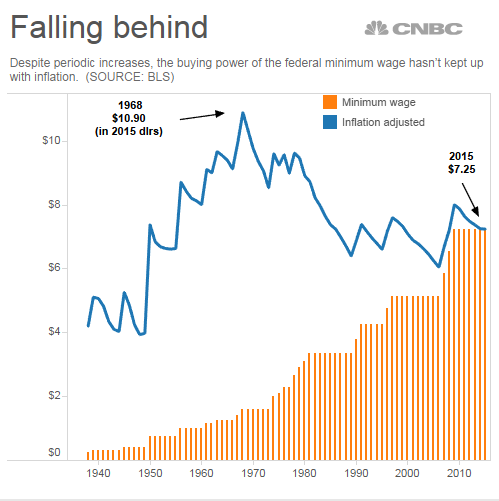
The main point was inflation and wages. He mentions that "The scale of immigration both legal and illegal I believe has the greatest impact on the lowest sectors of society.", I doubt the impact is greater than the stagnation of wages against inflation where $2 min wage in 1968 is equivalent to almost $11 of today's dollars [0]. Current min wage is at $7.25. Do the immigrants vote for maintaining the minimum wage at the current level or where am I getting lost? I'm quite sure econ 101 says that if the salary goes up there will be more people willing to accept the job. Until that happens, of course a low-skilled immigrant will take that $7.25 hour job that no one wants. He will barely survive (while making sacrifices in the quality of life) and yes the corporation will happily accept it since nobody wants to do that work for that wage and people want low prices.

[0] https://sc.cnbcfm.com/applications/cnbc.com/resources/files/...
[go to top]