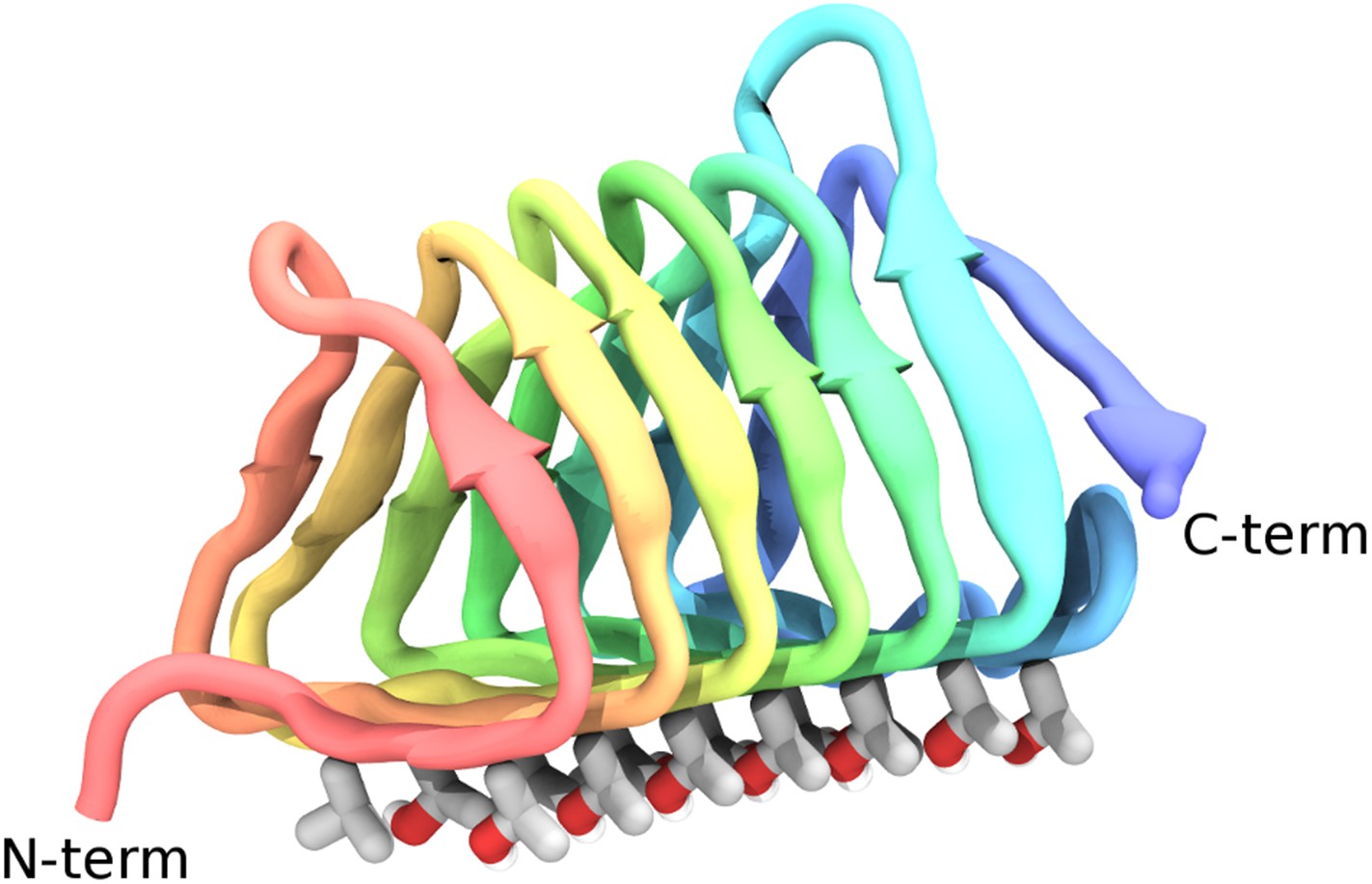
Some proteins have 3D structures that look like abstract art only because we don't have an intuitive understanding of what shape and amino acids are necessary to convert chemical A to chemical B, which is the main purpose of many enzymes in the body. If you look at structural proteins or motor proteins, on the other hand, their function is clear from their shape.
There are a lot of other things you can do with the shape. If it has a pore, you can estimate the size and type of small molecule that could travel through it. You can estimate whether a binding site is accessible to the environment around it. You can determine if it forms a multimer or exists as a single unit. You can see if protein A and protein B have drastically different shapes given similar sequences, which might have implications for its druggability or understanding its function.
The ribbon shape for GFP is a very cool barrel thing
* https://www.rcsb.org/structure/1m8n
* https://iiif.elifesciences.org/lax/05142%2Felife-05142-fig1-...