Would you mind if AI starts creating art like yours?
What if your clients tell you they bought the AI generated art instead of yours?
Imagine you are a painter and you have developed your expertise in photorealistic painting over your entire lifetime.
Would you mind if someone snaps a photograph of the same subject you just painted?
What if your commissioners tell you they decided to buy a photograph instead of your painting because it looked more realistic?
Every argument I've seen against AI art is an appeal to (human) ego or an appeal to humanity. I don't find either argument compelling. Take this video [0] for example and half of the counterarguments are an appeal to ego - and one argument tries to paint the "capped profit" as a shady dealing of circumventing laws without realizing (1) it's been done before, OpenAI just tried slapping a label on it and (2) nonprofits owning for-profit subdivisions is commonplace. Mozilla is both a nonprofit organization (the Foundation) and a for-profit company (the Corporation).
E:
I'm going to start a series of photographs that are intentionally bad and poorly taken. Poor framing, poor lighting, poor composition. Boring to look at, poor white balance, and undersaturated photos like the kind taken on overcast days. With no discernable subjects or points of interest. I will call the photos art - things captured solely with the press of a button by pointing my camera in a direction seemingly at random. I'm afraid many won't understand the point I am making but if I am making a point it does make the photographs art - does it not? I'm pretty sure that is how modern art works. I will call the collection "Hypocrisy".
E2:
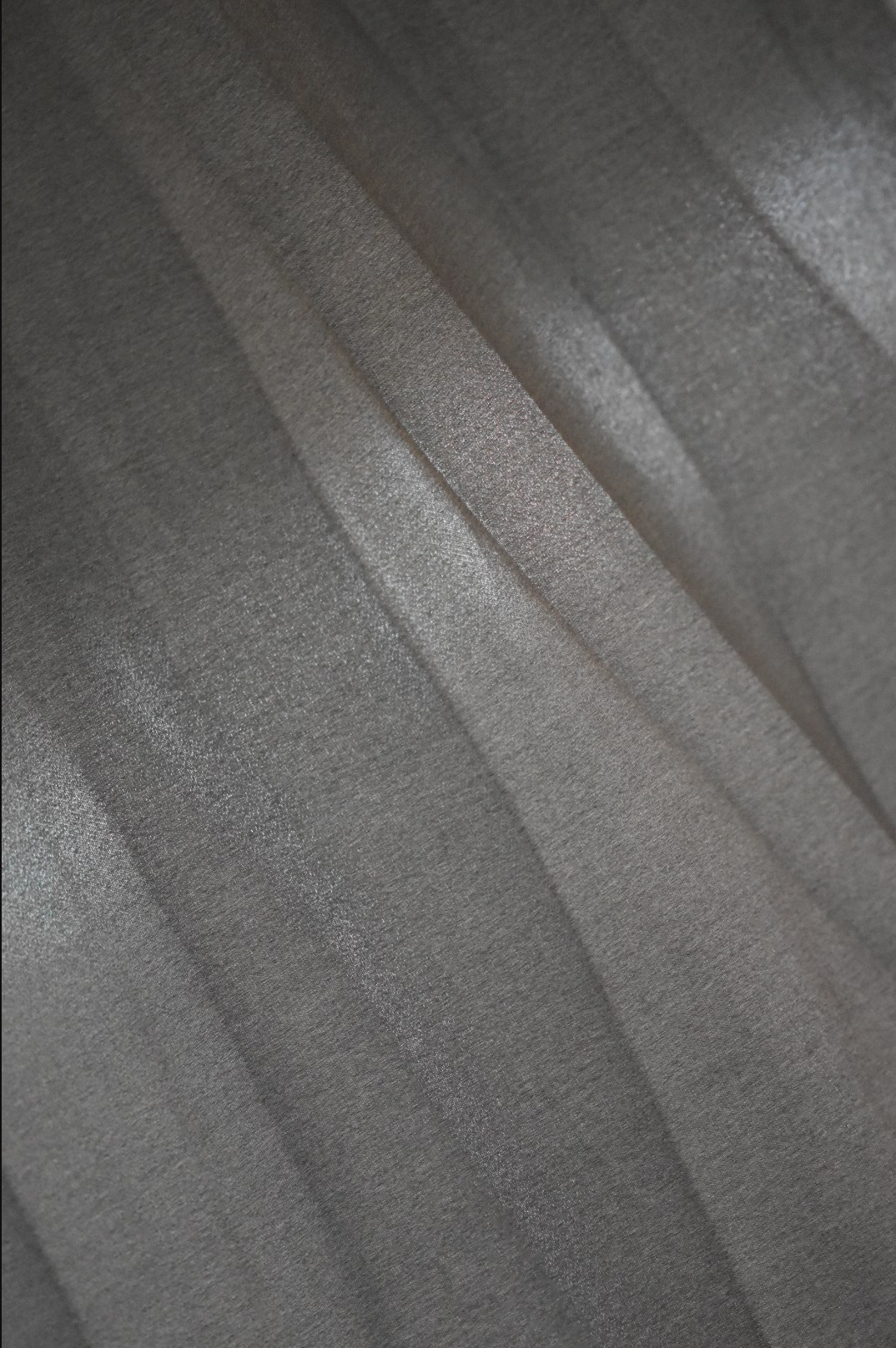
The first photo of the collection to set the mood - a picture of the curtain in my office: https://kimiwo.aishitei.ru/i/mUjQ5jTdeqrY3Vn0.jpg
Chosen because it is grey and boring. The light is not captured by the fabric in any sort of interesting manner - the fabric itself is quite boring. There is no pattern or design - just a bland color. There is nothing to frame - a section of the curtain was taken at random. The photo isn't even aligned with the curtain - being tilted some 40 odd degrees. Nor is the curtain ever properly in focus. A perfect start for a collection of boring, bland photos.
[0] https://www.youtube.com/watch?v=tjSxFAGP9Ss&feature=youtu.be