Now one fix that removing some of the equipment will do will reduce the amount of psychological impact it has on those wielding it, as in reduce the Rambo effect. The idea of attaching military style equipment to the current problems is only for political purposes, they needed to blame Trump for the violence.
However in the end, there are few alternatives to fixing the police and their application and misapplication of force
1) Restrict conditions that can be placed in union negotiated contracts regarding officer behavior, culpability, and indemnification.
2) If not 1) then make it illegal for the unions to exist with regards to any public servant who is armed
3) civilian oversight boards that are veto proof against the police they monitor. Not only would they review incidents which are questionable they would have to involved in any use of concentrated force to include no knock warrants; something which should be illegal except in the most incredible cases.
4) holding elected and appointed officials of the localities, city, county, or state, accountable for the harm caused by their police forces.
Dress for the job you want. If they all dress like storm troopers some of them will act like storm troopers.
NY state patrol uniform: Grey with purple ties. https://northcountrynow.com/sites/default/files/images/Zone2...
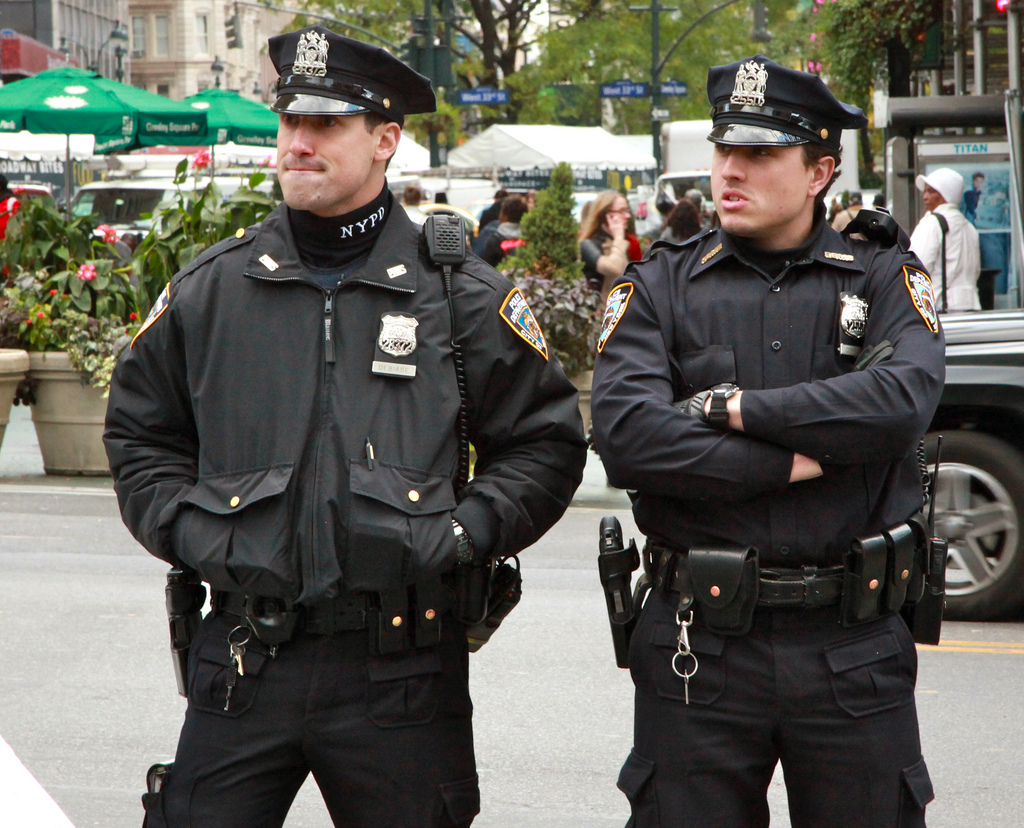
NYPD (new york city) police: Black on black with black ties. https://media.timeout.com/images/103899055/image.jpg
It seems meaningless, but having interacted with a few police agencies I have noticed a trend. They cops that show up for meetings in head-to-toe black tend to be more aggressive. They try to assert themselves in every meeting, which is entertaining as we are the military. They cannot win the "who has the bigger gun" thing. The cops that come in oldschool blue shirts and ties are much easier to work with.
(Fyi, if those two NYPD officers in the pic were in the military they would get a talking to about attitude. Hands in pockets. Chewing. Crossed arms. In public? Have some respect for your uniform.)
The leadership team for police that wants you dressing all paramilitary and in all black is going to have a focus on you acting a different way during training and in what your day to day is like than the other group.
There's also the brittle fact that I still remember the day long fire arms training where i was required to watch officers get shot for an hour and got it drilled into my head that it was better to shoot someone if I felt any risk or danger (and what to say if i had to do it), and that I needed to make sure i got to go home. It was all done in a very deniable way, but police officers are 100 percent indoctrinated during training to shoot if they feel like they are in any danger. I can speak more to what kind of training took place and the attitude of the instructors if people are curious.
2) Per [1] the surface area of your torso is about double that of one leg (that is, anterior torso is 18%, an individual leg anterior is 9%), so it's far more likely to hit if you aim for the torso. Even if you aim for a torso and miss, you might hit a limb or head - it's a lot less likely to miss a limb and hit something else.
3) The research behind the Tueller anti-knife self defence drill found an attacker with a knife could cover 21 ft / 6.4 metres in about 1.5 seconds. To stop the attack, you have to be able to shoot them before they can close to melee range - you must aim for the largest possible target to have any hope of success.
I am not commenting on US police practices generally, but specifically that the idea you can shoot to wound is neither responsible nor practical.