We don't know what's the percentage broken down by age.
If 38% is almost 50%, 25% is almost 38%.
https://www.census.gov/library/visualizations/2024/comm/disa...
Edit: And to clarify, just to be fair, I can accept there are many things that would qualify as "a disability that the education system should care about" but which don't rise to the level of the hard binary classification of "disabled" that would show up in government stats. I'm just saying that the overall 25% figure isn't quite applicable here.
https://www.explore.com/1804742/not-divine-story-miracle-fli...
As Scott Alexander opens his essay:
>The human brain wasn’t built for accounting or software engineering. A few lucky people can do these things ten hours a day, every day, with a smile. The rest of us start fidgeting and checking our cell phone somewhere around the thirty minute mark. I work near the financial district of a big city, so every day a new Senior Regional Manipulator Of Tiny Numbers comes in and tells me that his brain must be broken because he can’t sit still and manipulate tiny numbers as much as he wants. How come this is so hard for him, when all of his colleagues can work so diligently?
https://slatestarcodex.com/2017/12/28/adderall-risks-much-mo...
> Is it much though? 38%? I haven't seen one in 15 years across 5+ different companies.
Just another anecdote, but where I work (tech startup) there are at least 7 other employees (that I know of) and I can identify every single one as autistic. Three are one type, another three are another type, and I think the one other as well as myself are the same type.
Research in the space hasn't advanced enough yet for this to be consensus, but in my opinion this preprint is exactly correct, and is what taught me that there are even subtypes to recognize at all: https://www.thetransmitter.org/spectrum/untangling-biologica...
There are, of course, plenty of non-neurodivergent tech companies. These are typically boring corporate ones, though I think there are some non-flashy ones that are perfectly respectable. I don't think Microsoft would count, though; Asperger's can look a lot like a lack of neurodivergence if you don't pay close enough attention.
Under the Trump administration, accommodations for mentally disabled people are no longer enforced. Most of the enforcers were laid off. The new policy is “encouraging civil commitment of individuals with mental illness who pose risks to themselves or the public or are living on the streets and cannot care for themselves in appropriate facilities for appropriate periods of time.” [1]
[1] https://www.whitehouse.gov/presidential-actions/2025/07/endi...
https://www.goodreads.com/quotes/11903426-show-me-the-incentive-and-i-ll-show-you-the-outcomeit's not 38% - it's 1 in 4 or 25%, according to Stanford's own website https://oae.stanford.edu/students/dispelling-myths-about-oae
and that number includes students getting literally any kind of accommodation whatsoever. Allergies, food allergies, carpet replacement, etc, etc
"In the 2023-24 academic year, 88% of undergraduates graduated without debt, and those who borrowed graduated with a median debt of $13,723." Source: https://news.stanford.edu/stories/2025/02/stanford-sets-2025...
So strictly speaking, not "no one". (But certainly smaller than the national averages.)
https://commonslibrary.parliament.uk/research-briefings/cbp-...
However, big caveat - it's self-reported. If you look at how many people get disability benefit it's around 10%.
So whether or not that is true depends entirely on what you mean by "disability" which is obviously not a well defined term.
The stats are thin because not everything from private universities (where the disability numbers are highest) is reported. However they did get this:
> L. Scott Lissner, the ADA coordinator at Ohio State University, told me that 36 percent of the students registered with OSU’s disability office have accommodations for mental-health issues
Note that's only accommodations for mental health issues, so exclusive of the numerous other disability types.
World Health Organization: 16%
https://www.who.int/news-room/fact-sheets/detail/disability-...
UN Department of Economic and Social Affairs: 15%
https://www.un.org/development/desa/disabilities/resources/f...
CDC: 25% of Americans
https://www.cdc.gov/disability-and-health/articles-documents...
ROD Group: 22%
https://www.rod-group.com/wp-content/uploads/2024/09/The-Glo...
Schools and universities have made accommodations a priority for decades. It started with good intentions, but parents and students alike have noticed that it's both a) easy to qualify for a disability and b) provides significant academic advantages if you do.
Another big accommodation request is extra time on tests. At many high schools and universities, getting more time than your peers to take tests is as simple as finding a doctor who will write the write things in a note for you. Some universities grant special permissions to record lectures to students with disabilities, too.
If you don't have a disability, you aren't allowed to record lectures and you have to put your pencil down at the end of the normal test window. As you can imagine, when a high percentage of the student body gets to stay longer for a hard test, the wheels start turning in students' heads as they realize cheating is being normalized and they're being left behind by not getting that doctors' note.
The rampant abuse is really becoming a problem for students with true disabilities. As you can imagine, when the disability system is faced with 1/3 of the student body registering for disability status the limited number of single rooms and other resources will inevitably get assigned to people who don't need it while some who actually do need it are forced to go without.
The definition of disability is pretty wide. I have an emotional support animal but if it wasn't for the housing requirement I probably wouldn't have declared anything. I do have diagnosed depression[0] and ADHD. I tend to not be open about these unless it is relevant to the conversation and I don't really put it down in job applications or other questionnaires. But being more socially acceptable I also believe more people are getting diagnosed AND more people are putting an accurate mark on those questionnaires. I can absolutely tell you many people lie on these and I'd bet there are *far* more false negatives than false positives. Social stigma should suggest that direction of bias...
I say this because I really dislike Reason[1]. There's an element of truth in there, but they are also biased and using that truth to paint an inaccurate narrative. Reason says I've made this part of my identity, but that couldn't be further from the truth. What they're aware of and using to pervert the narrative is that our measurements have changed. That's a whole other conversation than what they said and they get to sidestep several more important questions.
[rant]
Also, people are getting diagnosed more! I can't tell you why everyone has a diagnosis these days, but I can say why I got my ADHD diagnosis at the age of 30 (depression was made pretty young). For one, social stigma has changed. I used to completely hide my depression and ADHD. Now that it is more acceptable I will openly discuss it when the time is right, but it's not like I'm proud of my depression or ADHD. But there is also the fact that the world has changed and what used to be more manageable became not. Getting treated changed my life for the better, but the modern world and how things are going have changed things for the worse. Doing a PhD is no joke[2], doing it in a pandemic is crazy, doing it in a ML boom (and researching ML) is harder, and doing it with an adversarial advisor is even worse. On top of that the world is just getting more difficult to navigate for me. Everything is trying to grab my attention and I have to be far more defensive about it. Instead of being in an office where I can signal "work mode" and "open to talk mode" with a door I get pings on slack by people who want to be synchronous with an asynchronous communication platform, messaging "hey"[3] and nothing else. A major issue with ADHD is triage, because everything seems like an emergency. If you're constantly pinging me and I can't signal that I need to be left alone, then that just drives the anxiety up. This is only worsened by the fact that Slack's notification system is, at best, insufferable[4]. So I don't know about everyone else, but I'm absolutely not surprised that other peoples' anxiety is shooting through the roof. We haven't even mentioned politics, economics, or many other things I know you're all thinking about.
[/rant]
So yeah, there's the housing issue and I do think that's worth talking about (it's true for an apartment too[5]). I'd gladly pay the pet deposit and extra money per month for a pet. It is never an option, so people go "nuclear". BUT ALSO I think we should have a different conversation about the world we're actually creating and how it is just making things difficult. The world is complicated, no surprise, but our efforts to oversimplify things are just making it more complicated. I really just wish we'd all get some room to breathe and rethink some things. I really wish we could just talk like normal human beings and stop fighting, blaming, and pointing fingers as if there's some easy to dismiss clear bad guy. There's plenty of times where there is, but more often there is no smoking gun. I know what an anxiety feedback loop looks like and I really don't know why we want the whole world to do this. They fucking suck! I don't want to be in one! Do you?
[0] My mom passed away when I was a pre-teen. I think no one is surprised nor doubts this diagnosis.
[1] I'm also not a big fan of The Atlantic. Both are highly biased
[2] I actually think a PhD should be a great place for ADHD people. Or research in general. Many of us get sucked down rabbit holes and see things from a different point of view. These can be major advantages in research and science. But these are major hurdles when the academic framework is to publish or perish. There's no ability to get depth or chase rabbit holes. I was always compared to peers who published 50 papers in a year as if that is a good thing. (Yeah, the dude did a lot of work and he should be proud, but those papers are obviously shallow. He should be proud, but we also need nuance in how we evaluate. https://youtube.com/shorts/rDk_LsON3CM)
[3] https://youtu.be/OF_5EKNX0Eg?t=8
[4] Thanks, I really needed that phone notification to a message I responded to an hour ago. Thanks, I really needed that notification to a muted channel. Thanks, I really needed that notification to a random thread I wasn't mentioned in and have never sent a single message in. Thanks, I'm glad I didn't get a notification to that @godelski in #general or #that-channel-I-admin. Does slack even care about what my settings say?
[5] My hypothesis is that the no pet clauses are put in because people use templates. And justified because one bad experience gets shared and sits in peoples heads stronger than the extra money in their pockets.
https://med.emory.edu/departments/pediatrics/divisions/neona...
There's a term for exactly this: "twice exceptional"!
I suspect this is similar - rich parents are doing anything for an edge in their child's education and can get any diagnosis they desire. It's an unfair system.
Maybe I'm misunderstanding what you mean - but I think almost any college student would disagree with this presumption.
> Do you have a source for the benefits giving way to problems long-term?
Although a very long read, I found this to be very insightful:
> It was still true that after 14 months of treatment, the children taking Ritalin behaved better than those in the other groups. But by 36 months, that advantage had faded completely, and children in every group, including the comparison group, displayed exactly the same level of symptoms.
https://archive.is/20250413091646/https://www.nytimes.com/20...
https://oae.stanford.edu/students/dispelling-myths-about-oae
it's 25% registered, not 38%. How do you get this number wrong when Stanford has it on their website? how does that even happen?
this number includes literally every type of possible accommodation. A shitty carpet in your room is included, an accommodation for a peanut allergy is included. This is a 90 plus a year private school, I think it's fine that you can get a shitty carpet replaced in a way maybe you couldn't at University of Akron ? what's the problem? it's a nothingnburger.
the point is the article is somehow implying that 38% of students get some weird special treatment but that just is not the case
https://www.census.gov/library/visualizations/2024/comm/disa...
TL;DR: Disability is not inherent in difference, but rather a combination of the difference and an environment in which that difference is not well-supported. For an analogy - a deep-sea fish is blind, but not disabled by their blindness. Similarly, a kid who "can't sit still" isn't disabled unless we put them in an environment where they have to.
The "1 in 4" number has been there as far back as Wayback Machine has that paged archived (2023): http://web.archive.org/web/20230628165315/https://oae.stanfo...
So it's definitely not a precise statistic, and it's likely out of date.
Stanford is not a random sample of the global population. Most notably, Stanford undergraduates are young, primarily between 18-24[1]. 8.7% of people in the US from ages 18-29 have a disability [2].
[1] https://www.meetyourclass.com/stanford/student-population
[2] https://askearn.org/page/statistics-on-disability#:~:text=8....
An unpleasant fact of law-school faculty life is that, at least at my school, I'm required to grade students so that the average is between 3.2 (a high B) and 3.4 (a low B-plus). Because of the nature of my course [0], a timed final exam is about the only realistic way to spread out The Curve.
The National Center for Education Statistics disagrees with 3-4%.
  In 2019–20, some 21 percent of undergraduates and 11 percent of
  postbaccalaureate students reported having a disability. . .
Joel Spolsky explained this well about what makes a good programmer[1]. "If the basic concepts aren’t so easy that you don’t even have to think about them, you’re not going to get the big concepts."
[1] https://www.joelonsoftware.com/2006/10/25/the-guerrilla-guid...
Success as a lawyer often requires the ability to handle a certain amount of pressure. Timed exams are one way of screening for that ability. But it's by no means a sure-fire predictor of success: Legendary trial lawyer Joe Jamail [0] flunked his first-year Torts class at UT Austin [1], yet went on to become a billionnaire.
[0] https://en.wikipedia.org/wiki/Joe_Jamail
[1] https://abovethelaw.com/2015/12/r-i-p-to-a-billionaire-lawye...
Trying amphetamines classically gives short-term euphoria and confidence boost.
There have been a few studies on this. If you give college students amphetamines they will report performing dramatically better, but their actual performance is maybe slightly improved at best and some measures are worsened: https://www.mdpi.com/2226-4787/6/3/58
The notable thing is that they all report doing much better despite the actual results not matching their self-assessment.
So don't "try some" and then think you're going to be speeding around like a superhuman for the rest of your life if you get a prescription.
I scrolled through some of their Reddit comment history (it's linked on their profile) and I think I would peg them as probably autistic. Their patterns of emphasis, placements of sentence breaks, certain turns of phrases and pattern of emotional expression seem to closely match a few autistic friends I have & a few autistic coworkers. Research on this hasn't fully developed though so I can't really offer references (other than the preprint that inspired me, https://www.thetransmitter.org/spectrum/untangling-biologica...)... I still don't really have a non-ambiguous way to call the different types.
https://disability.utexas.edu/statistics/
https://irp.osu.edu/sites/default/files/documents/2025/01/20...
Unlike insulin, which cannot be produced with any sort of therapy, it does seem that ADHD can be significantly improved.
I'm sorry though that the facts seem to bother you so much.
https://pubmed.ncbi.nlm.nih.gov/22480189/
https://slatestarcodex.com/2017/12/28/adderall-risks-much-mo...
> In 2019-20, 8% of students registered as having a disability with their institution. This rate was 10% at non-profit institutions, 7% at for-profit institutions, and 7% of students at public institutions.
https://pnpi.org/wp-content/uploads/2025/05/StudentswithDisa...
I always think of the SMBC "old physicist" comic: https://www.smbc-comics.com/comic/2012-03-21
Wouldn't say this is an accurate description of the US economy.
https://realtimeinequality.org/?id=wealth&wealthend=03012023...
In 2004/2008/2012, 11% of college students had disabilities. It was 21% in 2020.
In 2020, 69% of students with disabilities had behavioral or emotional conditions - up from 33% in 2004.
"Obviously"? "is clearly bogus?"
Not to me. I see too much rhetoric and assumptions. In an article in Reason magazine, I expect more -- to demonstrate careful thinking that cuts through lazy common-sense thinking.
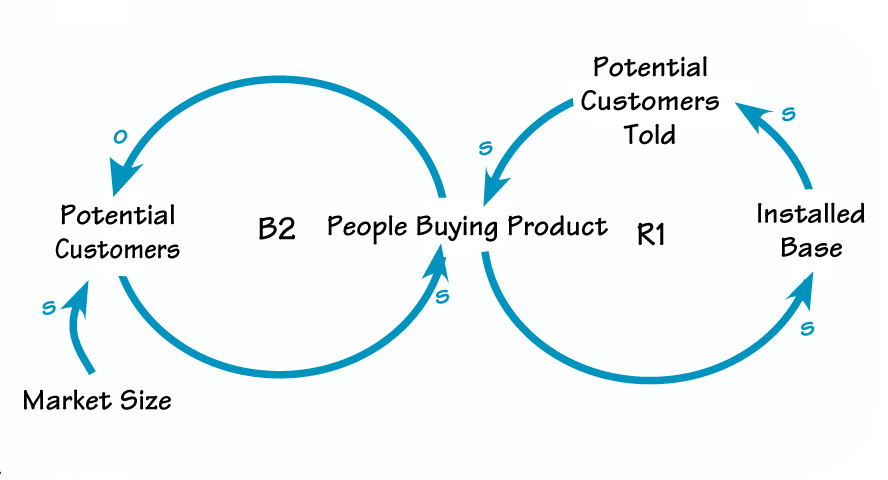
To make sense of a situation, one of my favorite tools is simple: a causal diagram(s). See [1]. This requires effort, and it should. Making a useful, communicable model that forms the foundation for your argument takes practice. Here's a disability-related example: [2]
I want to live in a world where causal models are demanded by readers.
[1]: https://thesystemsthinker.com/wp-content/uploads/images/volu...
> Learning disabilities don’t affect intelligence and are different from intellectual disabilities. People with LDs have specific issues with learning but have an average or above-average IQ (intelligence quotient).
I acknowledge that I was including autism as a learning disability, but I see this isn’t the case. Still, however, I hope you would acknowledge that autistic people are not inherently less intelligent than others, and neither are people with depression nor anxiety.
> Other accommodations risk putting the needs of one student over the experience of their peers. One administrator told me that a student at a public college in California had permission to bring their mother to class. This became a problem, because the mom turned out to be an enthusiastic class participant.
Woof.
[1] https://www.theatlantic.com/magazine/2026/01/elite-universit...
> 4. Naughtiness
> Though the most successful founders are usually good people, they tend to have a piratical gleam in their eye. They're not Goody Two-Shoes type good. Morally, they care about getting the big questions right, but not about observing proprieties. That's why I'd use the word naughty rather than evil. They delight in breaking rules, but not rules that matter. This quality may be redundant though; it may be implied by imagination.
> Sam Altman of Loopt is one of the most successful alumni, so we asked him what question we could put on the Y Combinator application that would help us discover more people like him. He said to ask about a time when they'd hacked something to their advantage—hacked in the sense of beating the system, not breaking into computers. It has become one of the questions we pay most attention to when judging applications.
Loopt, BTW, eventually became a shady gay hookup (not even "dating") app--the digital equivalent of the men's rooms in the Port Authority Bus Terminal--before getting acquired for barely more money than it raised in VC funding, and even then, only because one of its VCs was also on the board of the acquirer (Greendot). None of this is mentioned in Loop's sanitized wikipedia entry: https://en.wikipedia.org/wiki/Loopt
I think if you look at the 2012 Harvard cheating scandal, it's clear that this isn't true. There, the professor presumed honest students, hundreds cheated, and no student reported.
Also it would be fun if you had to pick a star card every semester for one off mechanics like:
“red letter day: papers submitted in tuesdays must use red pen and will be graded in black ink”;
“balogna bingo: all sandwich labels through April will include a random number — match four numbers with another student and your next lunch is free!”; or
“vocabulary dairy: free froyo every week for the students in the 90th percentile for how many times they use the words important, therefore, or however in their papers, but you have to agree to buy a Manual of Style (and provide proof of purchase at the froyo counter)”.
*Ironically one is called RA https://boardgamegeek.com/boardgame/12/ra
As said by Charlie Munger: "show me the incentive and I'll show you the outcome". In the UK, 23% (and climbing) working age adults are now registered as disabled [1]. For a qualifying disability you can claim personal independence payment (PIP) that gets you between £73.90-£110.40 for living plus £29.20-£77.05 for mobility, which is not means tested [2]. That's up to $249.98 USD a week untaxed on top of your regular income - you can imagine why people may be incentivised. Worse still, Citizens Advice which is 60% taxpayer funded [3], actively tell people how to fill out the forms to guarantee a positive outcome.
I have no idea why people would want to register as disabled though... /s
[1] https://www.scope.org.uk/media/disability-facts-figures
>In 1990 7.4% of single young adults were living with a roommate, increasing to 8.1% in 2000. From 2010 through 2022 the share was stable, reaching 8.7% in 2022.
>From 1990 through 2016 the share of single young adults living alone remained relatively stable, ranging from 6.0% to 6.8%. However, the share increased to 8.2% in 2022.
Although I think this does include current students.
https://www.bgsu.edu/ncfmr/resources/data/family-profiles/FP...
It's not "cheating" in that players are using the system as-is, and after a critical mass of people adopt it, there is no way to play competitively without it.
The simple answer becomes to patch the behavior out of the system, although that is rarely popular with the people who have adopted the strategy and invested a lot in the system.
I guess it’s not as bad as women rating 80% of men as unattractive.
Some people just don’t believe in normal distributions or binary search. I don’t believe disabilities, obesity, or attractiveness follow a power law.