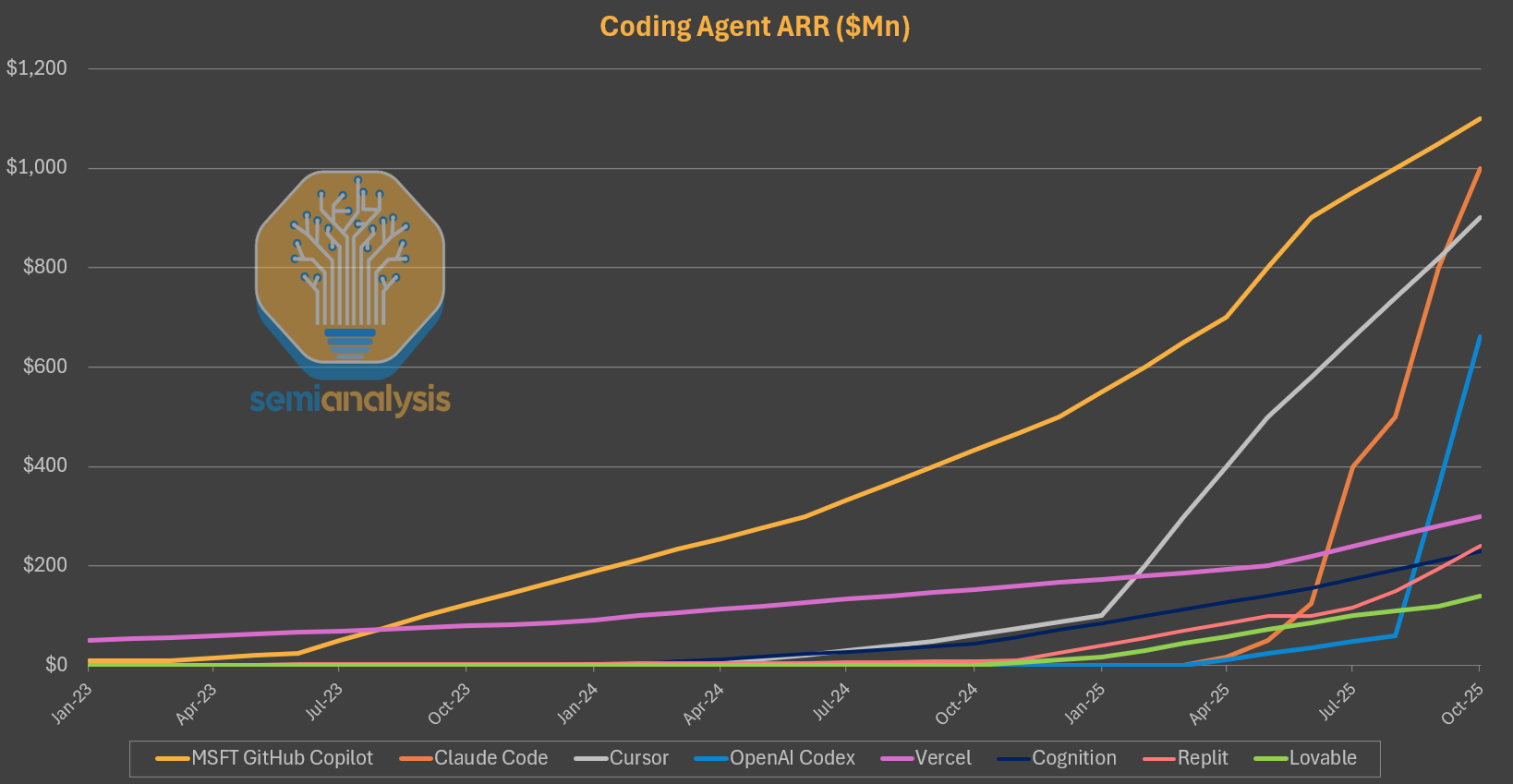
https://github.blog/news-insights/octoverse/octoverse-a-new-...
Despite the page title being "Fullstack dev server", it's also useful in production (Ctrl-F "Production Mode").
(1) Bun is what technical startups should be. Consistently excellent decisions, hyper focused on user experience, and a truly excellent technical product.
(2) We live in a world where TUIs are causing billion dollar acquisitions. Think about that. Obviously, Bun itself is largely orthogonal to the TUIs. Just another use case. But also obviously, they wouldn't have been acquired like this without this use case.
(3) There's been questions of whether startups like Bun can exist. How will they make money? When will they have to sell out one of the three principles in (1) to do so? The answer seems to be that they don't; at least, not like we expected, and in my opinion not in a sinister way.
A sinister or corrupting sell out would be e.g. like Conan. What started as an excellent tool became a bloated, versioned mess as they were forced to implement features to support the corporate customers that sustained them.
This feels different. Of course, there will be some selling out. But largely the interests of Anthropic seem aligned with "build the best JS runtime", since Anthropic themselves must be laser focused on user experience with Claude Code. And just look at Opencode [^1] if you want to see what leaning all the way into Bun gets you. Single file binary distribution, absurdly fast, gorgeous. Their backend, OpenTUI [^2], is a large part of this, and was built in close correspondence with the Bun folks. It's not something that could exist without Bun, in my opinion.
(4) Anthropic could have certainly let Bun be a third party to which they contributed. They did not have to purchase them. But they did. There is a strange not-quite altruism in this; at worst, a casting off of the exploitation of open source we often see from the biggest companies. Things change; what seems almost altruistic now could be revealed to be sinister, or could morph into such. But for now, at least, it feels good and right.
[^1]: https://github.com/sst/opencode [^2]: https://github.com/sst/opentui
And apparently the submission's source for being the only org I can tell that anticipated this: https://www.theinformation.com/articles/anthropic-advanced-t...
https://github.com/oven-sh/bun/pull/24578
So far, someone from the bun team has left a bunch of comments like
> Poor quality code
...and all the tests still seem to be failing. I looked through the code that the bot had generated and to me (who to be fair is not familiar with the bun codebase) it looks like total dogshit.
But hey, maybe it'll get there eventually. I don't envy "taylordotfish" and the other bot-herders working at Oven though, and I hope they get a nice payout as part of this sale.
I don't think they're doing that.
Estimates I've seen have their inference margin at ~60% - there's one from Morgan Stanley in this article, for example: https://www.businessinsider.com/amazon-anthropic-billions-cl...
Prior to that GitHub Copilot was either the VS Code IDE integration or the various AI features that popped up around the GitHub.com site itself.
There's also the trick Deno has been trying, where they can use their control of the core open source project to build features that uniquely benefit their cloud hosting: https://til.simonwillison.net/deno/deno-kv#user-content-the-...
So it seems odd to say that Bun is less dependent on the npm library ecosystem.
[1] It’s possible to use jsr.io instead: https://jsr.io/docs/using-packages
Bun is fast, and its worked as a drop in replacement for npm in large legacy projects too.
I only ever encountered one issue, which was pretty dumb, Amazon's CDK has hardcoded references to various package manager's lock files, and Bun wasn't one of them
https://github.com/aws/aws-cdk/issues/31753
This wasn't fixed till the end of 2024 and as you can see, only accidentally merged in but tolerated. It was promptly broken by a bun breaking change
https://github.com/aws/aws-cdk/issues/33464
but don't let Amazon's own incompetency be the confirmation bias you were looking for about using a different package manager in production
you can use SST to deploy cloud resources on AWS and any cloud, and that package works with bun
1. User krig reports an issue against the Bun repo: https://github.com/oven-sh/bun/issues/24548
2. Bun's own automated "bunbot" filed a PR with a potential fix: https://github.com/oven-sh/bun/pull/24578
3. taylordotfish (not an employee of Bun as far as I can tell, but quite an active contributor to their repo) left a code review pointing out many flaws: https://github.com/oven-sh/bun/pull/24578#pullrequestreview-...
My best writing on this topic is still this though (which doesn't include a video): https://simonwillison.net/2025/Mar/11/using-llms-for-code/
There are degrees to this though. A panic + unwind in Rust is clean and _safe_, thus preferable to segfaults.
Java and Go are another similar example. Only in the latter can races on multi-word data structures lead to "arbitrary memory corruption" [1]. Even in those GC languages there's degrees to memory safety.
The first hints of what become Bun were when Jared experimented at porting that to Zig.
curl -fsSL https://claude.ai/install.sh | bash
The best one is from the Information, but they're behind a paywall so not useful to link to. https://www.theinformation.com/articles/anthropic-projects-7...
I don't know why it's even necessary for this.
https://github.com/atxtechbro/test-ink-flickering
Issue on Claude Code GitHub:
> .... and in 12 months, we might be in a world where the ai is writing essentially all of the code. But the programmer still needs to specify what are the conditions of what you're doing. What is the overall design decision. How we collaborate with other code that has been written. How do we have some common sense with whether this is a secure design or an insecure design. So as long as there are these small pieces that a programmer has to do, then I think human productivity will actually be enhanced
(He then said it would continue improving, but this was not in the 12 month prediction.)
Source interview: https://www.youtube.com/live/esCSpbDPJik?si=kYt9oSD5bZxNE-Mn
And even in packages with full support you can find many github issues that bun behaves directly which leads to some bugs.
Here are the Bun API’s:
https://bun.com/docs/runtime/bun-apis
Here are the Deno API’s:
I posted a link and transcription of the rest of his "three to six months" quote here: >>46126784
[1] https://ziglang.org/code-of-conduct/#strict-no-llm-no-ai-pol...
We never associated with Bun other than extending an invitation to rent a job booth at a conference: this was years ago when I had a Twitter account, so it's fair if Jarred doesn't remember.
If Handmade Cities had the opportunity to collaborate with Bun today, we would not take it, even prior to this acquisition. HMC wants to level up systems while remaining performant, snappy and buttery smooth. Notable examples include File Pilot [0] or my own Terminal Click (still early days) [1], both coming from bootstrapped indie devs.
I'll finish with a quote from a blog post [2]:
> Serious Handmade projects, like my own Terminal Click, don’t gain from AI. It does help at the margins: I’ve delegated website work since last year, and I enjoy seamless CI/CD for my builds. This is meaningful. However, it fails at novel problems and isn’t practical for my systems programming work.
All that said, I congratulate Bun even as we disagree on philosophy. I imagine it's no small feat getting acquired!
The nice things:
1. It's fast.
2. The standard library is great. (This may be less of an advantage over Deno.)
3. There's a ton of momentum behind it.
4. It's closer to Node.js than Deno is, at least last I tried. There were a bunch of little Node <> Deno papercuts. For example, Deno wanted .ts extensions on all imports.
5. I don't have to think about JSR.
The warts:
1. The package manager has some issues that make it hard for us to use. I've forgotten why now, but this in particular bit us in the ass: https://github.com/oven-sh/bun/issues/6608. We use PNPM and are very happy with it, even if it's not as fast as Bun's package manager.
Overall, Deno felt to me like they were building a parallel ecosystem that I don't have a ton of conviction in, while Bun feels focused on meeting me where I am.
ChatGPT is feeling the pressure of Gemini [0]. So it's a bit strange for Anthropic to be focusing hard on its javascript game. Perhaps they see that as part of their advantage right now.
[0] https://timesofindia.indiatimes.com/technology/tech-news/goo...
You can see my site here, if you'd like: https://chipscompo.com/
It's a private repo, and I won't make it open source just to prove it was written with AI, but I'd be happy to share the prompts. You can also visit the site, if you'd like: https://chipscompo.com/
Like I’ve said: NativeAOT
https://learn.microsoft.com/en-us/dotnet/core/deploying/nati...
https://www.anthropic.com/engineering/advanced-tool-use
They discussed how running generated code is better for context management in many cases. The AI can generate code to retrieve, process, and filter the data it needs rather than doing it in-context, thus reducing context needs. Furthermore, if you can run the code right next to the server where the data is, it's all that much faster.
I see Bun like a Skynet: if it can run anywhere, the AI can run anywhere.
At present the browser monstrosity is used to (automatically, indiscriminantly) download into memory and run Javascripts from around the web. At least with a commandline web-capable JS runtime monstrosity the user could in theory exercise more control over what scripts are downloaded and if and when to run them. Perhaps more user control over permissions to access system resources as well (cf. corporate control)
1. One can already see an approach something like this being used in the case of
https://github.com/yt-dlp/yt-dlp/wiki/EJS
where a commandline JS runtime is used without the need for any graphics layer (advertising display layer)
Bun claims this feature is for running untrusted code (https://bun.com/reference/node/vm), while Node says "The node:vm module is not a security mechanism. Do not use it to run untrusted code." I'm not sure whom to believe.
It's a private repo, and I won't make it open source just to prove it was written with AI, but I'd be happy to share the prompts. You can also visit the site, if you'd like: https://chipscompo.com/
Bun genuinely made me doubt my understanding of what good software engineering is. Just take a look at their code, here are a few examples:
- this hand-rolled JS parser of 24k dense, memory-unsafe lines: https://github.com/oven-sh/bun/blob/c42539b0bf5c067e3d085646... (this is a version from quite a while ago to exclude LLM impact)
- hand-rolled re-implementation of S3 directory listing that includes "parsing" XML via hard-coded substrings https://github.com/oven-sh/bun/blob/main/src/s3/list_objects...
- MIME parsing https://github.com/oven-sh/bun/blob/main/src/http/MimeType.z...
It goes completely contrary to a lot of what I think is good software engineering. There is very little reuse, everything is ad-hoc, NIH-heavy, verbose, seemingly fragile (there's a lot of memory manipulation interwoven with business logic!), with relatively few tests or assurances.
And yet it works on many levels: as a piece of software, as a project, as a business. Therefore, how can it be anything but good engineering? It fulfils its purpose.
I can also see why it's a very good fit for LLM-heavy workflows.
<Alanna> Saying that Java is nice because it works on all OS's is like saying that anal sex is nice because it works on all genders
EDIT: someone has (much to my joy) made an archive of bash.org so here is a link[1], but I must say I’m quite jealous of today’s potential 1/10,000[2] who will discover bash.org from my comment!
you could also run java with js if you are brave enough https://kreijstal.github.io/java-tools/
Is there anything I could do to improve this PR/get a review? I understand you are def very busy right now with the acquisition, but wanted to give my PR the best shot:
[1] https://codeberg.org/ziglang/zig/src/commit/be9649f4ea5a32fd...
Sounds like "monetizing Bun is a distraction, so we're letting a deep-pocketed buyer finance Bun moving forward".
So how did it work back in the day, people would just submit text and it would get upvoted? I always assumed like half of them were just made up.
I was honestly baffled how fast Claude knocked this out.
More broadly, I think the observation tends to get repeated because C and Zig share a certain elegance and simplicity (even if C's elegance has dated). C++ is many things, but it's hardly elegant or simple.
I don't think anyone denies that Zig can be a C++ replacement, but that's hardly unusual, so can many other languages (Rust, Swift, etc). What's noteworthy here is that Zig is almost unique in having the potential to be a genuine C replacement. To its (and your) great credit, I might add.
>> At its core Zig is marketed as a competitor to C, not C++/Rust/etc, which makes me think it's harder to write working code that won't leak or crash than in other languages. Zig embraces manual memory management as well.
@GP: This is not a great take. All four languages are oriented around manual memory management. C++ inherits all of the footguns of C, whereas Zig and Rust try to sand off the rough edges.
Manual memory management is and will always remain necessary. The only reason someone writing JS scripts don't need to worry about managing their memory is because someone has already done that work for them.
1. https://github.com/denoland/deno/issues?q=is%3Aissue%20state... 2. https://github.com/oven-sh/bun/issues?q=is%3Aissue%20state%3...
Node.js is a no-brainer for anyone shipping a TS/JS backend. I'd rather deal with poor DX and slightly worse performance than risk fighting runtime related issues on deployment.
Linux needs to be a first class citizen for any runtime/langauge toolchain.
https://www.wheresyoured.at/why-everybody-is-losing-money-on...
If the build script being a DSL is the issue, they're even experimenting around declarative gradle scripts [0], which is going to be nice for people used to something like maven.
That's not true, if anything, C# is faster and also compiles fast enough.
https://benchmarksgame-team.pages.debian.net/benchmarksgame/...
You get a feel for how much direction they need after working for a while and tooling and accessible documentation is really important for quality.
Then you give them a task and review the results. In (backend/systems) programming it's pretty binary whether a solution works or not, it's not a matter of taste but something you can just validate with hard data.
I've done so many tiny/small/medium sized utilities for myself in the last year it's crazy[0]. A good bunch of them are 95-100% vibecoded, meaning I was just the "project manager" instructing what features I want and letting the agent(s) make it work.
I think I have a pretty good feel for the main agentic systems and what they can do in the context of what I do so I know what to tell them and how - each has its own distinct way of working and using the wrong one for the wrong job is either stupid, frustrating or just a waste of time.
Clever!
https://benchmarksgame-team.pages.debian.net/benchmarksgame/...
seems to work. relies on that individual quote being indexed, and google SERPs feeling like returning full results at the moment, of course. when the latter fails, I've found success with site: queries on Bing (of all places.)
Not yet; similar concerns were addressed by Dahl 6mo ago: https://deno.com/blog/greatly-exaggerated / https://archive.vn/L6His
> The Information earlier reported on some of the financial figures for both companies.
> The documents show that OpenAI expects to burn $9 billion after generating $13 billion in sales this year, while Anthropic expects to burn almost $3 billion on $4.2 billion in sales—roughly 70% of revenue for both.
https://archive.is/e7pg9 / https://www.wsj.com/tech/ai/openai-anthropic-profitability-e... (paywall)
https://fortune.com/2025/11/12/openai-cash-burn-rate-annual-...
Do you really think Anthrophic's annual expenses are in single digit billions? Or OpenAI's annual expenses being less than $9 billion?
> people latch on to them because it confirms their own ideals
I think this applies universally, even to yourself, no? You're so deadset on believeing Anthrophic is not losing billions, you're debating semantics and borderline insulting my reading skills.